

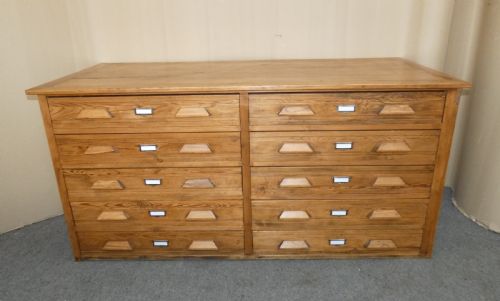


Shop Fitting Drawers
Shop fitting drawers are utilitarian banks and counters built for commerce, prized for monumental storage capacity and robust commercial character.
Shop Fitting Drawers
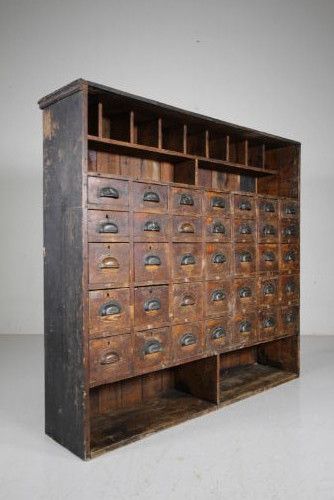
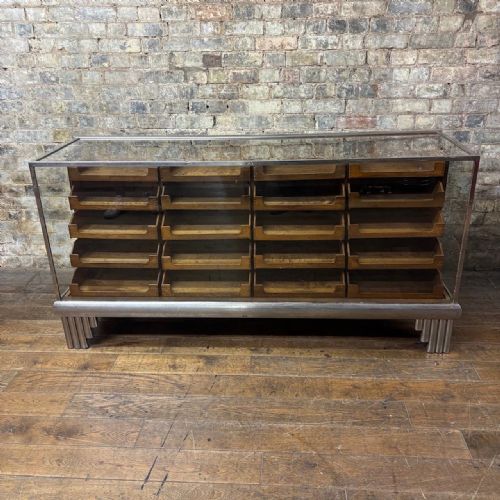
Shop fitting drawers encompass banks of multi-drawer units, haberdashery cabinets and commercial counters created for trade use. These substantial storage pieces emerge primarily from the Victorian period through to the 1930s.
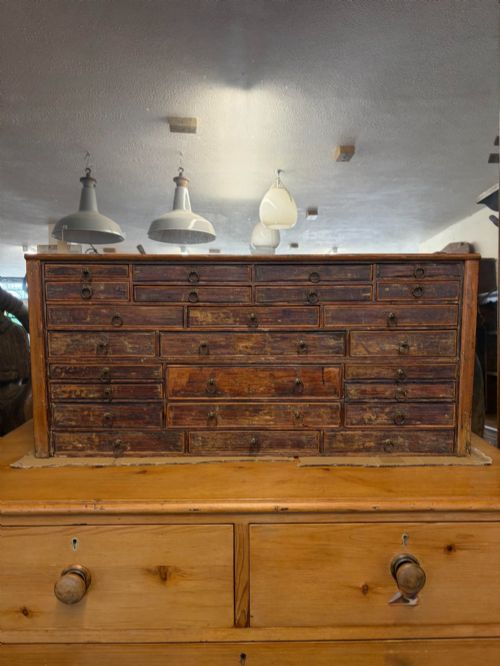
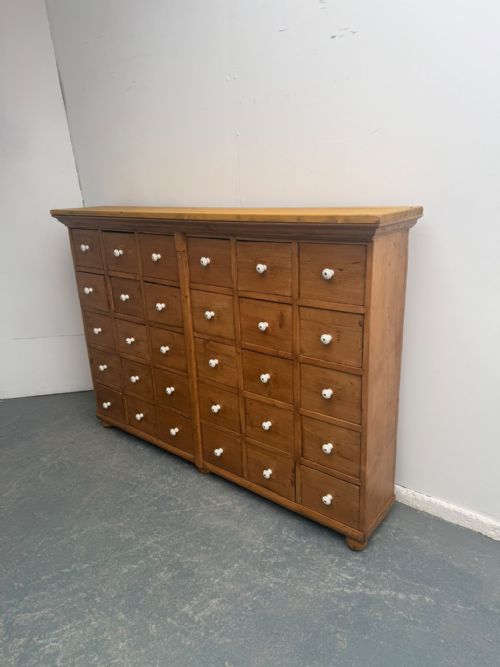
The most common forms found here include large banks of pine drawers, haberdashery counters and chemist shop fittings. Buyers encounter English, French, and Hungarian pine and oak configurations designed originally for retail stock.
Originating in commercial environments, these items transition effectively into modern domestic interiors as statement storage. Their configurations range from compact counter-top tills to fifty-drawer modular banks.
Construction and Materials
Carpenters constructed these commercial pieces predominantly in pine, oak, mahogany and fruitwood to withstand heavy daily use. Many retain their original painted surfaces in white, cream, green or black.
Hardware details involve brass, iron and chrome handles, label holders and catches designed for functional retail efficiency. Glazed panels appear on display cases and haberdashery counters to showcase merchandise.
Shop Fitting Drawers Retail Price Guide 2026
Typical asking prices for shop fitting drawers among the pieces listed under this phrase on Sellingantiques today, from the lower quarter to the upper quarter. They describe what is for sale here now, not the wider market.
Several units retain authentic sign-writing from historic agricultural merchants and fishing supply shops.
Quality Variations
Quality rests upon the integrity of the original commercial joinery and the scale of the drawer formation. Large multi-drawer banks retaining original paint finishes and authentic brass or iron hardware command greater interest.
Provenance and specialised trade use elevate specific pieces, particularly those bearing period sign-writing or originating from notable makers and merchants. Timber selection also dictates grade, shifting from utilitarian softwoods to dense oak and mahogany.
Luxmore's of Ilfracombe·Dudley & Co·G H Gledhill Halifax
The Shop Fitting Drawers Glossary
- Haberdashery cabinet
- A specialised display and storage unit featuring multiple shallow drawers, often with glass fronts, used for ribbons and cottons. These pieces provide organised storage for small domestic items.
- Bank of drawers
- A large assembly of numerous individual drawers housed within a single heavy frame. Such units were essential fixtures in 19th-century retail premises.
- Campaign chest
- A portable set of drawers constructed in sections with brass corners and recessed handles for transport. They frequently double as robust retail or domestic storage.
- Sign-written
- Painted commercial lettering or mercantile branding applied directly to the timber exterior. This authenticates the original retail context of the piece.
Shop Fitting Drawers: Frequently Asked Questions
How do I clean painted shop drawers?
Wipe surfaces gently with a damp cloth, avoiding harsh chemical cleaners that strip aged paint finishes. Preserve the dry, patinated character of old trade paint.
Dry the timber thoroughly afterwards to prevent moisture damage to the joints.
Can I use these drawers in a kitchen?
Large banks of drawers provide exceptional storage for kitchen utensils, tableware and dry goods. Their generous proportions suit modern culinary spaces well.
Ensure adequate ventilation if placing vintage timber pieces near moisture sources.
How do I identify Victorian shop fittings?
Look for traditional dovetail joinery, heavy timber construction in pine or mahogany, and period iron or brass hardware. Original trade labels or sign-writing often confirm the era.
Inspect the interior drawer linings for signs of heavy commercial wear.
Are French and English pieces different?
French counters and drapers drawers often utilise fruitwood or lighter pine constructions with softer decorative mouldings. English commercial furniture tends towards utilitarian oak, heavy pitch pine and robust brass pull handles.
Both styles reflect the practical demands of 19th-century European retail.