




Shop Counter Unit
A shop counter unit provides practical storage and display, bringing authentic commercial character into modern domestic and retail spaces.
Shop Counter Unit
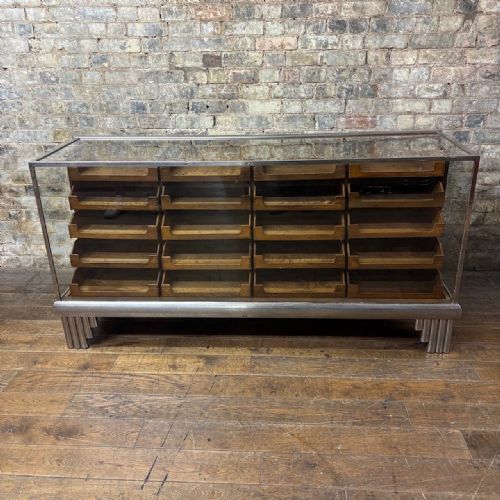
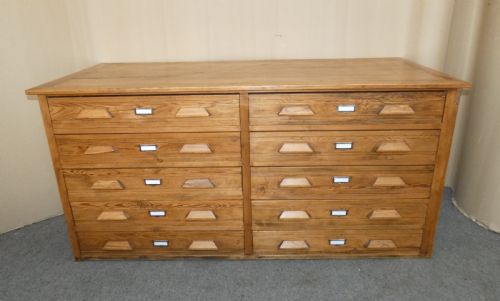
A shop counter unit brings together practical storage and display, appearing primarily in formats such as banks of drawers, haberdashery counters, and glass display cabinets. These pieces originate from commercial and domestic contexts spanning the Victorian, Edwardian, and 1930s periods.
Buyers frequently encounter substantial multi-drawer banks and glazed display cases designed for merchandise. Materials range from exposed pine and oak to polished walnut and painted finishes.
The assortment includes specialised forms like drapers counters, butchers blocks, and advertising display units. Origins stretch across British workshops and continental sources like France and Hungary.
Materials and construction
Construction relies heavily on durable hardwoods and softwoods such as oak, pine, mahogany, and walnut to withstand daily commercial use. Joinery techniques prioritize robust framing capable of supporting numerous drawers and heavy glass tops.
Metal components, including brass frames, iron hardware, and chrome detailing, provide structural reinforcement and functional operation. Painted finishes appear in original white, cream, and applied coats over timber bases.
Shop Counter Unit Retail Price Guide 2026
Typical asking prices for shop counter unit among the pieces listed under this phrase on Sellingantiques today, from the lower quarter to the upper quarter. They describe what is for sale here now, not the wider market.
Some fifty-drawer pine fittings still carry the faint ghost of a haberdasher's inventory system.
Indicators of quality
Quality rests upon the integrity of the timber framing, the smoothness of drawer operation within large banks, and the originality of fitted hardware. Superior examples retain their original painted surfaces, intact glass panels, and authentic maker details.
Proportion and scale distinguish finer commercial fittings from standard storage items, particularly in multi-drawer configurations and glazed display counters. The choice of materials, from basic pine to figured mahogany and walnut, dictates the finish level.
Wear patterns reflect genuine commercial use, with well-preserved joints and functional mechanisms separating superior survivals from heavily altered pieces.
Dudley & Co·Saml Elliott & Sons·Trussant & Cie
The Shop Counter Unit Glossary
- Haberdashery counter
- A long shop fixture featuring numerous shallow drawers designed to organise small sewing goods and textiles. These units often incorporate glazed display sections or dedicated drop-down workspace.
- Bank of drawers
- A large assembly of multiple small or graduated drawers housed within a single wooden carcass. They were utilised in retail and industrial settings for systematic stock organisation.
- Drapers counter
- A wide display and cutting table built for fabric merchants. They frequently utilise dense hardwoods like mahogany to endure heavy daily handling.
- Butchers block
- A thick timber preparation surface designed for heavy cutting and processing. These utilitarian pieces utilise end-grain or robust plank construction.
- Shop fitting
- A built-in or freestanding fixture created specifically for commercial interior display and storage. They reflect the practical requirements of late nineteenth and early twentieth-century retail.
Shop Counter Unit: Frequently Asked Questions
What is a shop counter unit?
A shop counter unit is a heavy-duty commercial fixture designed for retail display, customer service, and merchandise storage. These pieces encompass multi-drawer banks, glazed cabinets, and specialised counters.
Originally built for businesses such as drapers and grocers, they utilise robust timbers like oak, pine, and mahogany. Today, they serve as functional storage furniture in residential and commercial interiors.
How do I identify Victorian units?
Victorian shop counter units typically feature hand-cut dovetails, dense timber construction, and traditional painted or polished finishes. They often present in pine, oak, or walnut.
Details such as brass pulls, turned legs, and heavy paneling point toward nineteenth-century manufacturing methods. Regional variations, including painted Hungarian pine pieces, also appear within this timeframe.
Where were these counters used?
These counters were deployed in nineteenth and early twentieth-century retail environments, including drapers, haberdashers, hardware stores, and butchers. They functioned as primary transaction points and inventory storage.
Their robust construction allowed them to endure continuous public interaction and heavy stock loads over decades of commercial operation.
How do I care for wooden counters?
Caring for antique wooden counters involves maintaining stable indoor humidity levels to prevent timber movement or cracking. Regular dusting with a soft cloth preserves the surface finish.
Avoid placing untreated wood in direct sunlight or near heat sources. Wax polishes suited to historic timber help maintain the condition of polished walnut, oak, and pine surfaces.