





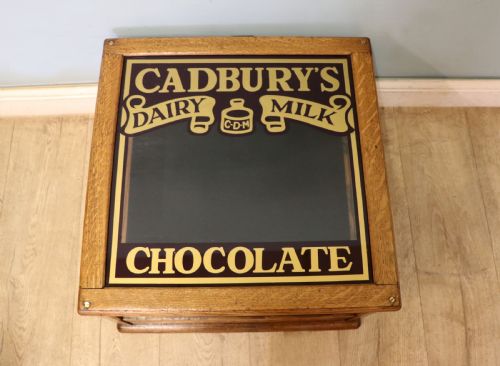


Shop Counter Box
A shop counter box organises trade goods right where customers make their choices, combining practical utility with direct display.
Shop Counter Box
A shop counter box serves commercial spaces by holding specific goods like sewing cottons, confectionery, and tea for immediate purchase. Buyers seeking a shop counter box will encounter tabletop cabinets, glazed display cases, and partitioned haberdashery units designed for retail environments.
The selection spans periods from the nineteenth century through the 1950s, capturing the shift from traditional Victorian mercantile fittings to mid-century commercial display. Common forms include apothecary boxes, watchmaker storage units, and branded confectionery showcases intended to sit directly upon retail furniture.
Many survivors retain original trade sign-writing or specific manufacturer lettering relating to chocolate, thread, and tobacco sales. These objects bridge general storage boxes and dedicated display cabinets, functioning as self-contained merchandising units.
Materials and construction
Timber frames in mahogany, oak, pine, and polished wood form the structural carcass of most examples, joined to house glass panels and internal dividers. Cabinet makers utilised brass for hinges, rims, and key escutcheons, adding durability to high-contact retail furniture.
Surface treatments range from painted finishes and toleware metalwork to clear polished wood grains that exposed the natural timber. Glazing relies on fitted glass panes secured within wooden framing or brass channels to protect the contents while maintaining visibility.
Shop Counter Box Retail Price Guide 2026
Typical asking prices for shop counter box among the pieces listed under this phrase on Sellingantiques today, from the lower quarter to the upper quarter. They describe what is for sale here now, not the wider market.
Several boxes survived because they were repurposed long ago to hold buttons and pencils instead of chocolates and apothecary powders.
Assessing quality in commercial boxes
Quality reveals itself in the rigidity of the timber framing and the precision of the joinery used to construct small, multi-compartment layouts. Superior examples employ dense hardwoods like mahogany or oak with tight corner joints rather than softer utility pine.
The presence of original manufacturer branding, intact glass panels, and specialised internal fittings elevates the integrity of a piece. Metal hardware such as heavy brass rims and functional locking mechanisms further distinguish high-grade commercial display boxes from basic utility storage.
G H Gledhill Halifax·Manoah Rhodes & Sons Ltd
The Shop Counter Box Glossary
- Haberdashery
- Small items used in sewing, such as threads, buttons, and ribbons, which required specialised multi-drawer or glazed storage.
- Toleware
- Enamelled or painted sheet metal items, often used for storage canisters, tea caddies, and grocery hoppers.
- Apothecary
- Relating to the preparation and sale of medicines, producing specialised partitioned boxes and small countertop drawer units.
- Cantilever
- A structural system allowing trays or display tiers to lift and extend outward when the main lid opens.
Shop Counter Box: Frequently Asked Questions
What were shop counter boxes used for?
Merchants placed these boxes on retail counters to display small goods like sewing cottons, chocolates, and writing pencils directly to buyers.
They allowed customers to inspect items easily while keeping stock secure and organised during busy trading hours.
How do I date a countertop display cabinet?
Dating relies on observing the timber species, construction joints, and any surviving commercial branding or typography associated with known manufacturers.
Victorian pieces often favour solid mahogany with hand-cut joints, while twentieth-century examples introduce oak frames and different hardware styles.
Where should I place a shop counter box at home?
These boxes sit well on tabletops, sideboards, or open shelving where their glass panels and partitioned interiors remain visible.
They function effectively for storing small collections, jewellery, or stationery while adding a distinct commercial aesthetic to an interior.
What is the difference between a cabinet and a box?
Countertop cabinets typically feature glazed doors or lift-up viewing lids designed primarily for active visual merchandising.
Boxes tend to focus on internal storage compartments, drawers, or lift-off lids rather than outward display.