


Shirvan Caucasian Runner
These shirvan caucasian runner pieces bring geometric discipline and rich regional weaving traditions straight into a hallway.
Shirvan Caucasian Runner
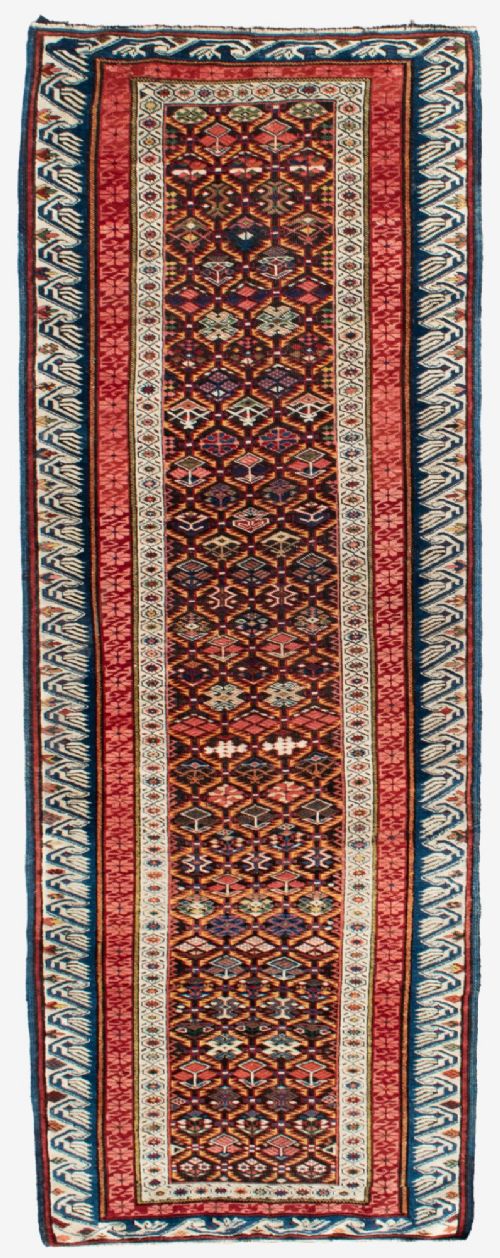
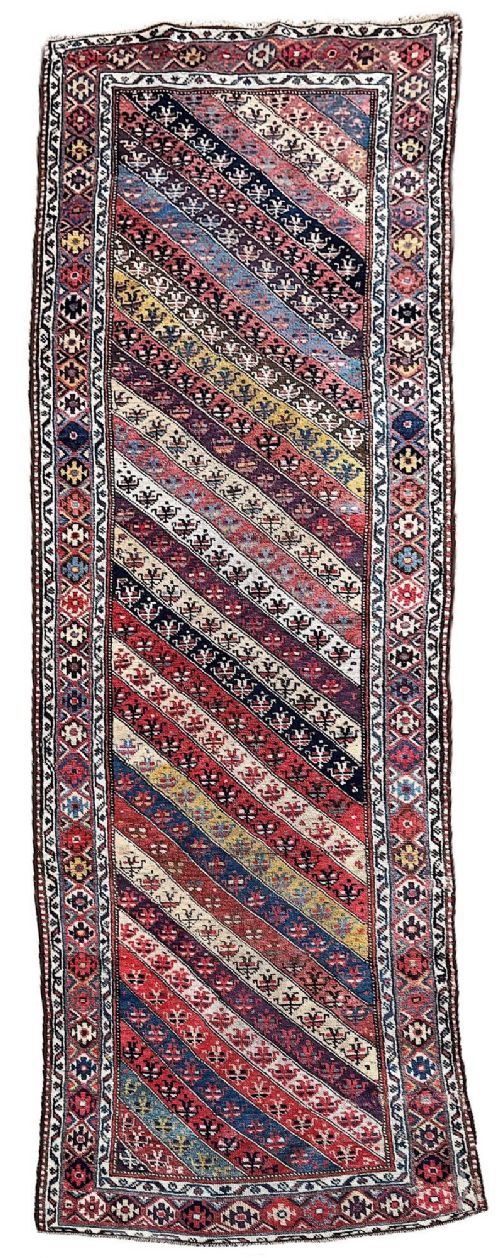
A shirvan caucasian runner is a long, narrow textile originating from the Eastern Caucasus, specifically the Shirvan region. These pieces bridge traditional tribal artistry and structured village weaving, often taking the form of elongated formats designed for corridors and passages.
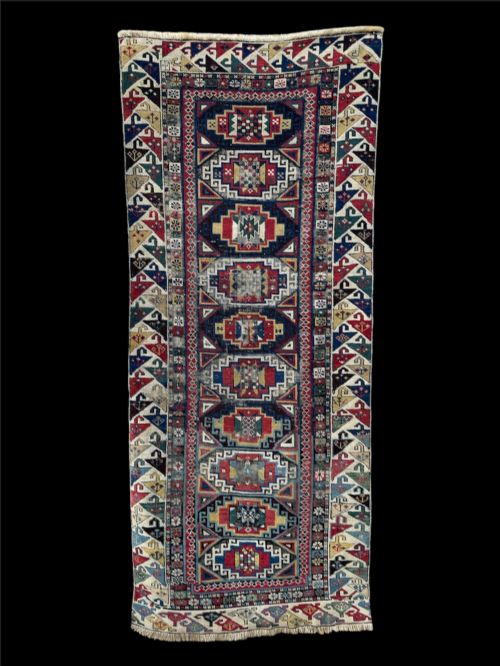
The pieces appearing on this page span the late nineteenth century through to the early twentieth century. Alongside formal runners, buyers encounter related regional formats including long rugs, flatwoven kilims, and saddle bags sharing the same aesthetic vocabulary.
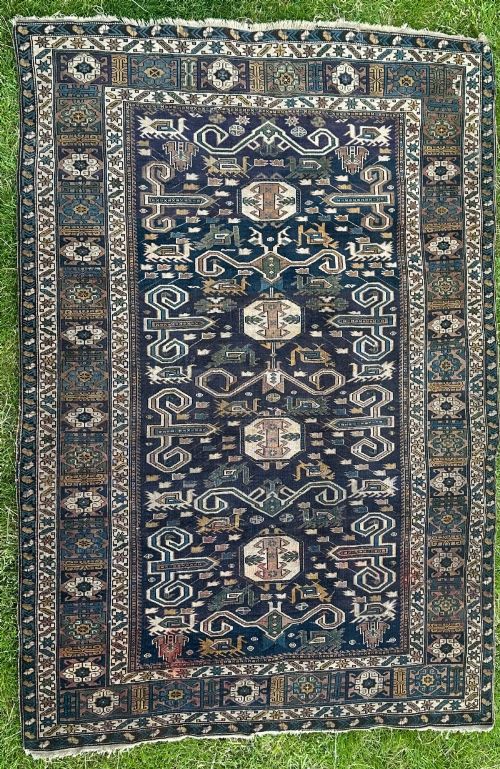
Geometrical medallions, repeating star motifs, and stylised birds or peacocks populate the fields of these textiles. The palette relies on soft colours alongside striking blue and yellow grounds, reflecting the traditional appearance of Caucasian tribal and traditional craft.
How they were made
Weavers constructed these runners using wool and hand-spun wool foundations and piles, complemented by cotton details in specific configurations. The use of hand-spun wool yields a tactile texture that responds well to traditional handling and age.
Natural dyes provide the enduring palette seen across these items, creating soft colour variations that mature gracefully over decades. Flatwoven kilim versions utilise distinct interlacing techniques without a pile, resulting in a lighter structure suited to specific decorative uses.
Certain Shirvan runners feature large peeping peacocks staring out from the geometric field.
What varies in quality
The refinement of the weave distinguishes finer examples from simpler village work, with tighter knotting allowing for crisper geometric outlines and more intricate star and lattice patterns. Condition plays a major role, as surviving runners with intact borders and minimal fragmentation demonstrate greater structural integrity.
The choice and preservation of natural dyes dictate visual depth, where complex palettes and scarce ground colours elevate the status of a piece. Distinctive pictorial elements, such as uncommon bird borders or specific garden designs, set individual runners apart within the wider Caucasian tradition.
The Shirvan Caucasian Runner Glossary
- Runner
- A long, narrow carpet format traditionally utilised in corridors, passages, and narrow rooms.
- Kilim
- A flatwoven textile produced without a pile, created by tightly interweaving warp and weft threads.
- Boteh
- A traditional teardrop or almond-shaped motif with a curved upper end, frequently seen in oriental weaving.
- Lesghi star
- An eight-pointed geometric star motif characteristic of specific Caucasian rug designs.
- Natural dye
- Colourants derived from plants, insects, and minerals rather than synthetic chemical sources.
Shirvan Caucasian Runner: Frequently Asked Questions
Where were shirvan caucasian runners made?
These textiles originate from the Shirvan region situated in the Eastern Caucasus. The local weaving traditions absorbed influences from surrounding tribal groups while maintaining distinct regional characteristics.
Production centred on village workshops and nomadic camps where weavers utilised locally sourced materials. Each valley and settlement imparted subtle variations in design execution and palette choice.
How do I care for an antique wool runner?
Regular gentle vacuuming without a rotating brush roll prevents dust accumulation within the wool pile. Professional cleaning tailored for antique textiles ensures the natural dyes remain stable.
Positioning a suitable underlay beneath the runner reduces friction against hard flooring and prevents unwanted slipping. Keeping the textile away from direct, harsh sunlight preserves the soft tones of the natural dyes over time.
What is a kilim runner?
A kilim runner is a flatwoven textile lacking the raised pile characteristic of knotted carpets. The structural technique involves interlocking weft threads tightly over the warp threads to form flat geometric patterns.
This construction method produces a lighter, reversible fabric that functions effectively in high-traffic corridors. Banded designs and repeating motifs often define the visual layout of these flatweaves.
How can I tell the age of these pieces?
Dating relies on examining material characteristics, dye types, and structural wear consistent with the late nineteenth and early twentieth centuries. Hand-spun wool and specific natural dye palettes indicate production periods before synthetic aniline dyes became widespread.
Structural traits such as selvage construction and wool preparation methods provide further clues regarding the era of manufacture. Comparing structural details with dated examples helps narrow down the decade of origin.