



Ships Bulkhead Clock
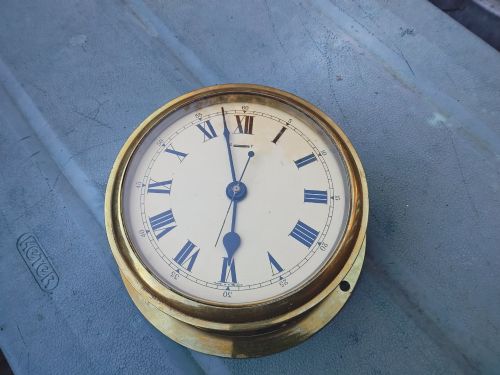
A ships bulkhead clock brings heavy brass cases, enamel dials and maritime history straight into a room.
Ships Bulkhead Clock
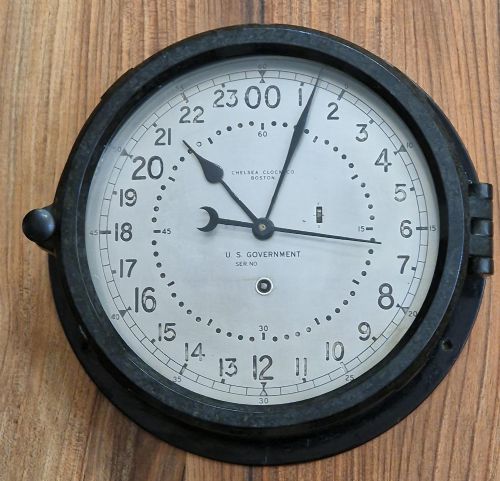
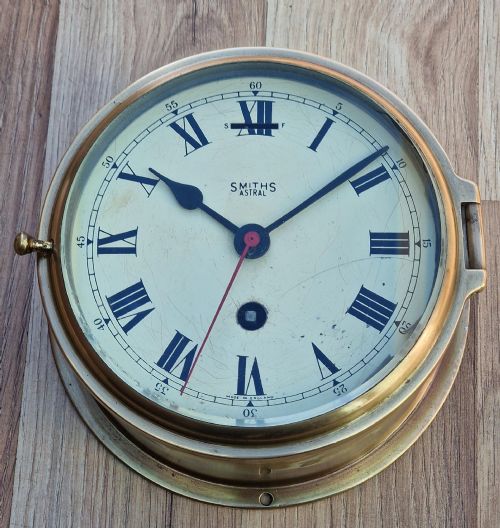
A ships bulkhead clock is a heavy marine timekeeper designed to mount securely to the interior walls of a vessel. When you search for this phrase, you encounter wall clocks and maritime clocks spanning the Victorian era through the mid-century.
The most common versions met on this page are solid brass cased clocks with enamel dials and secure bezel fixings. They originate from makers and patterns associated with naval, commercial and engine room service across the nineteenth and twentieth centuries.
Forms range from standard time-only wall models to complex fusee movements, radio room clocks with coloured segments, and matched bulkhead clock and barometer pairs. These pieces reflect the functional demands of life at sea, built to withstand constant motion and damp environments.
How they were made
Cases are formed predominantly from heavy brass, nickel-plated brass, or chrome, housing sturdy mechanical movements designed to resist marine corrosion. Wood surrounds and steel components also appear in specific military and commercial variants.
Dials typically feature painted or fired enamel with bold numerals for clear legibility in poor light. Bevelled glass covers protect the face, held tightly within threaded or hinged brass bezels.
Complex examples utilise chain fusee movements to maintain even tension as the mainspring winds down. This ensures accurate timekeeping despite the constant pitch and roll of a ship.
Ships Bulkhead Clock Retail Price Guide 2026
Typical asking prices for ships bulkhead clock among the pieces listed under this phrase on Sellingantiques today, from the lower quarter to the upper quarter. They describe what is for sale here now, not the wider market.
Radio room clocks feature red and green dial sectors so operators knew precisely when to stop talking and listen for SOS calls.
What varies in quality
The sophistication of the internal movement dictates the standing of the piece, moving from standard spring-driven mechanisms up to fine chain fusee movements and specialised marine striking systems. The presence of named makers or official military broad arrows alters the historical weight of an example.
The casting thickness of the brass case and the clarity of the enamel dial show the original investment in manufacture. Substantial bezels, heavy glass, and crisp dial lettering distinguish workshop production from mass commercial output.
Prescot Clock Co·Kelvin White and Hutton·Smiths Empire·Schatz of Germany
The Ships Bulkhead Clock Glossary
- Bulkhead
- The upright partition wall inside a ship dividing compartments. Clocks made for these walls feature secure mounting holes and robust cases.
- Fusee movement
- A conical pulley mechanism connected to the mainspring by a chain. It equalizes the driving force as the spring uncoils to improve timekeeping accuracy.
- Bezel
- The metal ring that holds the glass face over the dial. On marine clocks, this is often threaded to screw down tightly against moisture.
- Radio room clock
- A specialised dial layout featuring red and green segments indicating silent periods for listening to maritime distress frequencies.
- Admiralty pattern
- A standardised design specification commissioned for use by the British Royal Navy. These items adhere to strict naval utility requirements.
Ships Bulkhead Clock: Frequently Asked Questions
How do I mount a bulkhead clock?
These clocks typically feature pre-drilled fixing holes in the outer brass flange or a hinged mounting bracket designed to screw securely into wall studs.
Because the metal cases are surprisingly heavy, ensure the fixings take the full weight rather than relying on standard plasterboard anchors.
What is an 8 bells clock?
A traditional marine striking clock that rings the ship's watch schedule rather than standard hours. Eight bells mark the end of a four-hour watch.
This pattern kept crew members oriented to their duty shifts while below deck in windowless quarters.
How do I wind the movement?
Most models require a specialised winding key inserted directly into a small arbor hole on the enamel dial face. Turn the key gently until firm resistance indicates the spring is fully tensioned.
Take care not to overwind older mechanisms, as this places unnecessary strain on the historical mainspring.
How do I date a brass clock?
Examine the dial typography, the style of the case bezel, and any engraved stamps or Ministry marks on the movement backplate. Victorian pieces often house fusee movements, while 1940s examples frequently display military broad arrows.
Comparing the maker's trading name on the dial also provides a reliable window of production.