

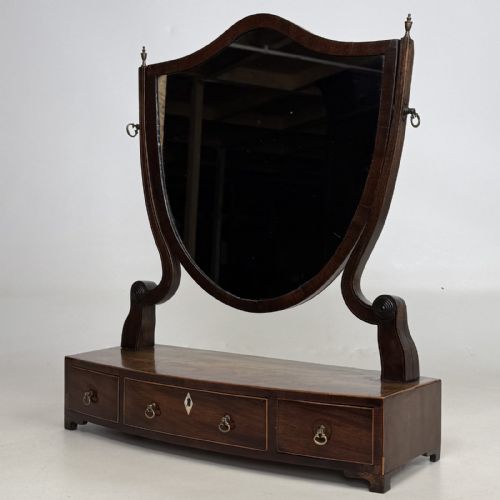
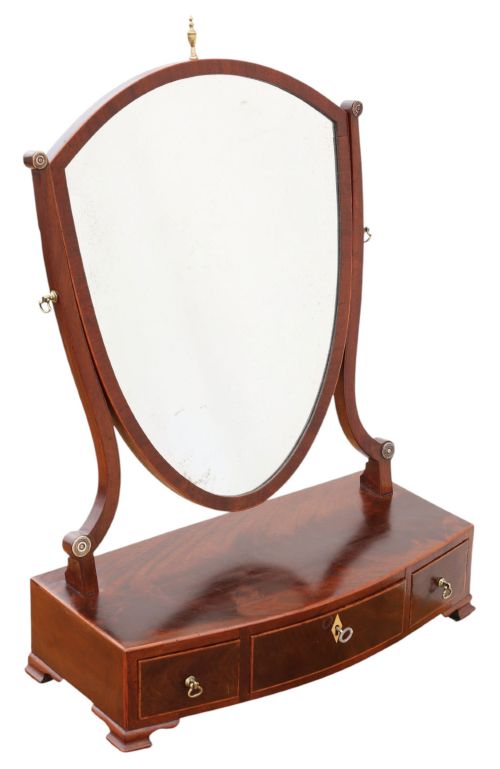
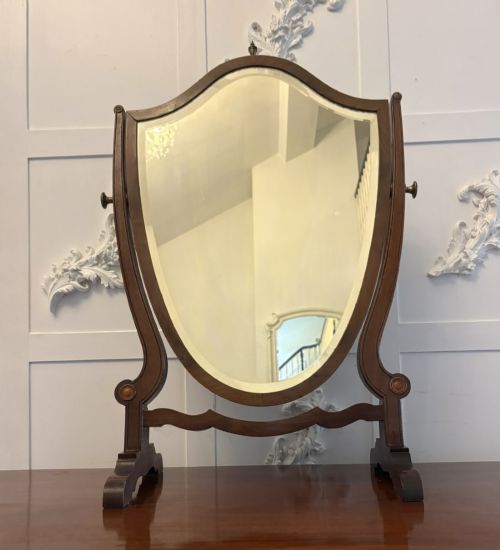
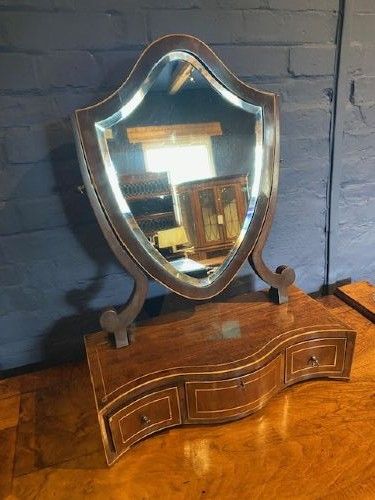
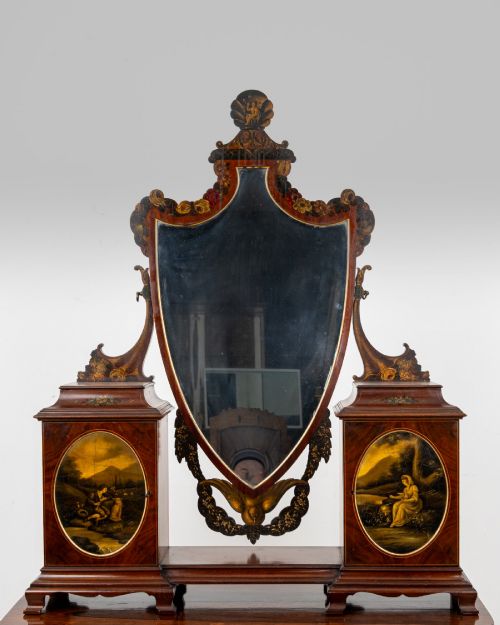
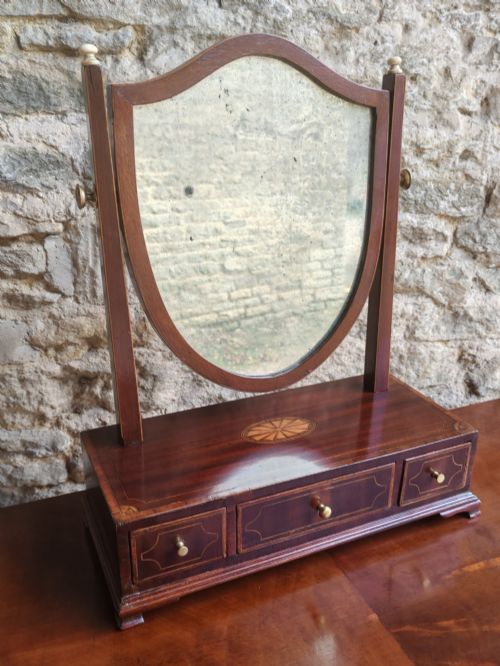


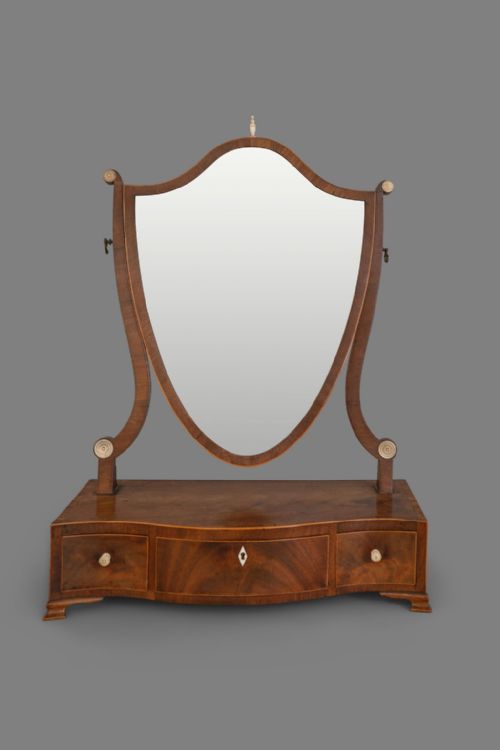


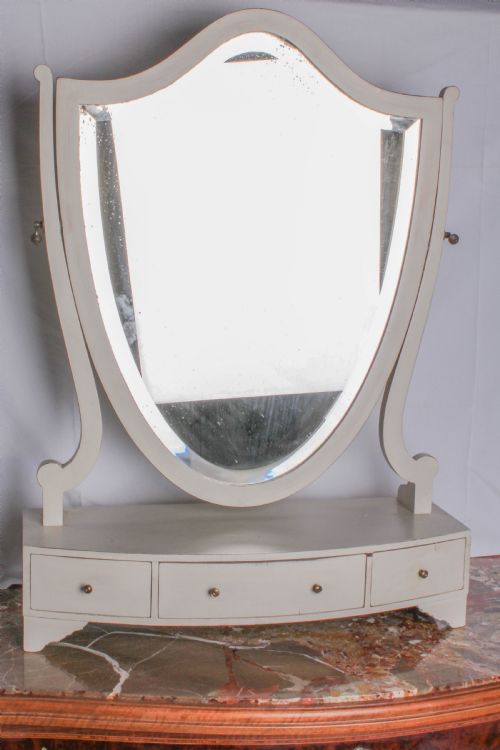


Shield Shaped Dressing Mirror
A shield shaped dressing mirror offers a refined glass surface for the dressing table, combining practical reflection with traditional craftsmanship.
Shield Shaped Dressing Mirror
A shield shaped dressing mirror sits upon tables and chests, designed to adjust on pivots for daily grooming. These table top pieces emerge across the Georgian, Victorian, and Edwardian periods, maintaining a classic form with a distinct curved glass profile.
The pieces on this page appear in forms such as dressing table mirrors, toilet mirrors, and table top cheval mirrors. Mahogany dominates the selection, frequently accompanied by boxwood and satinwood inlay.
Buyers encounter examples spanning from the eighteenth century to the early twentieth century, including revival pieces from the Edwardian era. Each period brings its own interpretation of the proportions and framing style.
How they were made
Cabinetmakers constructed these mirrors using solid and veneered mahogany, often incorporating boxwood and satinwood stringing for linear contrast. Brass fittings secure the adjustable plates to upright arms, allowing the glass to tilt.
Makers shaped the mirror glass into the characteristic serpentine or shield outline, fitting it into slender wooden frames. Some Edwardian examples feature painted wood surfaces, while earlier pieces rely on rich timber grains polished to a smooth finish.
Shield Shaped Dressing Mirror Retail Price Guide 2026
Typical asking prices for shield shaped dressing mirror among the pieces listed under this phrase on Sellingantiques today, from the lower quarter to the upper quarter. They describe what is for sale here now, not the wider market.
Several mirrors incorporate tiny hidden compartments inside their base drawers, designed for keeping small trinkets safe.
What varies in quality
The refinement of the timber and the crispness of the inlay distinguish standard items from finer pieces. Superior examples display carefully chosen mahogany veneers and well-proportioned serpentine bases fitted with small drawers.
The execution of the brass pivoting hardware and the integrity of the original mirror glass also indicate the standard of production. Finer workshop output shows attention to structural joinery in the upright supports and the base.
The Shield Shaped Dressing Mirror Glossary
- Toilet mirror
- A small mirror designed to sit on a dressing table or chest of drawers. These portable pieces became popular during the Georgian period.
- Cheval mirror
- A full length floor standing mirror in a frame with pivoting side supports. Table top versions also appear in Edwardian inventories.
- Serpentine
- A curved line with a convex centre flanked by concave sides. This shape frequently defines the base or drawer fronts of better mirrors.
- Stringing
- A narrow inlay of contrasting wood used to outline panels or edges. Cabinetmakers utilised boxwood and satinwood for this decorative detail.
- Swing mirror
- A mirror plate hung on pivots between two upright posts. This mechanism allows the glass to tilt to various angles.
Shield Shaped Dressing Mirror: Frequently Asked Questions
Where should I place a dressing mirror?
These table top mirrors suit dressing tables, chests of drawers, or sideboards in bedrooms and hallways. Their compact footprint allows them to sit securely on existing furniture.
Ensure the surface is level and stable to support the weight of the frame and pivoting glass plate.
How do I adjust the mirror angle?
Most examples use brass screw caps or pins fitted into the upright support arms. Gently tightening or loosening these fittings controls the tension on the side pivots.
Support the glass frame with one hand while adjusting the hardware to prevent sudden movement or strain on the wood.
How do I tell Georgian from Edwardian pieces?
Georgian mirrors tend to feature heavier mahogany timbers, serpentine drawer bases, and understated joinery. Edwardian pieces often incorporate lighter inlay work, painted surfaces, or revival styling from around nineteen hundred.
Examining the secondary woods and construction methods inside the small drawers helps confirm the period of manufacture.
Are the mirror plates original?
Older mirrors frequently have replacement glass due to the fragility of silvering over centuries. Original glass often shows minor foxing, light oxidation, or subtle imperfections in the reflection.
Replacement glass provides a clearer reflection while retaining the historic wooden frame and brass hardware of the period.