




Sheraton Revival Seat
A sheraton revival seat brings light neoclassical elegance into a room through refined woodwork and delicate decorative inlay.
Sheraton Revival Seat
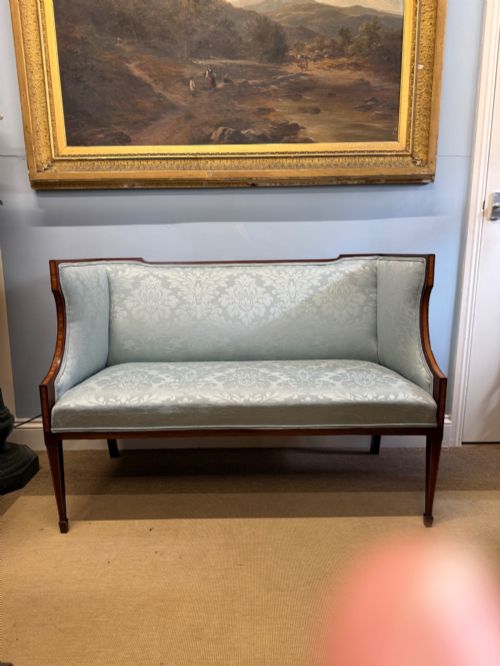
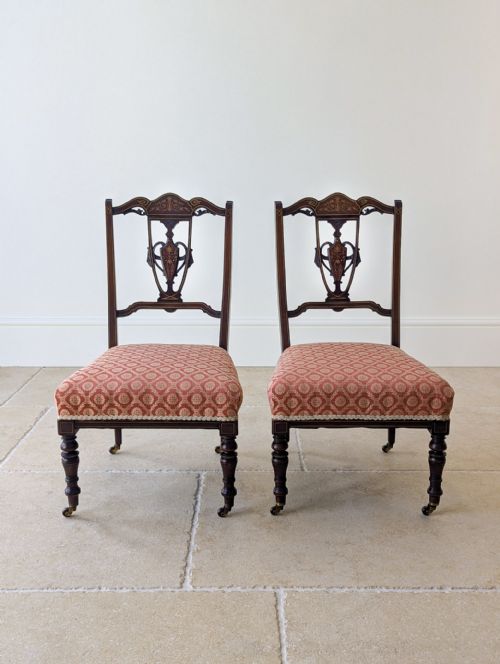
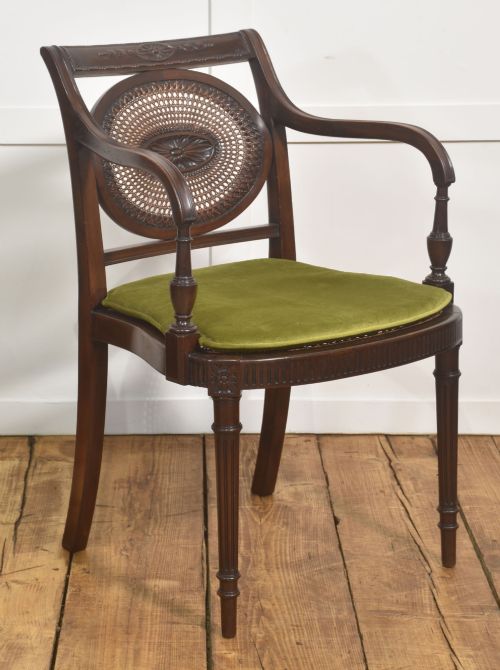
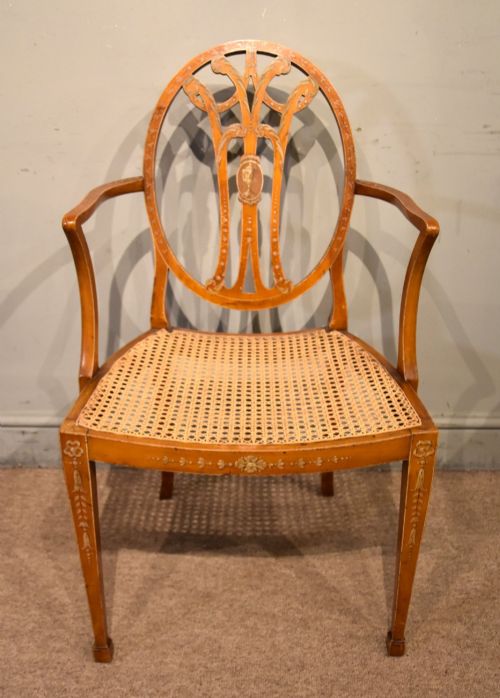
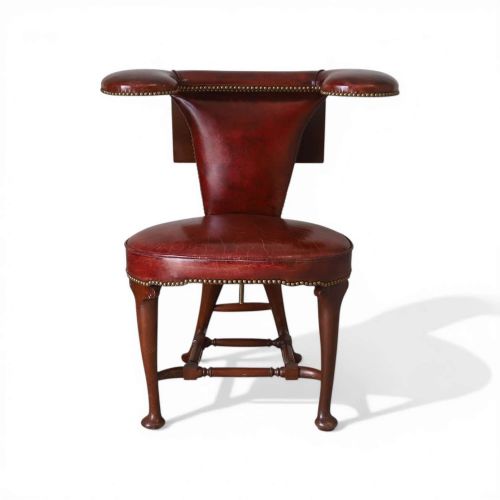
A sheraton revival seat draws on late eighteenth-century design principles to create refined chairs, settees, and stools for period interiors. The pieces appearing here predominantly date from the Edwardian era and the late nineteenth century, spanning various forms from salon chairs to library armchairs.
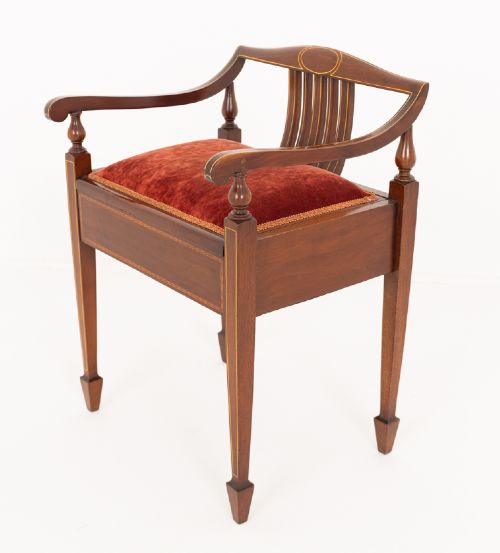
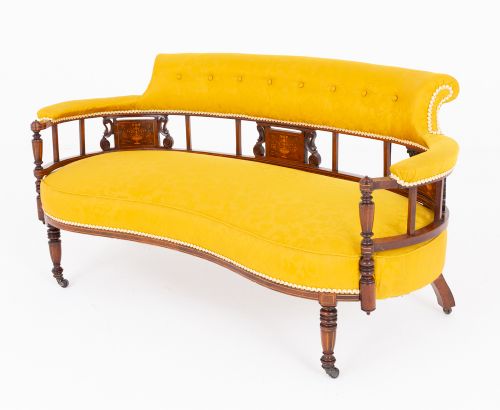
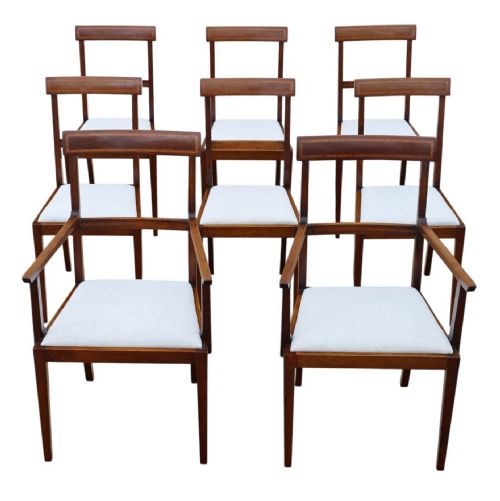
The most common formats on this page include mahogany and satinwood settees, twin-seater sofas, and individual armchairs featuring characteristic neoclassical proportions. Makers of this period frequently produced matching pairs or larger dining sets alongside specialised items like piano stools and window seats.
Materials and construction methods
Makers utilised solid mahogany and satinwood as the primary timber foundations, shaping slender legs and delicate frames that emulate Georgian lightness. Structural integrity relied on traditional joinery supplemented by lighter scantlings appropriate for parlour and bedroom furniture.
Decorative detailing depended heavily on marquetry inlay and satinwood banding, alongside hand-painted motifs and cane work panels. Upholstery materials ranged from plain fabrics and velvet to leather inserts on designated desk and reading chairs.
The listings feature mahogany and satinwood predominantly, alongside marquetry inlay and cane work spanning the late nineteenth and early twentieth centuries.
Assessing quality in execution
The distinction between ordinary and superior pieces rests upon the crispness of the inlay work and the selection of figured timber veneers. Finer examples display meticulous hand-painted details and dense, well-matched mahogany grains rather than printed or superficial ornamentation.
Structural refinement separates standard production from exceptional workshop output, visible in the grace of the carved details and the rigidity of slender frames. Superior upholstery foundations and original brass or cast fittings further elevate the standing of an individual chair or settee.
Brights of Nettlebed
The Sheraton Revival Seat Glossary
- Sheraton Revival
- A design movement spanning the late Victorian and Edwardian periods that reinterpreted the light, neoclassical furniture forms associated with designer Thomas Sheraton.
- Marquetry Inlay
- Decorative patterns formed by fitting contrasting veneers into prepared recesses within the primary wood surface to create geometric or floral motifs.
- Satinwood
- A lustrous, fine-grained tropical hardwood native to India and Ceylon, frequently employed for light-coloured panels and stringing lines on Edwardian furniture.
- Bergere
- An enclosed upholstered armchair featuring exposed wooden frames and woven cane panels along the back and sides.
- Window Seat
- An elongated stool or bench designed specifically for placement beneath a bay window, typically featuring low arms at either end.
Sheraton Revival Seat: Frequently Asked Questions
What defines a sheraton revival seat?
These pieces emulate the graceful neoclassical lines, straight tapered legs, and balanced proportions popular in the late eighteenth century but manufactured during the Victorian and Edwardian eras. They rely on light timbers and subtle decorative elements rather than heavy carving.
Craftsmen adapted original Georgian forms for contemporary Victorian and Edwardian homes, producing versatile seating options ranging from small bedroom chairs to full double settees.
Where were these seats used?
Owners placed these lighter chairs and settees in formal drawing rooms, parlours, and bedrooms where heavy Victorian furnishings would have appeared too dark or dominant. Their portable nature suited them to intimate conversation areas.
Specialised variants like piano stools, library armchairs, and window seats fulfilled specific domestic functions while maintaining a cohesive aesthetic throughout the home.
How do I date a piece?
Dating relies on timber selection, construction methods, and secondary woods combined with stylistic markers characteristic of the late nineteenth and early twentieth centuries. Edwardian examples often feature brighter satinwood highlights and machine-assisted finishing.
Late Victorian iterations tend to utilise deeper mahogany tones and heavier internal framing while retaining the neoclassical vocabulary associated with the revival style.
How should I care for satinwood?
Protect fine satinwood and inlaid surfaces from direct sunlight and extreme humidity fluctuations to prevent veneer lifting and timber fading. Regular dusting with a dry, soft cloth maintains the natural lustre of the polished finish.
Avoid applying modern silicone polishes, opting instead for traditional microcrystalline wax applied sparingly when the wood requires nourishment.