
Sheraton Marquetry Cabinet
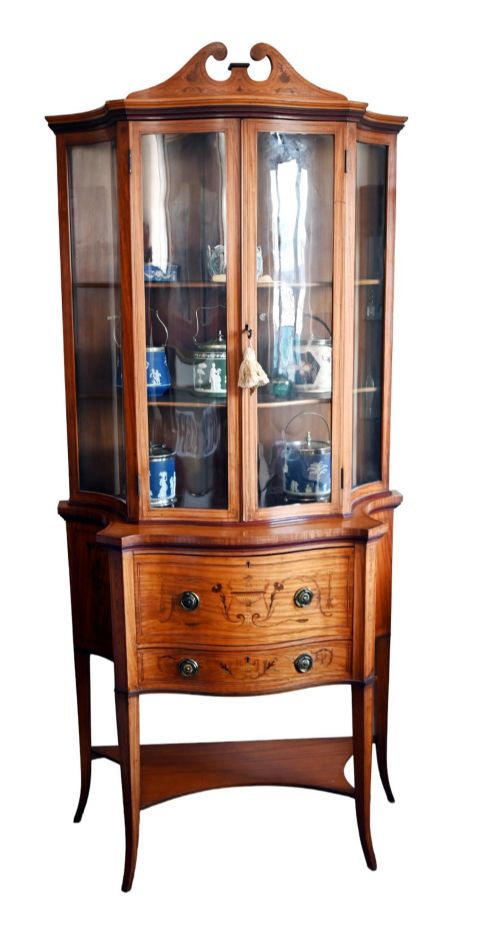
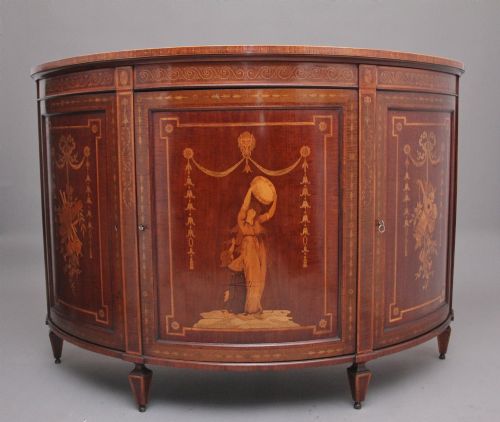
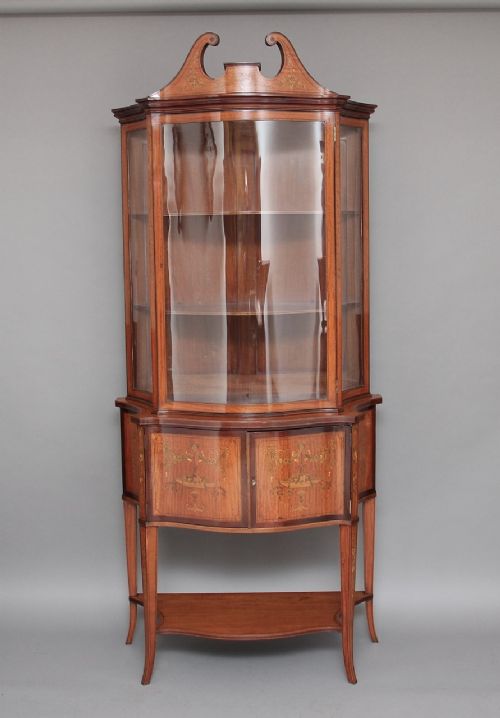
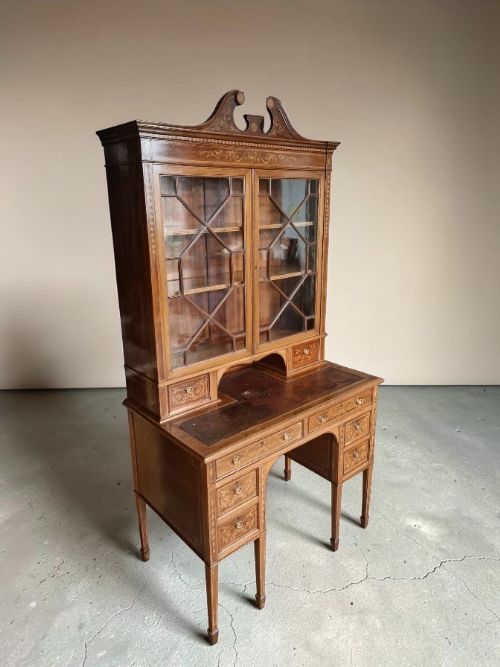
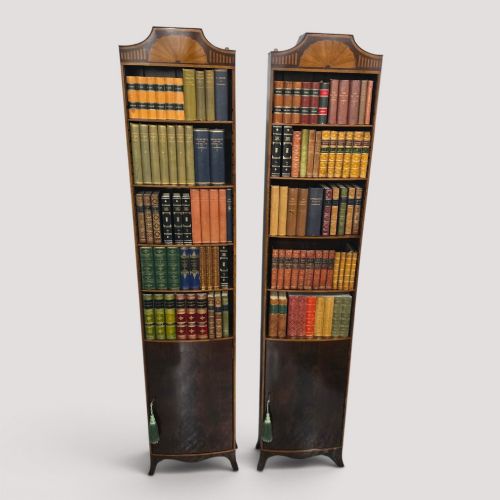
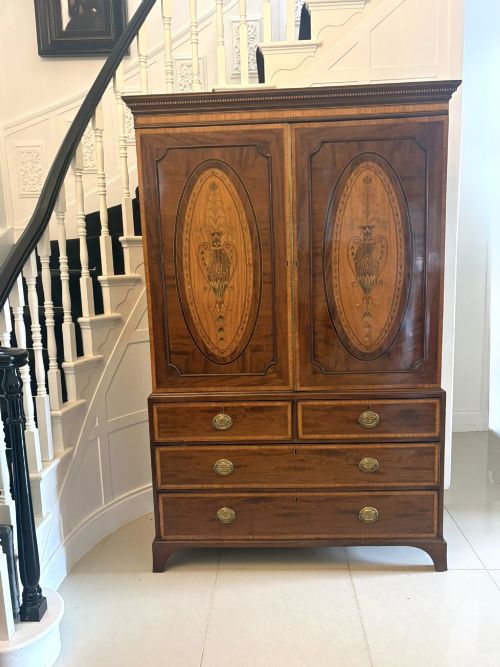
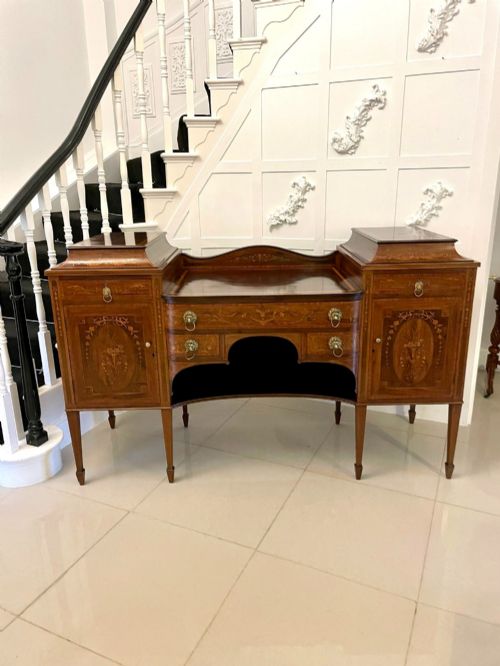
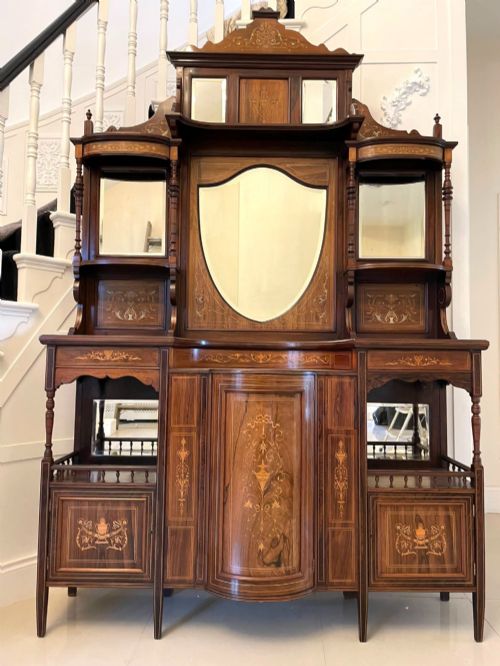
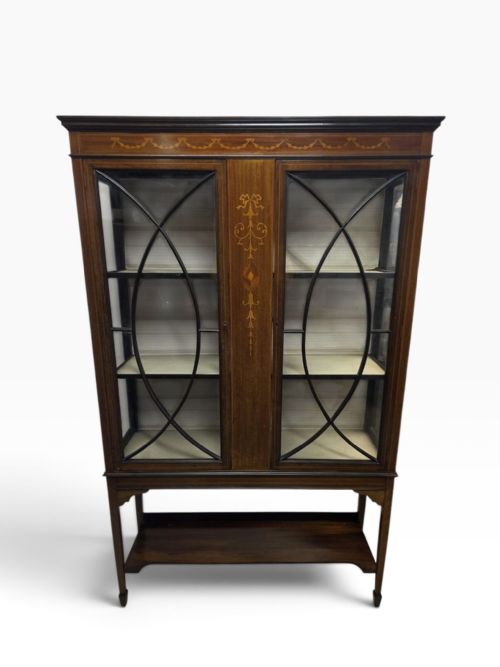
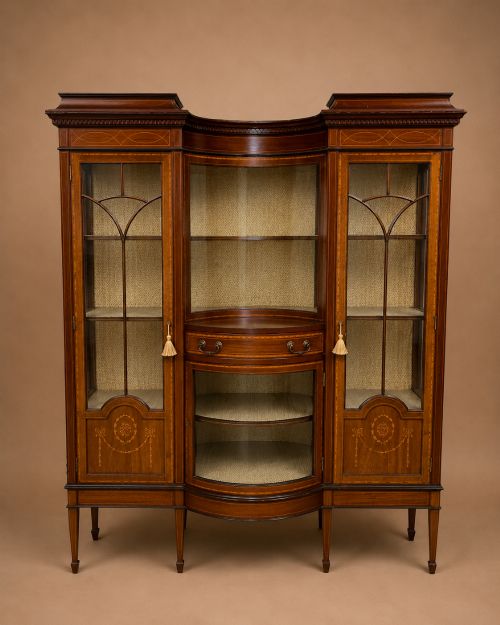
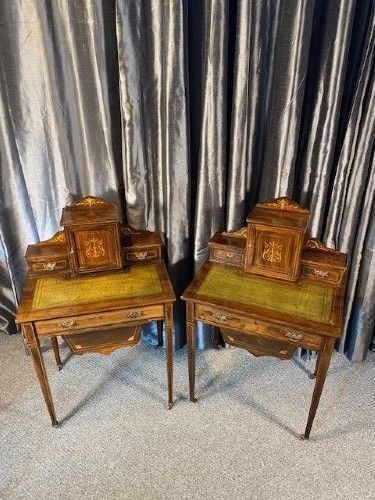
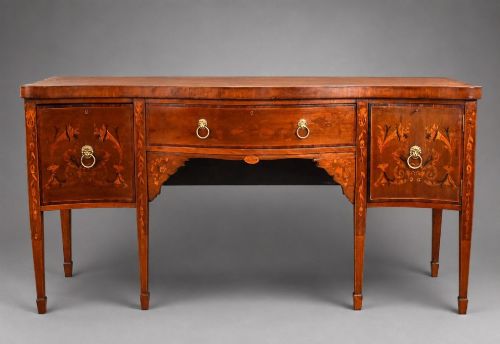
These pieces take the classic forms of a sheraton marquetry cabinet, offering refined floral inlays and polished timbers for a formal room.
Sheraton Marquetry Cabinet
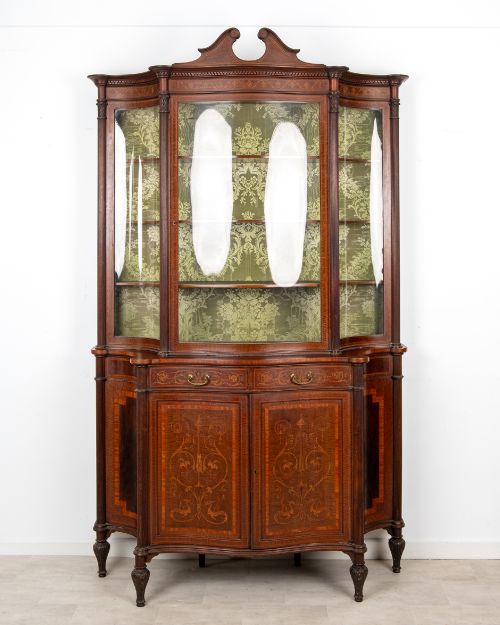
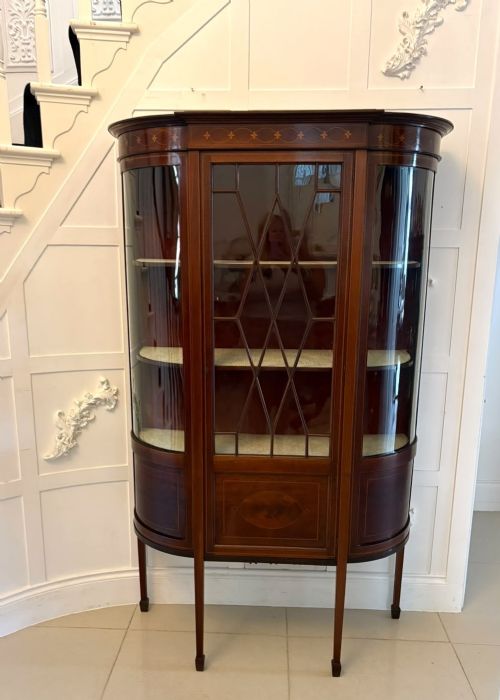
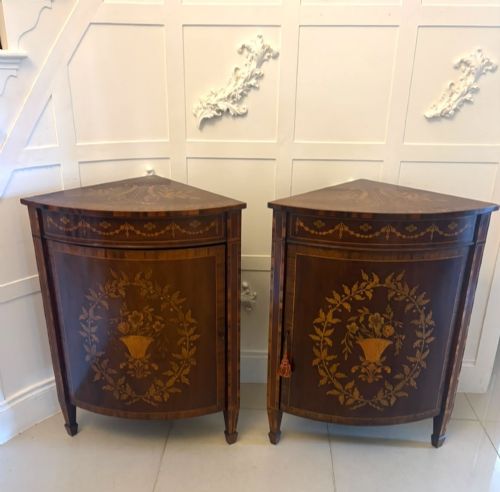
A sheraton marquetry cabinet brings together neoclassical proportions and intricate wood veneers, taking forms such as display cabinets, corner cabinets, side cabinets, and sideboards. These furnishings emerge across the eighteenth, nineteenth, and early twentieth centuries, spanning the Georgian, Victorian, and Edwardian eras.
Buyers most frequently encounter Edwardian and late nineteenth-century pieces executed in the Sheraton Revival style. These later interpretations adopt the lighter satinwood and mahogany grounds and floral motifs established in the eighteenth century, adapted for domestic display and storage.
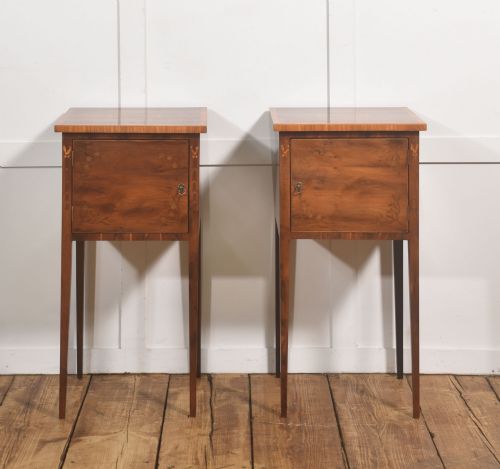
The selection also accommodates larger functional items like linen presses and compact bedside pieces alongside glazed display furniture. Each variation utilises inlaid timbers to create decorative urns, ribbons, or floral sprays across the front and sides.
Materials and Construction
Makers construct the primary carcase using stable timbers such as mahogany, rosewood, and harewood, providing a strong foundation for decorative work. Workshops then apply fine veneers of satinwood and exotic woods to the exterior surfaces.
Marquetry panels utilise contrasting timbers, boxwood, and mirror glass elements, cut and fitted by hand into intricate pictorial arrangements. Brass mounts and glazing bars complete the structure, particularly on display and corner cabinets.
Listings feature mahogany, satinwood, and rosewood across Georgian, Victorian, and Edwardian periods.
Distinctions in Quality
Quality rests upon the precision of the marquetry cutting and the choice of timbers used across the carcase and veneers. Finer examples display tight, seamless joins in the inlay work and balanced grain patterns in the satinwood or mahogany.
Makers marked by established firms demonstrate superior cabinet-making through refined internal construction, well-fitted doors, and crisp brass hardware. Simpler pieces rely on standard commercial production methods of the later periods while retaining the characteristic style.
Hewetsons London·Edwards and Roberts·Maple and Co·Druce and Co·James Hicks
The Sheraton Marquetry Cabinet Glossary
- Marquetry
- Decorative veneer work forming pictures or patterns using various coloured woods. Craftsmen assemble these pieces onto a paper backing before gluing them to the carcase.
- Satinwood
- A lustrous, hard timber with a golden yellow sheen, frequently used for veneering fine eighteenth and nineteenth-century furniture. It forms the pale ground common in Sheraton Revival designs.
- Sheraton Revival
- A late nineteenth and early twentieth-century style imitating the light, neoclassical furniture of the eighteenth-century designer Thomas Sheraton. It incorporates satinwood, painted details, and marquetry.
- Linen Press
- A tall piece of furniture featuring sliding trays or shelves enclosed by doors above a set of lower drawers. They often incorporate mahogany and inlaid decoration.
- Astragal Glazing
- Wooden bars dividing glass panes within a cabinet door into smaller geometric sections. This technique shapes the front of display and corner cabinets.
Sheraton Marquetry Cabinet: Frequently Asked Questions
What is a sheraton marquetry cabinet?
A sheraton marquetry cabinet is a piece of furniture featuring neoclassical lines, symmetrical forms, and detailed wood inlay. These cabinets serve to store and display precious objects or domestic linens while adding decorative warmth to a room.
They appear in various formats including corner cabinets, side cabinets, and tall display units. The style draws on eighteenth-century design principles executed across several subsequent eras.
How do I identify a revival period piece?
Revival pieces typically date from the late nineteenth or early twentieth century, reflecting the tastes of the Victorian and Edwardian eras. They employ machine-assisted efficiency alongside traditional hand-craftsmanship in their marquetry.
Examination of the secondary woods, internal construction methods, and hardware helps distinguish these later interpretations from eighteenth-century originals. The timber finishes and backboards often provide clear chronological indicators.
Where should I place a corner cabinet?
A corner cabinet fits into unused wall angles, making efficient use of space in dining rooms, hallways, or drawing rooms. Glazed versions allow for the display of ceramics or glassware.
These pieces draw the eye to neglected architectural junctions while offering enclosed shelving. Their compact footprints suit rooms where floor space is limited.
How do I care for satinwood veneer?
Satinwood veneer requires protection from direct sunlight and excessive moisture to prevent fading and lifting. Regular dusting with a soft, dry cloth preserves the polished surface.
Applying appropriate furniture wax occasionally helps maintain the lustre of the timber. Avoiding placement near heat sources prevents the wood from drying out.