



Shell Painted Porcelain
Shell painted porcelain brings together marine forms and botanical details across Georgian and Victorian tableware.
Shell Painted Porcelain
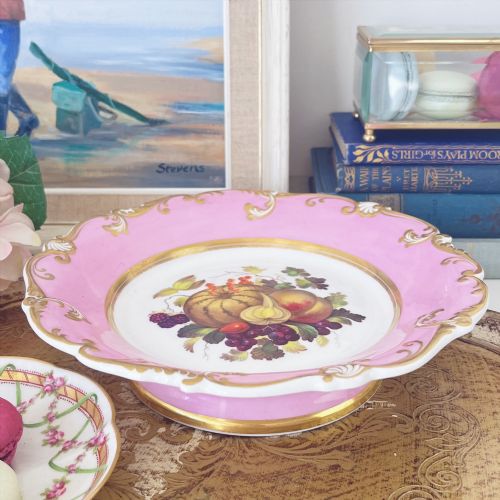
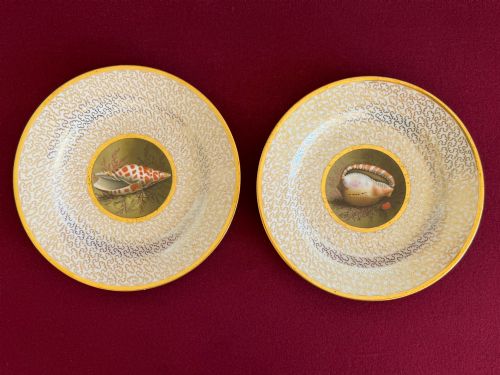
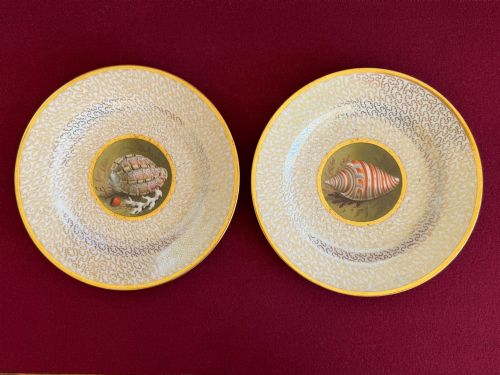
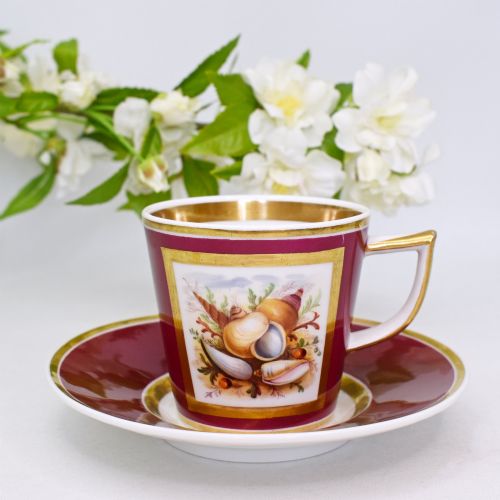
When you search for shell painted porcelain, you find cabinet plates, comports, dessert dishes, and cream boats shaped or painted around marine and botanical themes. These pieces span the 18th century, Georgian, Regency, and Victorian periods, reaching into the early 20th century.
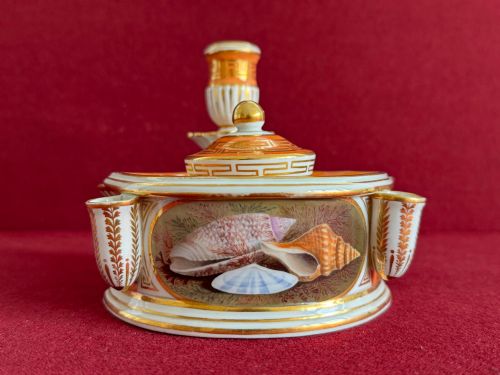
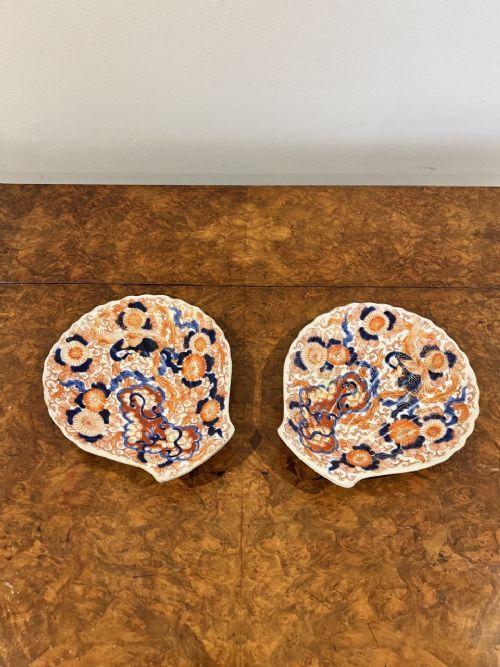
You are most likely to meet Worcester porcelain plates and dishes from the Regency and Georgian eras, alongside Japanese Imari shell shaped plates and Royal Worcester blush ivory pieces. Forms range from simple footed comports to dolphin ewer cream boats and inkstands.
Maker traditions visible in these listings include Worcester factories such as Flight and Barr, Barr, Flight and Barr, Chamberlain, and First Period Worcester, alongside H & R Daniel, Rockingham, and Royal Worcester.
Materials and construction
Pieces combine hard and soft-paste porcelain with bone china bodies, shaped into moulded marine contours such as shell edges, fluted bowls, and dolphin handles. Handpainted motifs feature floral sprays, pink grounds, and landscapes.
Decoration relies on careful enamel application supplemented by gold leaf and gilding to accentuate edges, rims, and moulded details. Firing techniques accommodated intricate shapes like inkstands, lidded vases, and centrepieces with cherubs.
Shell Painted Porcelain Retail Price Guide 2026
Typical asking prices for shell painted porcelain among the pieces listed under this phrase on Sellingantiques today, from the lower quarter to the upper quarter. They describe what is for sale here now, not the wider market.
A porcelain lamprey acts as a handle on an 18th century cream boat.
Distinctions in quality
Quality rests upon the crispness of the porcelain moulding, particularly where vessels take organic forms like shell edges, fluted basins, and lamprey handles. Finer examples maintain sharp definition in both the clay body and the applied gilding.
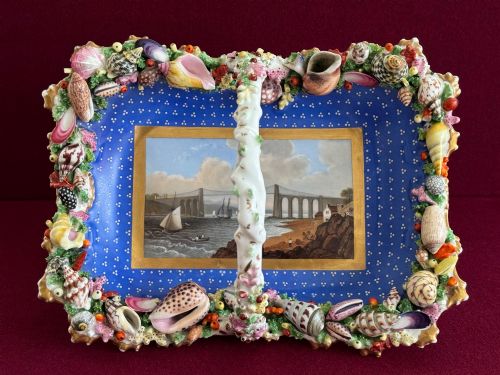
The finesse of the handpainting dictates the upper tier of pieces, showing disciplined brushwork in floral sprays, fruit studies, and topographical views like the Menai bridge. Ground colours, such as pink grounds or blush ivory, show varying levels of evenness and saturation.
Flight and Barr·Barr Flight and Barr·Royal Worcester·Rockingham·H and R Daniel·Chamberlain Worcester
The Shell Painted Porcelain Glossary
- Soft-Paste Porcelain
- An early ceramic composition fired at lower temperatures than hard-paste porcelain, often found on 18th century English pieces. It yields a warmer texture beneath the glaze.
- Comport
- A raised serving dish used in dessert services, sometimes called a tazza. They feature prominently in 19th century table settings.
- Gilding
- The application of gold leaf or gold paint to ceramic surfaces for decorative emphasis. It highlights rims, handles, and painted borders.
- Ewer
- A pitcher or jug with a wide spout and shaped handle, often modelled after classical or marine forms like dolphins.
- Imari
- A style of Japanese porcelain featuring a palette of underglaze blue, iron red, and gold. European makers frequently copied these distinct patterns.
Shell Painted Porcelain: Frequently Asked Questions
What is a shell shaped plate?
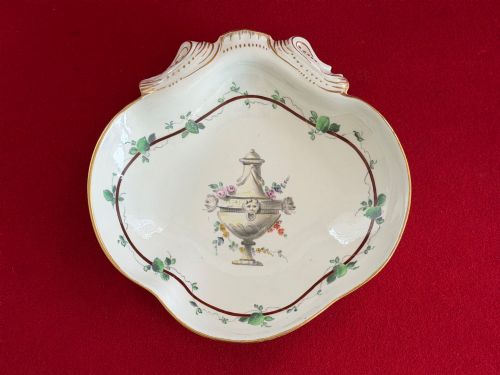
Shell shaped plates are decorative tableware pieces moulded to mimic the fluted, curving geometry of sea shells. Makers in the Georgian and Victorian eras used this natural form for dessert dishes and cabinet plates.
These items frequently combined functional service with sculptural display, often highlighted with gold leaf or handpainted botanical motifs.
How do I date Worcester porcelain?
Dating Worcester porcelain involves examining the paste, glaze characteristics, and factory marks underneath the piece. Different partnerships, from First Period to Flight and Barr, used distinct variations of script and crescent marks.
Stylistic shifts from neoclassical Regency designs to later Victorian floral work also help narrow the manufacturing decade.
What was a comport used for?
Comports served as elevated presentation vessels on formal dining tables during the 18th and 19th centuries. They held fruit, sweetmeats, or small desserts as part of multi-course dessert services.
Their raised stature provided visual variety and vertical interest across elaborate table settings.
How do I care for antique porcelain?
Antique porcelain requires gentle hand washing in lukewarm water with mild soap, avoiding harsh scrubbing or dishwashers. Protecting the surface from sudden temperature shocks prevents stress to the old body and glaze.
Displaying pieces away from direct sunlight preserves the handpainted enamels and gold leaf over time.