

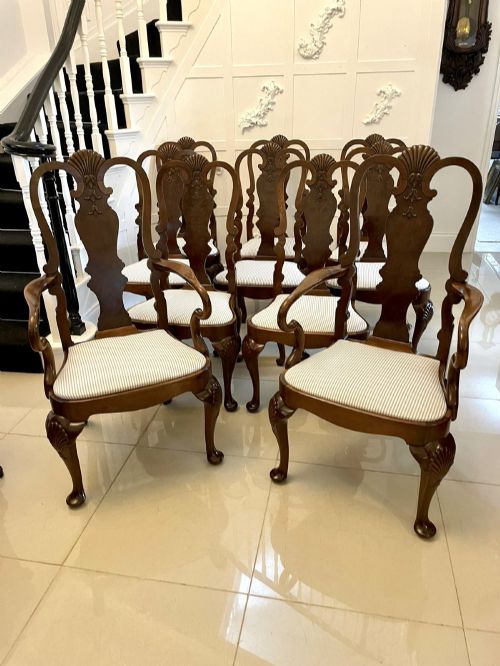
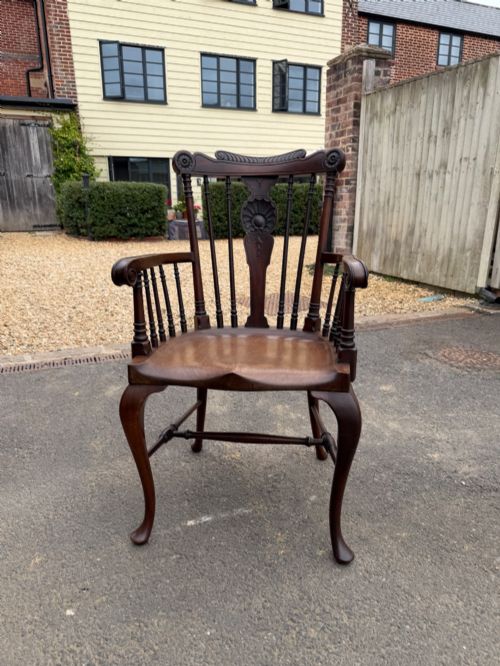
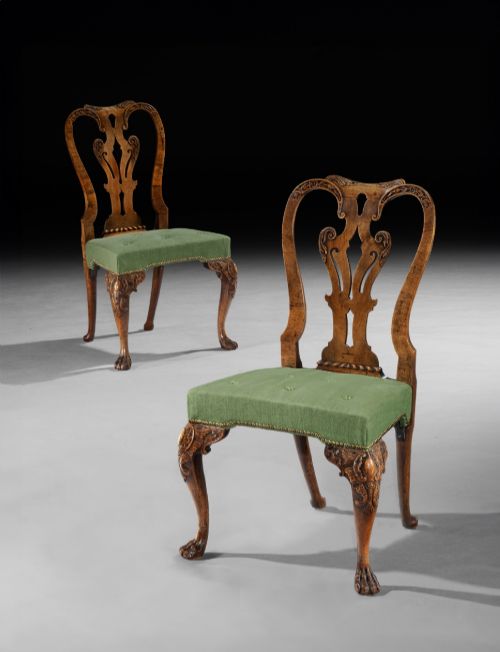
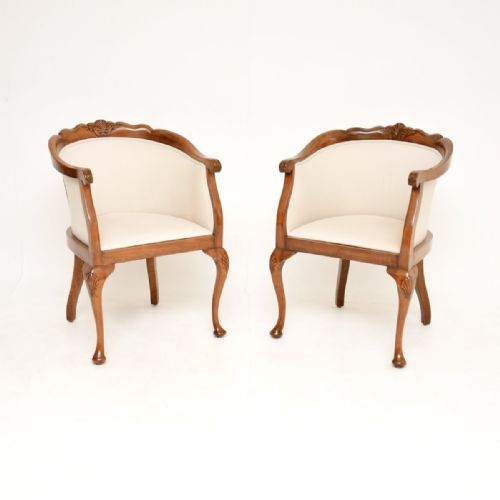


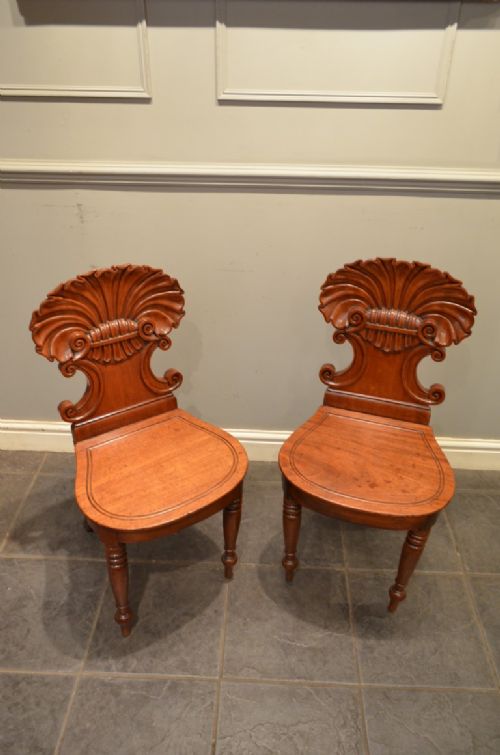

Shell Carved Leg Chair
These shell carved leg chair options combine classical timber frames with sculptural shell motifs, offering collectors robust seating with distinctive period character.
Shell Carved Leg Chair
A shell carved leg chair brings together structural timber seating and ornate leg ornamentation, encompassing forms from dining chairs to armchairs. Buyers searching for a shell carved leg chair typically encounter walnut and mahogany examples spanning the eighteenth century through to twentieth-century revivals.
The selection ranges from George II side chairs and nineteenth-century hall chairs to Queen Anne style tub armchairs and revolving desk chairs. Walnut and mahogany predominate across these pieces, often paired with textile, tapestry upholstery, velvet, fabric, or brass details.
How they were made
Cabinetmakers constructed these frames using dense hardwoods like walnut and mahogany, shaping the timber to support carved ornamentation on the legs and backs. Joinery relied on traditional framing techniques to ensure stability across heavy dining chairs and lighter hall seating.
Upholstered variants integrated textile, tapestry upholstery, velvet, or fabric secured over internal padding, whilst un-upholstered timber versions displayed exposed carved wooden surfaces. Brass fixtures occasionally appeared on specialised seating forms like desk chairs.
Shell Carved Leg Chair Retail Price Guide 2026
Typical asking prices for shell carved leg chair among the pieces listed under this phrase on Sellingantiques today, from the lower quarter to the upper quarter. They describe what is for sale here now, not the wider market.
Current listings feature mahogany and walnut timbers across dining chairs, armchairs, hall chairs, and footstools spanning the eighteenth to twentieth centuries.
What varies in quality
Quality rests upon the crispness of the timber carving, particularly the depth and definition achieved in the shell motifs upon the legs and frames. Superior examples display harmonious proportions between the decorative elements and the structural timber.
The choice of primary wood and the integrity of the original framing significantly influence the overall standard of the piece. Consistency in period revival details or eighteenth-century construction marks the distinction between ordinary seating and exceptional pieces.
The Shell Carved Leg Chair Glossary
- Queen Anne Style
- A design movement characterised by pad feet, cabriole legs, and curved lines. It heavily influenced later twentieth-century revival pieces seen in walnut.
- Cabriole leg
- A furniture leg that bends out in a convex curve and tapers inward to a concave curve, frequently featuring carved shell motifs at the knee.
- Hall chair
- A rigid wooden seat traditionally placed in entrance halls, often featuring carved backs or wooden panels rather than soft upholstery.
- George II
- An eighteenth-century English design period noted for robust walnut furniture with rich carving and substantial proportions.
Shell Carved Leg Chair: Frequently Asked Questions
What periods do these chairs come from?
The selection includes authentic eighteenth-century items alongside nineteenth-century pieces and early twentieth-century revivals. Makers across these different eras adopted traditional walnut and mahogany timbers.
Specific styling cues help distinguish genuine period items from later revival interpretations. Examining the timber construction and carving depth clarifies the era of manufacture.
How were shell carved chairs used historically?
Dining chairs and side chairs provided formal seating around dining tables and in reception rooms. Hall chairs served visitors in entrance spaces, whilst armchairs offered domestic comfort.
Desk chairs and revolving variants fulfilled practical workspace requirements. Stools and footstools provided auxiliary seating and support alongside larger armchairs.
Are these chairs suitable for daily use?
Robust hardwood frames in walnut and mahogany provide sturdy structural support for regular seating. Many examples feature upholstered pads in fabric, velvet, or tapestry.
Placement should account for timber sensitivity to direct sunlight and extreme humidity changes. Regular gentle care preserves both the polished wood and the upholstered textiles.
How do I identify a revival piece?
Twentieth-century revival items replicate earlier eighteenth-century aesthetics, utilising period styles like Queen Anne or George II. These pieces combine older design vocabulary with twentieth-century construction methods.
Comparing timber patination and carving sharpness against documented historical examples assists in dating. Revival pieces often show consistent twentieth-century workshop practices beneath traditional styling.