





Sheffield Silver Candelabrum
These heavy, branching light-holders bring tactile Georgian and Victorian grace to a dining table.
Sheffield Silver Candelabrum
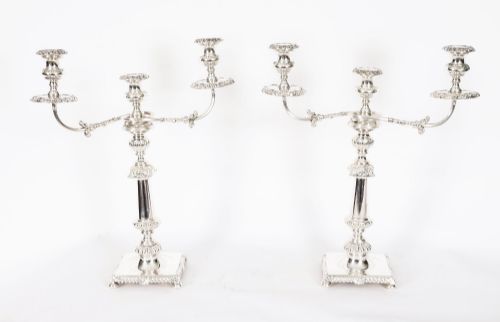
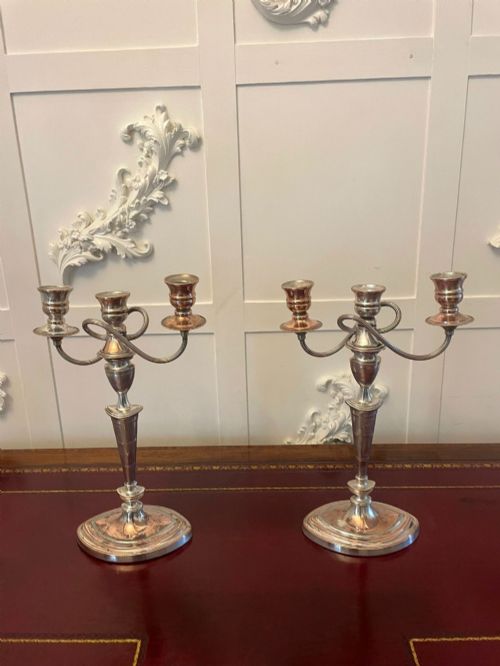
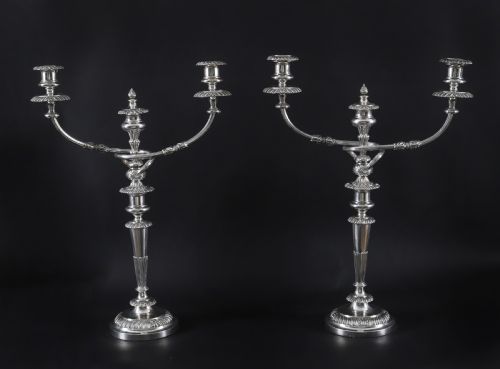
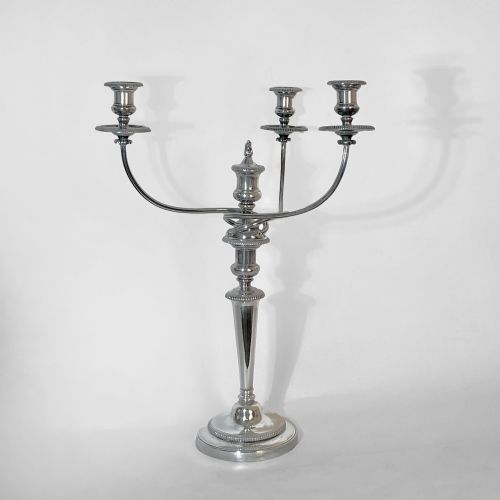
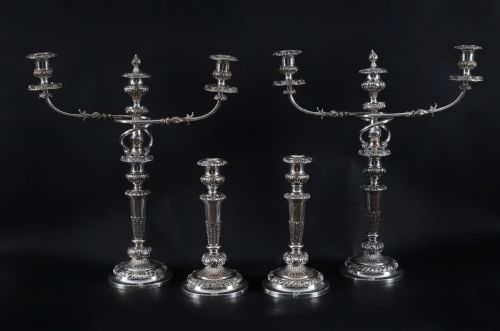
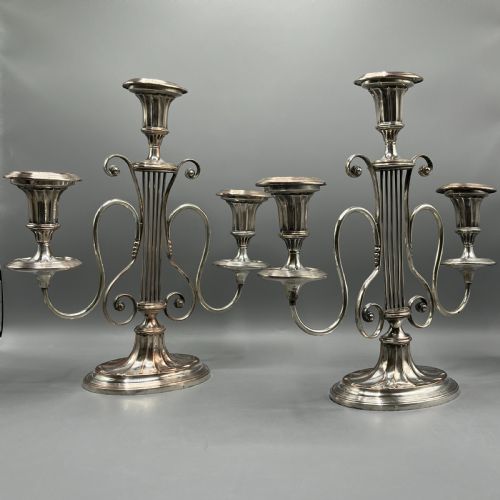
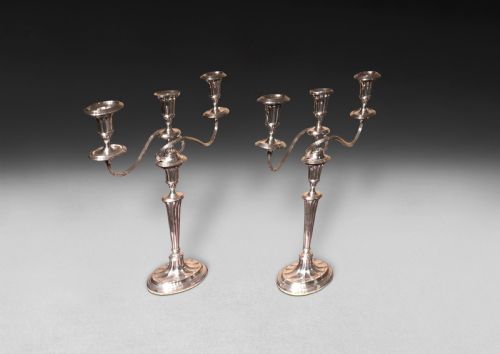
When you search for a sheffield silver candelabrum, you encounter multi-light branch fixtures designed to hold candles above a central column and heavy base. The pieces on this page span from the eighteenth century into the twentieth, taking forms such as standard three-light candelabra, four-piece suites, and convertible candlesticks.
Georgian and Regency examples tend to show classical proportions, including lyre shapes and neoclassical urn motifs, whilst Victorian pieces often lean towards naturalistic ornamentation. You will find pairs and grand single centerpieces ranging from compact nineteenth-century designs up to thirty-inch Elkington productions.
Most items grouped under this description utilise silver plating over a base metal rather than solid silver throughout. This manufacturing tradition gives the objects their distinctive weight and structure, identifying them as products of the Sheffield workshops that developed these layered metal techniques.
Materials and construction methods
Old Sheffield plate fuses a thin sheet of silver onto a thicker copper core by heat and pressure before rolling, allowing smiths to work the composite metal into complex hollow forms. Makers also utilised standard silver plate and electroplated nickel silver on later Victorian iterations.
Branches, nozzles, and drip pans were cast separately and soldered or screwed into place atop weighted bases. This modular construction enabled workshops to combine standard candlesticks with detachable branch units to form three or four-light candelabra.
Sheffield Silver Candelabrum Retail Price Guide 2026
Typical asking prices for sheffield silver candelabrum among the pieces listed under this phrase on Sellingantiques today, from the lower quarter to the upper quarter. They describe what is for sale here now, not the wider market.
Object configurations include paired candlesticks, three-light candelabra, and large four-piece dining suites alongside palm tree centrepiece dishes.
Judging quality and execution
The distinction between standard production and top-tier work rests on the crispness of the chased and embossed detail. Superior pieces retain sharp leaf tips, distinct fluting, and securely fitted branches that do not wobble under the weight of the drip pans.
Wear patterns reveal the underlying metal through the silver layer in characteristic ways. Fine craftsmanship shows careful conservation of the plate, whereas lesser pieces suffer from excessive repolishing that strips the silver surface entirely from high points and edges.
Matthew Boulton·Blagden Hodgson And Co·Elkington
The Sheffield Silver Candelabrum Glossary
- Old Sheffield plate
- A composite material made by fusing silver and copper together before shaping. It differs from later electroplate by showing copper edges where the sheets meet.
- EPNS
- Electroplated nickel silver. This baseline metal alloy substrate replaced older fusing methods during the nineteenth century.
- Candelabra
- A branched candlestick holder designed to support multiple candles simultaneously. The upper branches are frequently detachable to allow single-candle use.
- Drip pan
- A small removable collar fitted beneath the candle nozzle to catch melting wax. Quality examples match the decorative chased motifs of the base.
Sheffield Silver Candelabrum: Frequently Asked Questions
Are the branches removable?
Many period pieces feature a central drop-in nozzle or screw fitting that allows the multi-light branch assembly to be lifted off. This converts the candelabrum into a pair of standard candlesticks.
Check the socket carefully before lifting, as some Victorian and Georgian examples were manufactured as permanent fixed units.
Why can I see copper through the silver?
Old Sheffield plate involves fusing a thin layer of silver onto a copper base. Centuries of polishing gradually wear down this outer silver skin along raised edges and high points.
This telegraphing of the copper beneath is often accepted by collectors as proof of genuine period manufacture rather than modern electroplating.
How do I tell Georgian from Victorian pieces?
Georgian and Regency designs favour restrained neoclassical lines, urn forms, and crisp gadrooned borders. They often utilise traditional fused plate methods.
Victorian pieces introduce heavier naturalistic decoration, cast floral motifs, and later manufacturing techniques like electroplating on nickel silver.