



Sheffield Silver Candelabra
Sheffield silver candelabra are substantial multi-light table centrepieces that bring formal Georgian and Victorian illumination to any dining room.
Sheffield Silver Candelabra
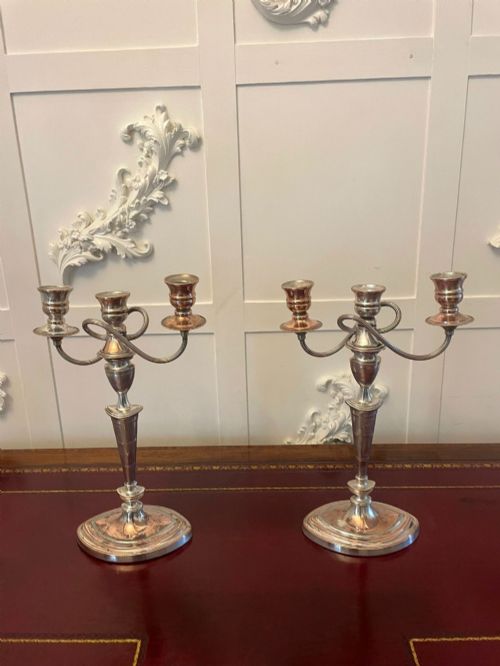
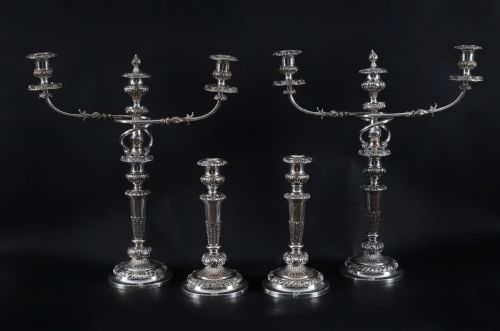
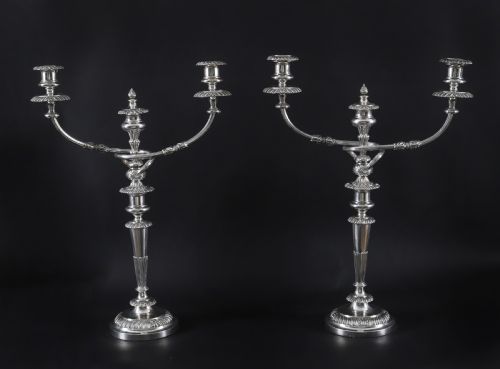
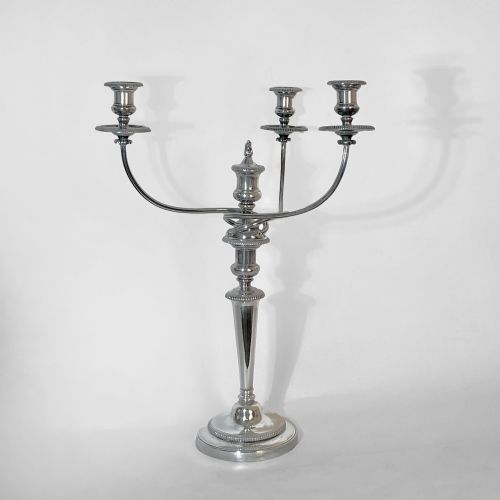
When buyers search for sheffield silver candelabra, they encounter large multi-light lighting pieces originating from the eighteenth and nineteenth centuries. These items take the form of heavy pairs or grand suites designed to hold three or more candles for dining table illumination.
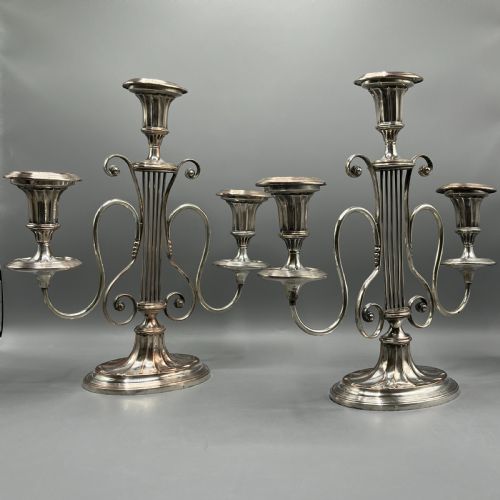
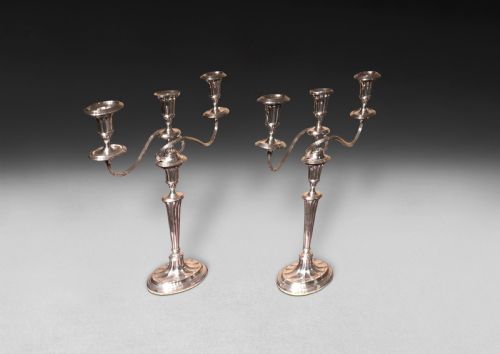
The pieces on this page span the Georgian, Regency, and Victorian periods, alongside later Victorian interpretations. Buyers will frequently find three-light and four-light examples, including circular bases, lyre-shaped designs, and palm tree centrepiece combinations.
Makers and manufacturers represented across these listings include notable firms such as Matthew Boulton, Elkington, and Blagden, Hodgson and Co. Forms range from restrained neoclassical lines to heavily ornamented Victorian naturalism.
Construction and materials
The manufacturing technique relies heavily on Old Sheffield Plate and silver plate, where a thin layer of silver is fused to a copper core. This method produces durable items that show characteristic copper bleed through the surface over time.
Makers also utilise standard silver plate and EPNS alongside solid silver elements for structural components and decorative mounts. Workshops employed casting, hammering, and detailed chasing to achieve neoclassical motifs and ornate Victorian foliage.
Sheffield Silver Candelabra Retail Price Guide 2026
Typical asking prices for sheffield silver candelabra among the pieces listed under this phrase on Sellingantiques today, from the lower quarter to the upper quarter. They describe what is for sale here now, not the wider market.
Listings feature pieces spanning the Georgian, Regency, and Victorian eras, utilising Old Sheffield Plate, copper, and silver plate.
Assessing craftsmanship and condition
Quality in these candelabra rests on the crispness of the cast ornamentation and the integrity of the original plating over the copper base. Finer examples retain deep, sharp chasing on the foliage and sconces without excessive wear revealing the underlying metal.
Proportion and scale also separate standard items from exceptional suites, particularly in large four-piece configurations and signed works by prominent makers. The balance of the arms and the weight of the base dictate how well the piece holds multiple heavy candles upright.
Matthew Boulton·Elkington·Blagden Hodgson and Co
The Sheffield Silver Candelabra Glossary
- Old Sheffield Plate
- A composite material made by fusing a sheet of silver to a thicker bar of copper under heat. This early plating method creates a rich surface texture unique to eighteenth and nineteenth-century workshops.
- EPNS
- Electroplated Nickel Silver, a base metal alloy coated with a layer of pure silver using an electrical current. This technique largely superseded older fusion plating methods during the Victorian era.
- Candelabrum
- A branched candlestick designed to hold multiple candles simultaneously. In plural form as candelabra, these pieces typically feature a central shaft with removable or fixed branching arms.
- Chasing
- A metalsmithing technique where designs are hammered into the front surface of the metal using steel punches to create relief work. This process defines the intricate details on arms, drip pans, and bases.
- Neoclassical
- A design style inspired by classical Greek and Roman art that emphasises symmetry, clean lines, and restrained ornamentation. It appears frequently on Georgian period pieces.
Sheffield Silver Candelabra: Frequently Asked Questions
What is Old Sheffield Plate?
Old Sheffield Plate is an early composite material formed by fusing silver to a copper core. This technique creates distinct ageing characteristics as the underlying copper shows through.
Items made this way date primarily from the eighteenth and nineteenth centuries before electroplating became common.
How do I clean my candelabra?
Cleaning requires a soft cloth and a silver polish specifically formulated for plated items. Care must be taken not to rub too vigorously and expose the base copper.
Routine dusting and minimal polishing preserve the remaining silver layer and maintain the antique surface finish.
How do I date a candelabrum?
Dating relies on stylistic clues such as neoclassical symmetry, Regency motifs, or heavy Victorian naturalism. Maker marks, where present, help pinpoint the workshop and active manufacturing period.
Construction methods, including the presence of Old Sheffield fusion plating versus later electroplating, also indicate the era of production.