





Sheffield Plate Meat Dish
These sheffield plate meat dish examples offer exceptional fusion of copper and silver, built to grace grand dining tables with period elegance.
Sheffield Plate Meat Dish
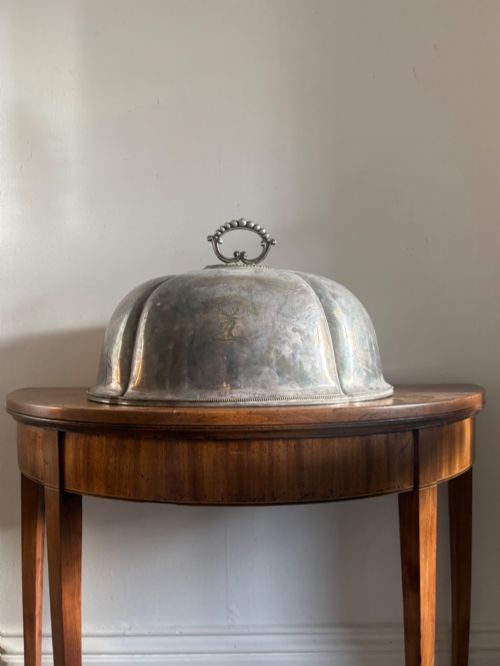
A sheffield plate meat dish or associated dome is a substantial serving piece designed to keep joints of meat warm at the table. These items take the form of large covers, warming dishes, mazarine draining plates, and serving tureens that appear across the Georgian, Regency, William IV, and Victorian periods.
The objects seen here largely originate from the nineteenth century and the year eighteen hundred, encompassing substantial meat domes and paired warming dishes. Such serveware represents a pivotal development in domestic dining history, bridging the gap between solid silver and later electroplate.
How they were made
Old Sheffield plate is produced by fusing a thin sheet of silver to a thicker copper core, a method invented in the eighteenth century that created a durable composite material. This fused metal was then shaped by hand and hammer, often featuring applied silver wire borders and cast handles.
Makers utilised base metal reinforcements to handle the structural demands of large meat covers and warming dishes. Wood components occasionally appear in associated elements, while interior surfaces were polished to a high lustre.
Sheffield Plate Meat Dish Retail Price Guide 2026
Typical asking prices for sheffield plate meat dish among the pieces listed under this phrase on Sellingantiques today, from the lower quarter to the upper quarter. They describe what is for sale here now, not the wider market.
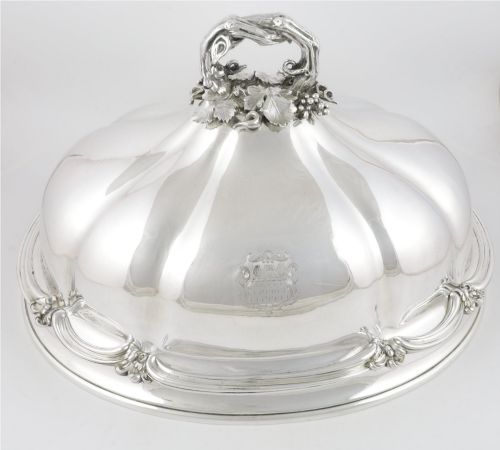
Some meat domes bear the aristocratic weight of a duke's crest, proving that even a joint of beef deserved a noble introduction.
What varies in quality
The distinction between standard examples and the finest pieces lies in the crispness of the chased decoration and the weight of the copper base. Superior items display well-defined crests, heraldic engravings, and substantial gauge metal that resists warping under heat.
Makers who invested greater labour in the original fusing process produced covers and warming dishes that retain their silver layer more uniformly across high-wear areas. The finesse of the handle casting and the precision of fit between dome and tray mark the highest tier of production.
Roberts Cadman·Henry Wilkinson·Boulton·Dan Holy
The Sheffield Plate Meat Dish Glossary
- Old Sheffield Plate
- A composite material formed by fusing silver and copper together through heat and pressure before rolling into sheets. This technique predates modern electroplating.
- Meat Dome
- A large, vaulted cover used to retain heat over joints of meat on a serving platter. These often feature engraved armorials or crests.
- Mazarine
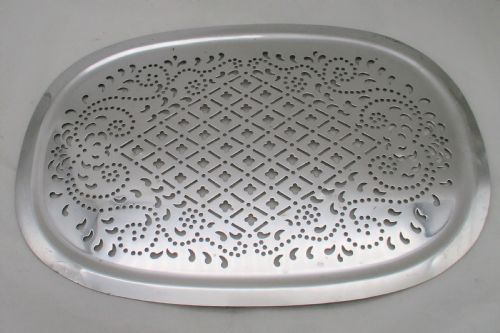
- A pierced draining plate fitted inside a serving dish to keep meat elevated from accumulated juices. It forms part of the broader suite of tableware.
- Warming Dish
- A dual-layer vessel designed to hold hot water beneath a serving surface. This kept food warm throughout long dining courses.
- Serving Tureen
- A deep, lidded vessel used for presenting food at the table. These match the aesthetic and material standards of accompanying meat covers.
Sheffield Plate Meat Dish: Frequently Asked Questions
How do I care for old sheffield plate?
Care requires gentle cleaning with non-abrasive silver foams and soft cloths to preserve the thin silver layer over the underlying copper. Avoid harsh dips that strip the character from the metal.
Display these items in stable environments away from direct moisture to protect the historic surfaces and any wooden elements.
How do I date a meat dome?
Dating relies on stylistic markers such as Regency neo-classical lines, Georgian proportions, or Victorian ornamentation combined with maker marks. The transition from fused plate to later methods provides a reliable chronological anchor.
Examining the construction of handles and borders also helps place the piece within the nineteenth century.
Were these used in sets?
Large households often utilised matched or complementary groups of serving dishes, warming trays, and meat covers to maintain visual harmony. Pairs of warming dishes and sets of multiple covers do appear in period collections.
Such suites accommodated the elaborate multi-course dining practices of Georgian and Victorian society.