

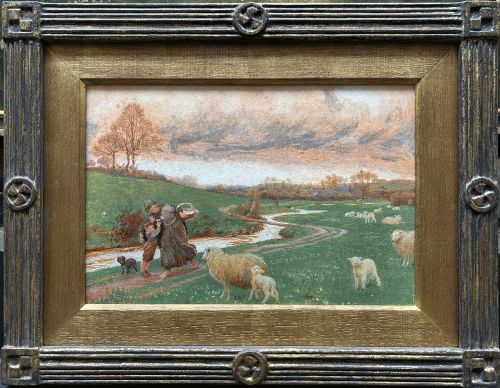


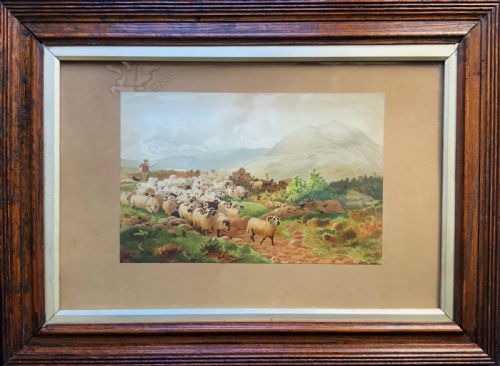


Sheep Watercolour
A sheep watercolour brings the quiet pastoral rhythm of the countryside directly onto your wall through delicate pigment on paper.
Sheep Watercolour
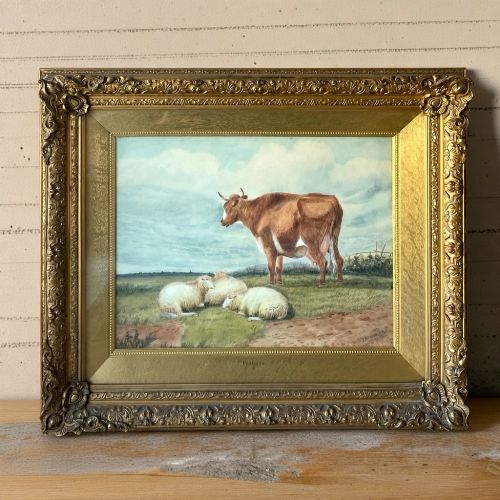
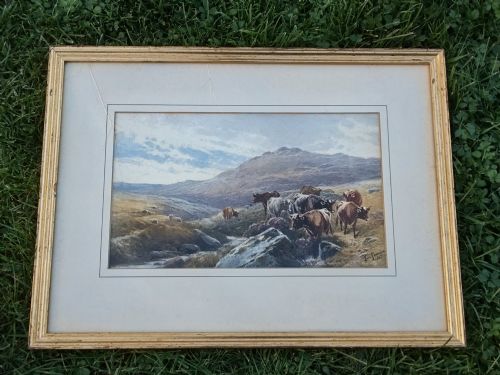
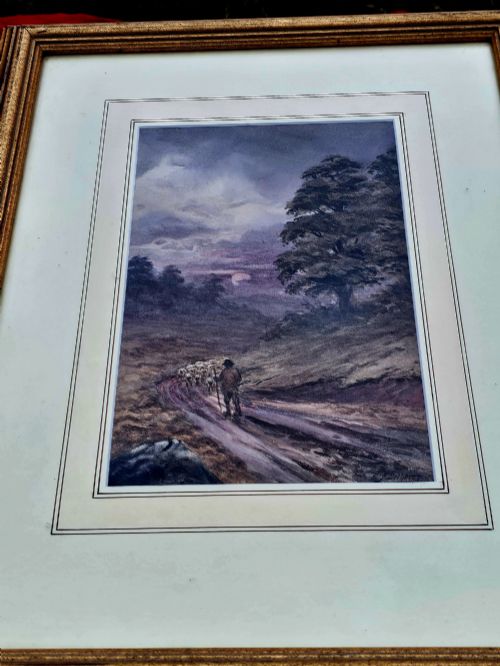
A sheep watercolour captures pastoral scenes, rural landscapes, and coastal downs through the application of fluid pigment onto paper. When you search for sheep watercolour, you encounter historic works that record rural British life, agricultural tracks, and expansive moorlands.
The pieces on this page emerge predominantly from the nineteenth century and the Edwardian era, spanning styles from Victorian Pastoral to British Impressionism. Most examples depict flocks driven across commons, grazing on hillsides, or resting near rural cottages.
Framed beneath glass within wooden mounts, these paintings reflect the Victorian and Edwardian fascination with the British countryside. Artists such as Henry Charles Fox and Charles James Adams document specific locales from Dorset to Wales, grounding each pastoral view in observation.
Materials and technique
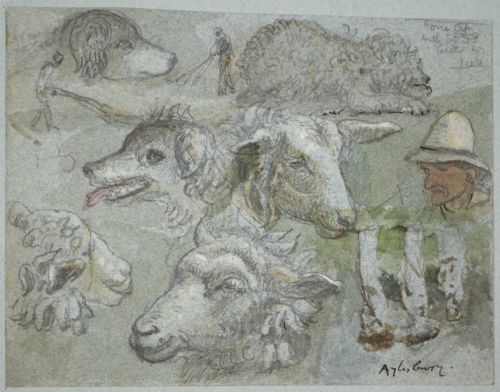
These works rely upon watercolour pigment applied to paper surfaces, often enhanced with touches of bodycolour to build opacity in the sheep's wool and the bright highlights of the sky. Artists manipulate dilution to create atmospheric haze over distant hills and crisp clarity on foreground animals.
Protection comes from traditional framing methods utilising wood mouldings and glass to shield the delicate paper from atmospheric moisture and dust. Gold leaf and gilt accents occasionally line the inner mounts, framing the watercolour within a warm border.
Sheep Watercolour Retail Price Guide 2026
Typical asking prices for sheep watercolour among the pieces listed under this phrase on Sellingantiques today, from the lower quarter to the upper quarter. They describe what is for sale here now, not the wider market.
Listings feature works created across the nineteenth and early twentieth centuries, employing watercolour pigment on paper within wood and gilt frames.
Separating the ordinary from the exceptional
Quality rests upon the artist's ability to render the anatomy and movement of the flock convincingly within a cohesive landscape. Master hands handle pigment with translucent economy, capturing the texture of wool and the atmospheric weight of a moorland sky without overworking the paper.
Compositional balance separates standard topographical records from superior gallery works. The finest examples integrate the sheep naturally into the terrain, using light and shadow to guide the eye across the landscape rather than treating the animals as isolated additions.
Thomas Rowden·James Smetham·EJ Letheren·Frederick Walker·F.J. Snell·Cornelius Pearson·Henry Charles Fox·Bernard Walter Evans·Basil Bradley·A. Winter Shaw·Henry Birtles·George Faulkner Wetherbee·Charles James Adams·Rowland Henry Hill·Edmund George Warren·Jessie Hall·John D.Walker·JS Cooper·Wycliffe Egginton·T. Sidney Cooper RA
The Sheep Watercolour Glossary
- Watercolour pigment
- Finely ground colour particles suspended in a water-soluble binder. This medium allows artists to layer transparent washes that retain the luminous quality of the underlying paper.
- Victorian Pastoral
- An artistic style celebrating rural agricultural life and untouched countryside views. These compositions often feature shepherds, flocks, and quiet lanes bathed in soft daylight.
- Edwardian Pastoral
- A later evolution of rural landscape painting popular in the early twentieth century. It shares the bucolic subjects of the Victorian era but often employs a lighter, more impressionistic palette.
- Bodycolour
- Watercolour mixed with a white pigment to make it opaque. Artists utilise this technique to add highlights and solid areas of tone to an otherwise transparent painting.
- Gilt
- A thin layer of gold or gold-like material applied to wooden frames. This finish adds a reflective border that enhances the warmth of the watercolour within.
Sheep Watercolour: Frequently Asked Questions
How should I hang a sheep watercolour?
Position your painting away from direct sunlight to prevent the watercolour pigments and paper from fading over time. Maintaining a stable indoor environment protects the paper from humidity fluctuations.
Pair the framed work with traditional wooden furniture or neutral walls to complement the pastoral subject matter. Ensure the glass is securely seated and use picture wire rated for the weight of the wood frame.
What periods do these watercolours date from?
The listings span the nineteenth century, the Victorian era, and the early twentieth century up to the 1920s. This period encompasses traditional academic recording as well as the transition into British Impressionism.
Edwardian Pastoral works often feature lighter tones and looser brushwork compared to their tighter Victorian predecessors. Examining the framing style and any artist inscriptions helps pinpoint the decade of creation.
Can I identify the exact locations in the paintings?
Many titles and inscriptions on the reverse record specific geographic locations such as Swansea Bay, Burpham in West Sussex, or Sutton Poyntz. Artists often travelled extensively across rural Britain to sketch regional topography.
Comparing the depicted landmarks with historical maps reveals how much the surrounding countryside has changed. Local place names provide a tangible anchor to the history of the region.
How do I spot an original painting?
Original watercolours reveal subtle brush textures, variations in pigment density under magnification, and the physical indentation of the paper fibres. Prints and reproductions lack these three-dimensional nuances and show uniform dot patterns.
Checking the paper margins often uncovers artist signatures, dates, or pencil notes left by the painter. Historic backing boards and aged framing materials further confirm the age of the piece.