


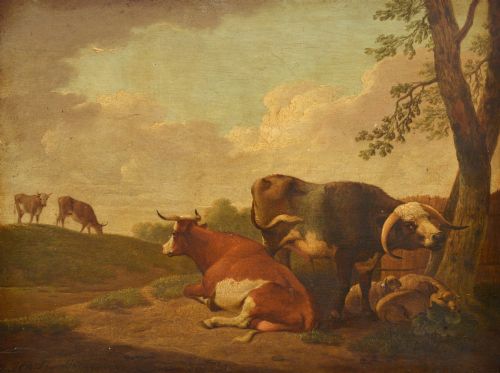
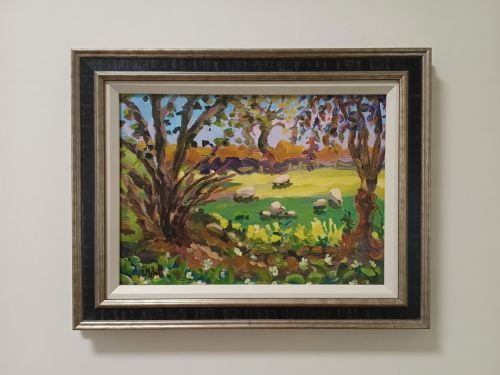
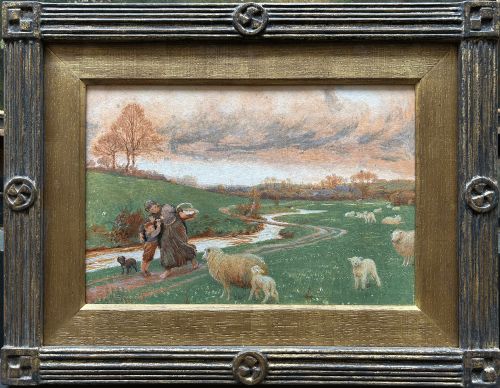
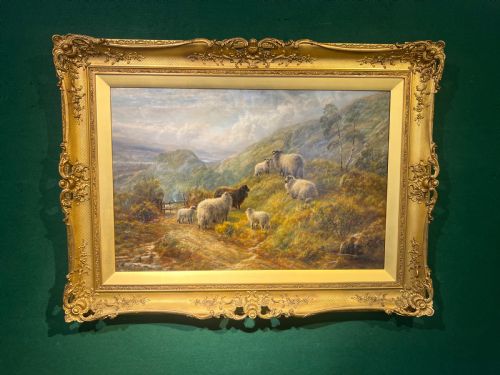
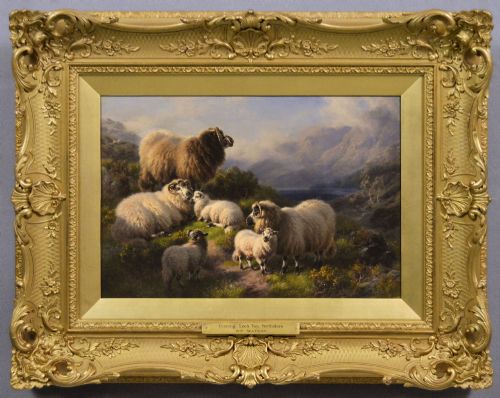
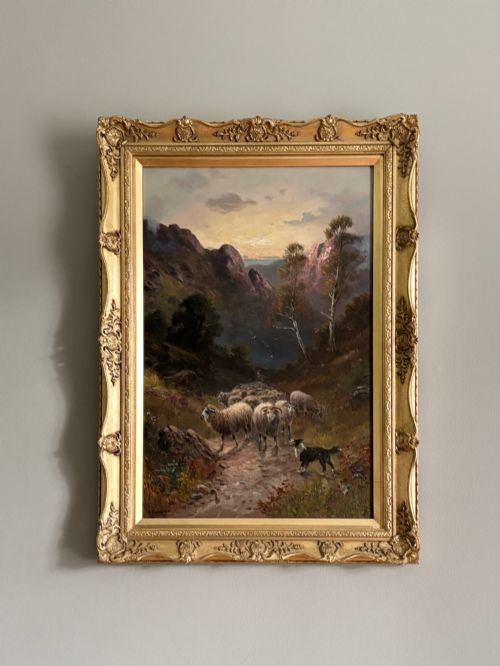
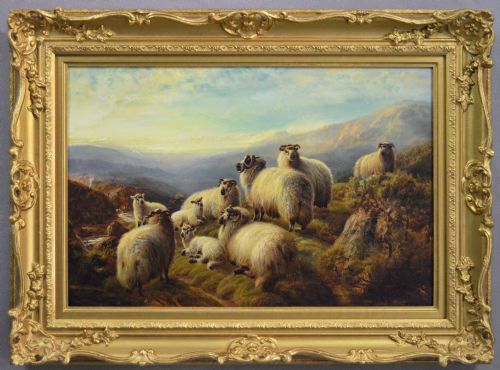
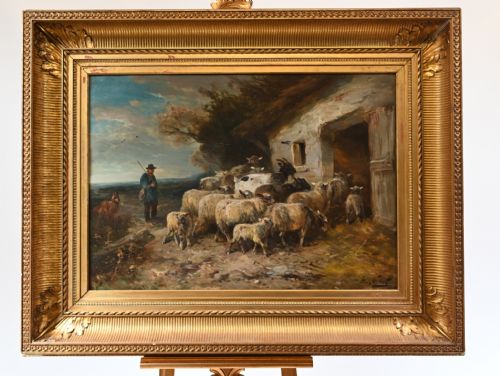
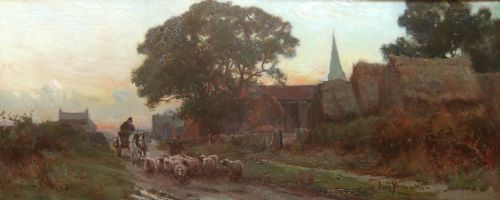


Sheep Landscape Oil Painting
A sheep landscape oil painting captures pastoral scenery, depicting flocks grazing on hillsides and moors.
Sheep Landscape Oil Painting
A sheep landscape oil painting depicts rural scenery, farmland, and moorlands populated by flocks of sheep, often accompanied by a shepherd.
The works appearing on this page originate predominantly from the nineteenth and early twentieth centuries, spanning Victorian and Edwardian periods.
Compositions range from intimate studies of animals resting in pastures to expansive Scottish Highland and Yorkshire moorland vistas.
Materials and technique
Artists painted primarily with oil paint upon stretched canvas, wooden panels, or card supports.
Frames are frequently constructed from wood with gesso ornamentation and giltwood finishes.
Listings feature works from the nineteenth century through the mid twentieth century, utilising oil on canvas, wood panel, and card.
Variations in quality
Quality rests in the handling of light across wool and pasture, and the anatomical accuracy of the animals depicted.
The strength of the composition and the depth of the surrounding landscape separate standard regional works from finer examples.
Eugène Verboeckhoven·Tom Campbell·Thomas Sidney Cooper·Owen Bowen·Robert Watson
The Sheep Landscape Oil Painting Glossary
- Oil on canvas
- Pigment suspended in drying oil applied to a woven fabric support stretched across a wooden frame.
- Wood panel
- A rigid wooden support used by artists as a base for painting.
- Giltwood
- Wood carved and treated with a thin layer of gold leaf or metallic gilding, commonly found on picture frames.
- Pastoral
- A genre of art depicting rural life, shepherds, and agricultural landscapes in an idealized manner.
Sheep Landscape Oil Painting: Frequently Asked Questions
What is a sheep landscape oil painting?
These artworks depict agricultural and rural scenes featuring flocks of sheep within British and European countryside settings.
Created largely during the nineteenth and early twentieth centuries, they combine animal portraiture with topographical views.
Where were these paintings displayed?
Historically, these framed works hung in domestic reception rooms and galleries to bring pastoral serenity indoors.
Today, they suit traditional interiors, studies, and living spaces alongside period furniture.
How do I date these paintings?
Dates are identified through artist signatures, framing styles, and the specific clothing or farming methods shown in the landscape.
Canvas construction and stretcher types also offer clues regarding the period of creation.
Are these paintings original works?
The inventory consists of hand-painted original oil artworks created by period artists rather than modern reproductions.
Many bear signatures, monograms, or attribution to notable nineteenth-century painters.