





Shaped Top Lamp Table
A shaped top lamp table brings refined nineteenth and early twentieth century timberwork into a sitting room.
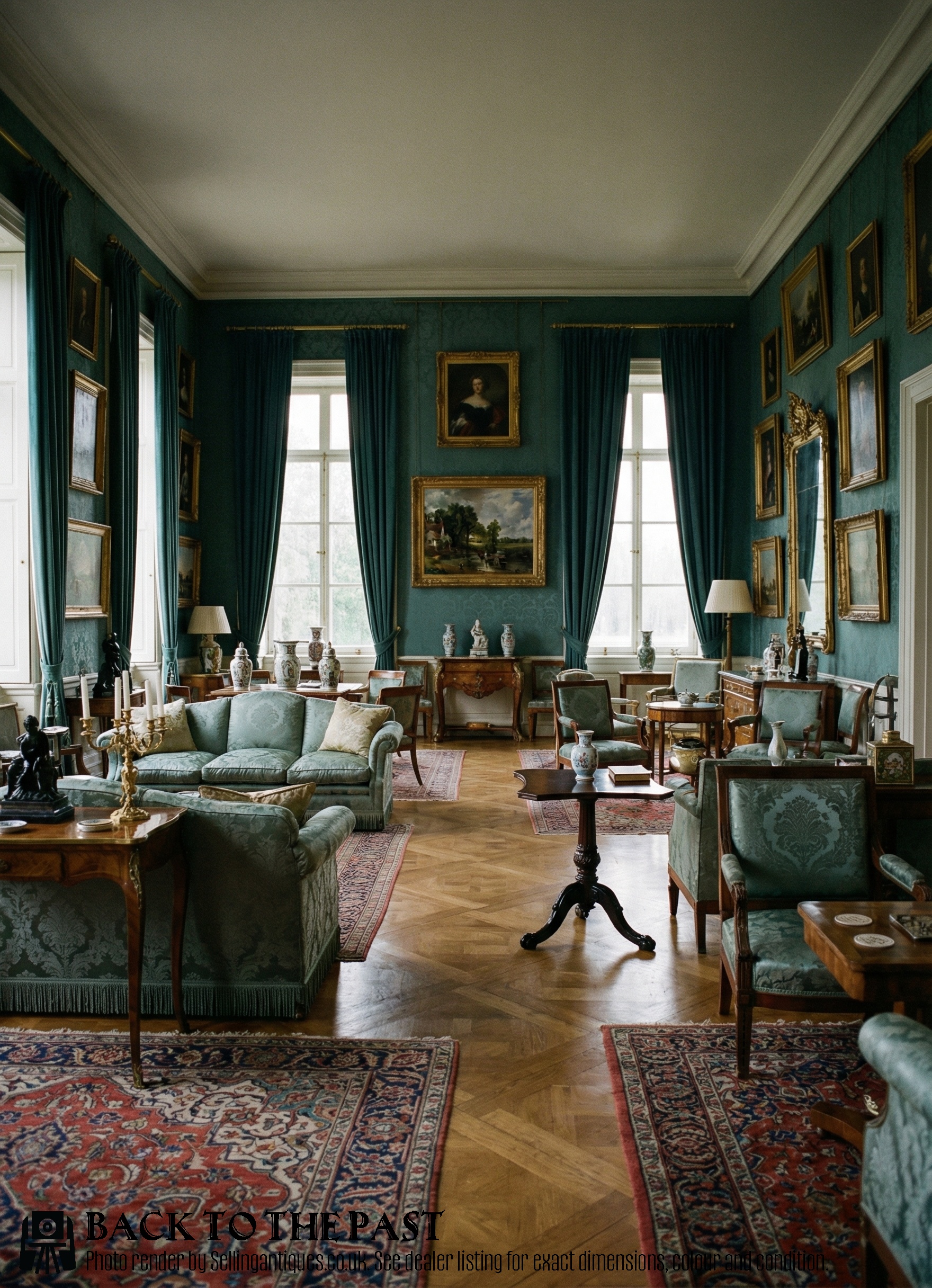
Shaped Top Lamp Table
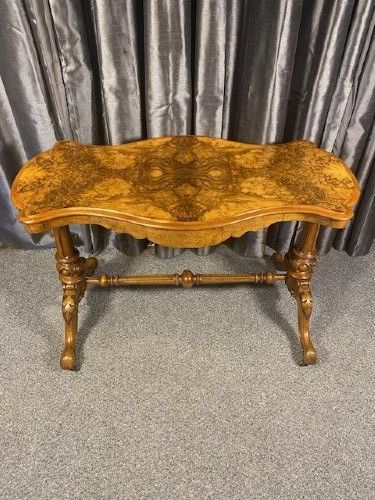
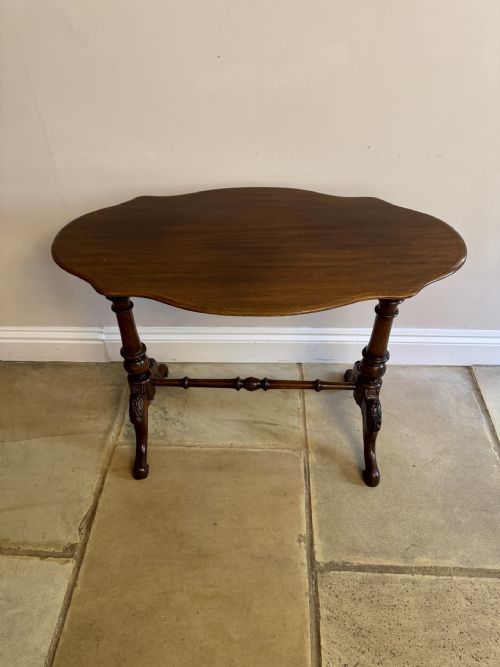
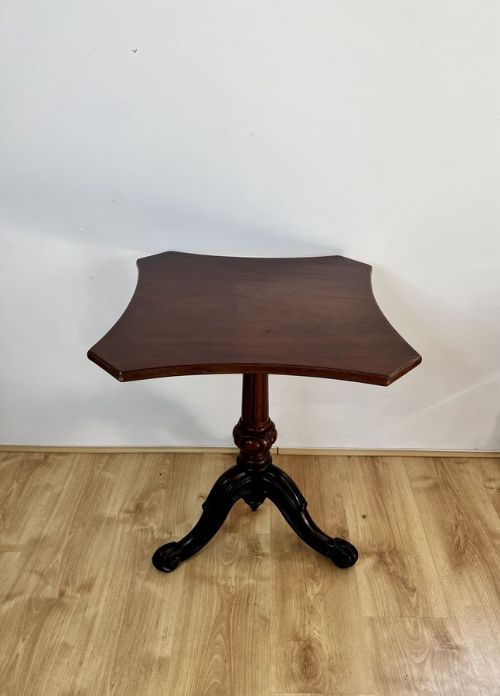
A shaped top lamp table is primarily represented here by occasional tables, side tables, and centre tables originating from the Victorian, Edwardian, and late nineteenth century periods. These pieces take the form of compact occasional tables designed to sit beside a chair or in the middle of a parlour, providing a sturdy surface for illumination and display.
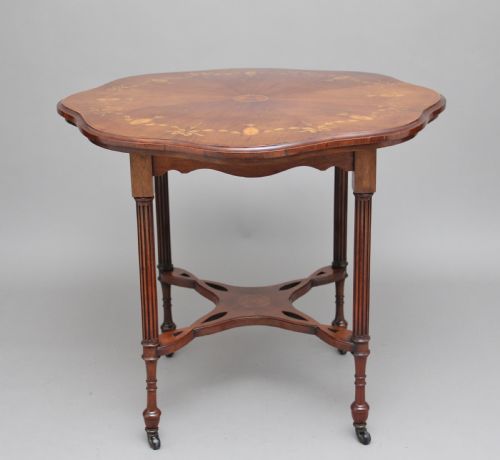
Most examples you meet on this page date from the eighteen sixties to nineteen ten, embracing Victorian and Edwardian aesthetics alongside Louis XV Revival, Arts and Crafts, Art Nouveau, and Sheraton Revival styles. They appear in diverse woods with intricate marquetry and inlaid details, reflecting the versatile furnishing needs of British homes across those decades.
Materials and construction
Structural elements incorporate brass details and turned or shaped legs that support the distinctively curved table tops. Cabinetmakers employed traditional joinery to join the tops to their bases, ensuring stability for everyday use in the parlour or drawing room.
Some nineteenth century makers apparently believed a straight edge on a table top was a personal insult.
What separates the finest examples
The degree of refinement in the timber selection and inlay work marks the difference between standard production and higher quality pieces. Burr walnut and finely figured satinwood display rich natural grain patterns that require skilled handling by the cabinetmaker.
Execution of the marquetry and the precision of the shaped top edges demonstrate the maker's proficiency. Sharply defined curves, tight joints, and balanced proportions across the legs and table top indicate superior workshop standards.
The Shaped Top Lamp Table Glossary
- Burr walnut
- A figured wood veneer taken from the excrescence on a walnut tree. It yields highly decorative swirling grain patterns prized on Victorian table tops.
- Marquetry
- The art of applying pieces of veneer to a structure to form decorative patterns. Craftsmen cut various woods like satinwood and boxwood to create pictures or designs.
- Occasional table
- A small, movable table designed for specific, intermittent use in a room. These pieces function easily as lamp stands or side tables.
- Pie crust edge
- A raised, carved, and shaped rim around a table top that resembles pastry work. This decorative edging appears on classical occasional and lamp tables.
Shaped Top Lamp Table: Frequently Asked Questions
What is a shaped top lamp table?
A shaped top lamp table is a compact nineteenth or early twentieth century stand designed to hold a lamp beside seating. These tables combine decorative timber tops with supportive occasional table bases.
They serve as both practical lighting surfaces and decorative centrepieces within a Victorian or Edwardian interior scheme.
How do I date a walnut lamp table?
Dating relies on examining the timber, secondary woods, and stylistic clues within the construction. Victorian examples from eighteen sixty often feature rich burr walnut veneers.
Later Edwardian versions incorporate lighter satinwood or specific inlay styles like Art Nouveau, helping narrow down the decade of manufacture.
Where should I place an occasional table?
These tables fit naturally beside armchairs, in corners, or as freestanding centre tables in a parlour. Their compact proportions allow them to occupy small spaces without crowding the room.
They provide a stable surface for reading lamps, small ornaments, or floral displays while adding historical character to the space.
What woods were used for these tables?
Cabinetmakers employed dense hardwoods such as mahogany, walnut, and rosewood for the primary structure. Burr walnut and satinwood frequently appear on the table tops.
Inlays incorporate contrasting boxwood and elaborate wood marquetry to create decorative borders and central motifs.
How do I care for antique marquetry?
Keep inlaid tables away from direct sunlight and strong heat sources to prevent the veneers from drying and lifting. Regular dusting with a soft, dry cloth preserves the polished surface.
Applying appropriate wax occasionally helps maintain the moisture and natural lustre of the walnut or mahogany timber.