






Shaped Stretcher Side Table
These shaped stretcher side table examples bring together walnut, mahogany, and marquetry across Victorian and Edwardian rooms.
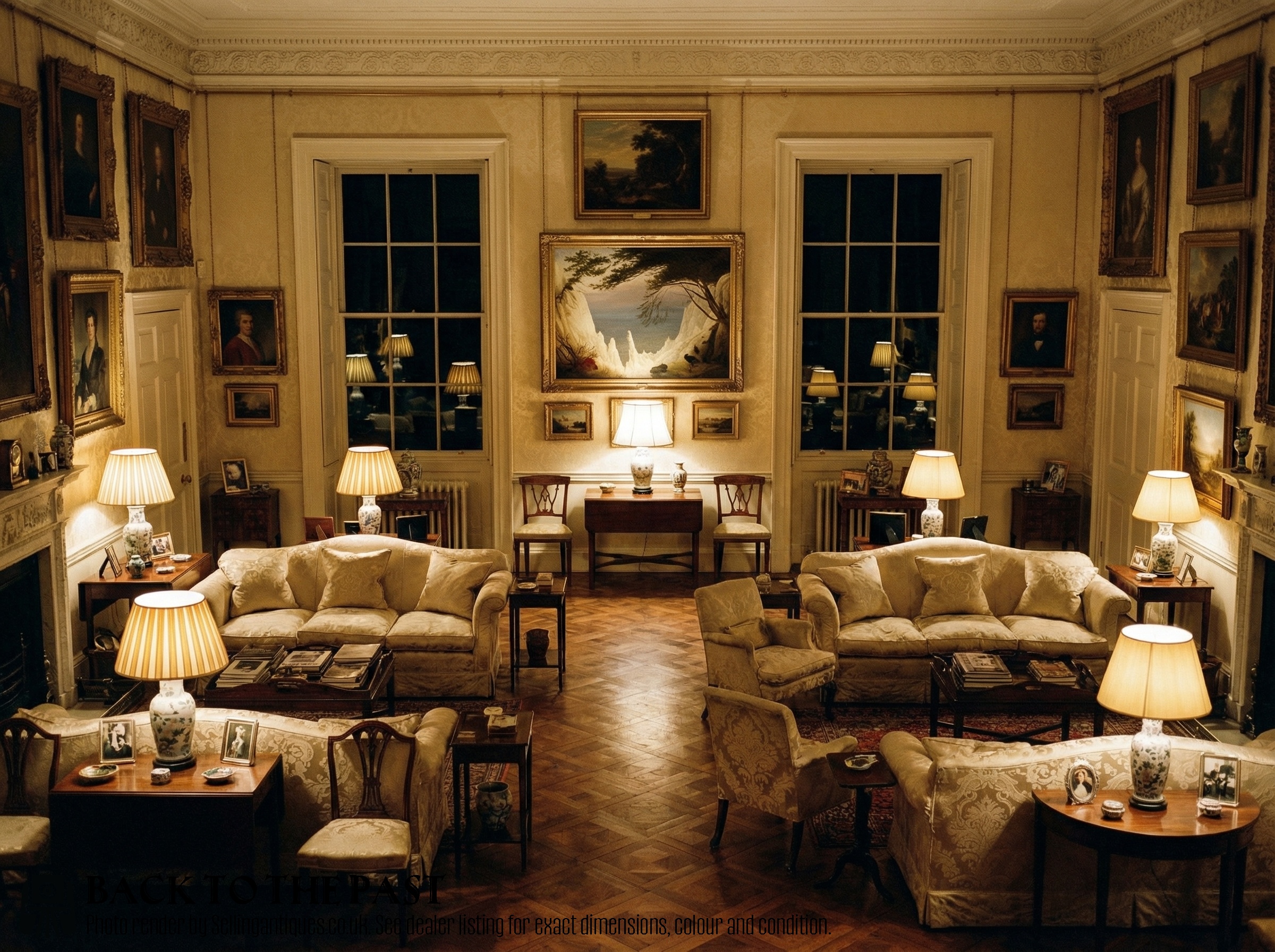
Shaped Stretcher Side Table
When you search for a shaped stretcher side table, you are looking at occasional, lamp, and centre tables featuring distinct underframe bracing. The examples you meet on this page span the Victorian and Edwardian eras, alongside Georgian pieces.
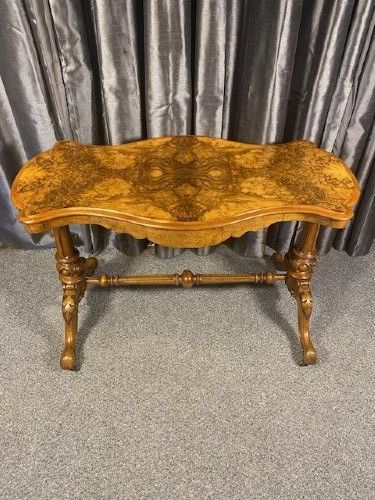
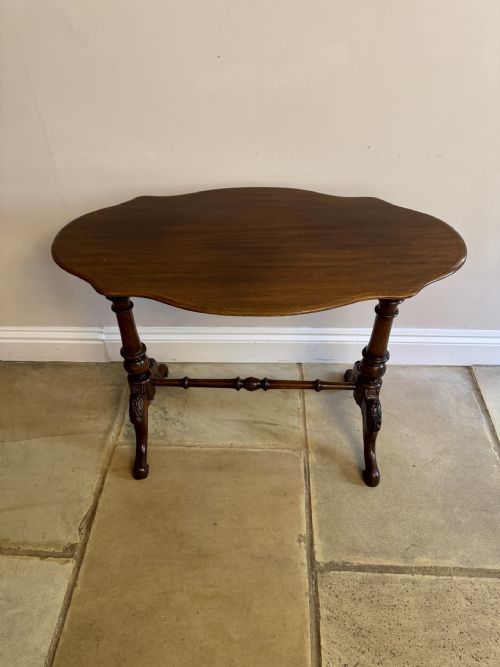
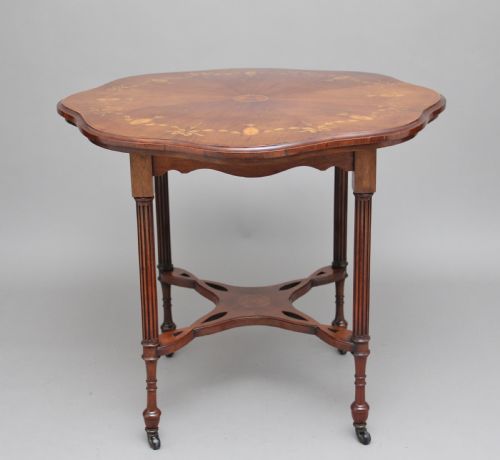
The primary forms take shape as walnut or mahogany occasional pieces, frequently incorporating marquetry inlay, ceramic elements, or brass details. These tables function well in living spaces as lamp tables or small centre tables.
Makers from the nineteenth century onward produced these items in various styles, including Louis XV Revival alongside traditional Victorian and Georgian designs.
How they were made
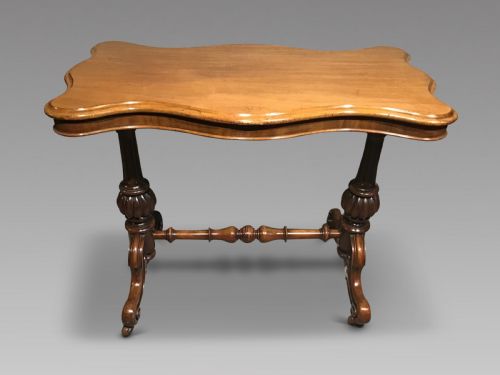
The structural framework relies heavily on timber selection, utilising walnut, burr walnut, and mahogany for the main bodies. Cabinet makers shaped these woods into serpentine and occasional table tops supported by stretcher bases.
Surface decoration frequently involves wood inlay, boxwood, and marquetry patterns set into the timber. Brass components and ceramic elements sometimes complete the construction details.
Listings feature walnut, burr walnut, mahogany, satinwood, and rosewood across Victorian, Edwardian, and Georgian periods.
What varies in quality
Quality rests upon the execution of the timber grain and the complexity of the inlay work. Burr walnut surfaces and fine marquetry separate standard production from more ambitious workshop output.
The refinement of the shaped stretcher base and the overall harmony of the proportions determine the distinction between simpler occasional tables and superior centre tables.
The Shaped Stretcher Side Table Glossary
- Marquetry
- Decorative veneer applied to furniture in patterns using different woods and materials. This technique creates detailed pictorial designs on table tops.
- Burr Walnut
- Timber taken from a walnut tree growth, showing intricate and swirling grain patterns. It is highly valued for decorative table surfaces.
- Pembroke Table
- A small rectangular table with hinged leaves dropping from the sides. Examples from the Georgian period appear in faded mahogany.
- Serpentine
- A gently curved line curving inward then outward, commonly seen along table edges. This contour adds movement to the silhouette.
Shaped Stretcher Side Table: Frequently Asked Questions
What is a shaped stretcher side table?
A shaped stretcher side table is an antique occasional or centre table featuring an interconnected underframe with curved or shaped bracing between the legs.
These pieces typically date from the Victorian and Edwardian periods, constructed from woods like walnut and mahogany.
How were these tables used originally?
Victorian and Edwardian households utilised these versatile pieces as lamp tables, small writing desks, or central display surfaces in reception rooms.
The stable base allowed them to hold decorative objects, lamps, or writing materials safely.
Which woods are most common?
Walnut and burr walnut appear most frequently among the surviving examples on this page, often paired with boxwood inlay.
Mahogany and satinwood also feature across various Victorian, Edwardian, and Georgian pieces.
How do I date a table?
Dating relies on identifying the stylistic markers of periods such as the Georgian era, the Victorian reign, or the Edwardian years.
Material choices, such as satinwood or burr walnut, alongside construction methods help place each piece in its correct time.