



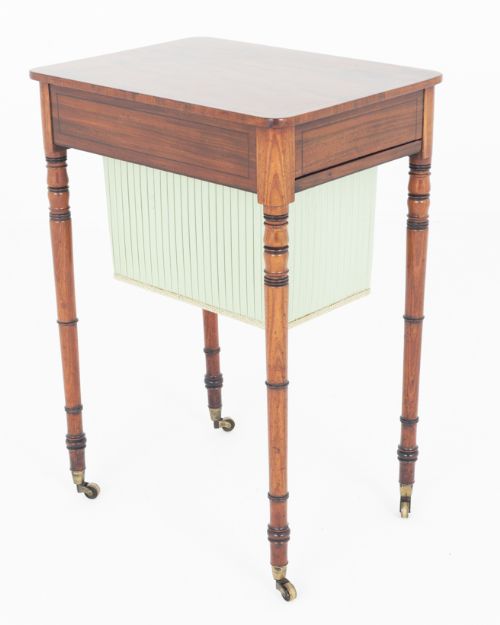


Sewing Box on Legs
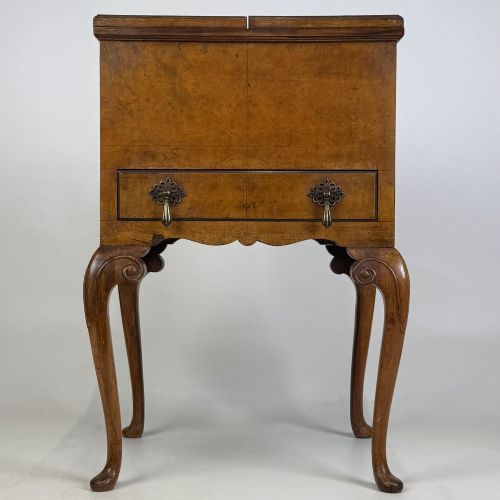
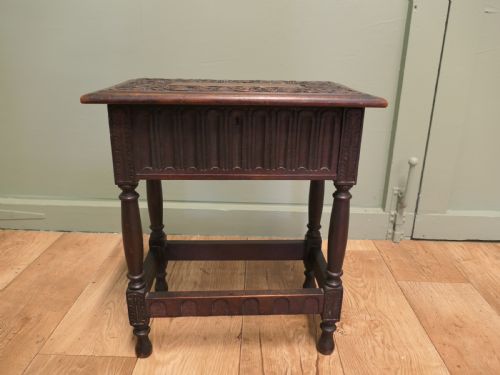
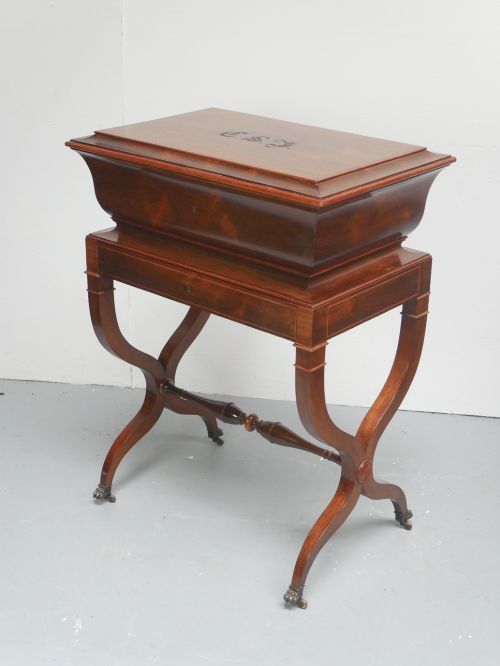
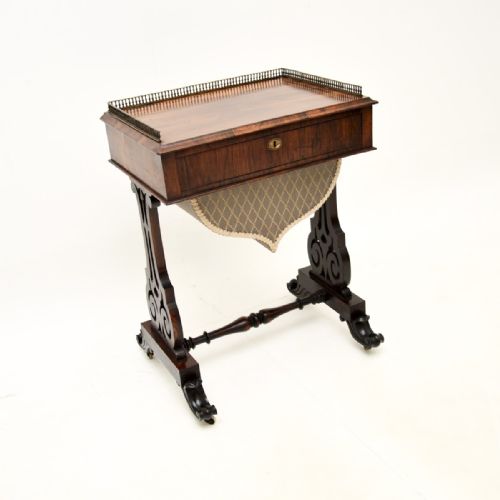
These sewing box on legs pieces combine practical storage with elegant furniture forms, offering collectors both period charm and refined interior utility.
Sewing Box on Legs
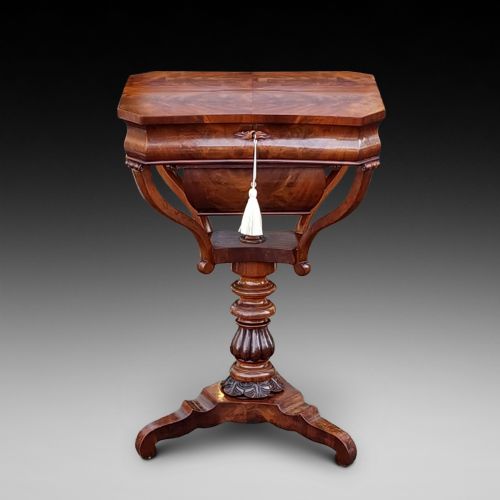
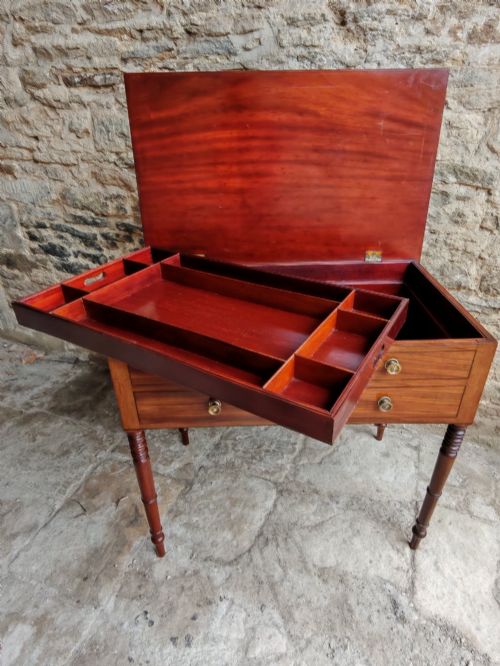
A sewing box on legs functions as a dedicated repository for needlework and small domestic tasks, elevated on a frame for ease of access beside a chair. When you search for a sewing box on legs, you encounter varied forms including work tables, cabinets, and boxes mounted on stands.
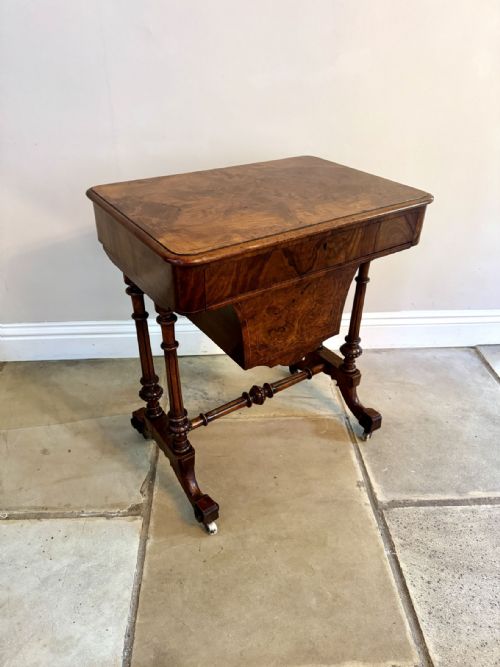
The pieces appearing on this page span the Georgian, Regency, and Victorian eras through to the Edwardian period. Mahogany, walnut, and rosewood predominate, frequently styled to reflect Victorian, Regency, or revival tastes.
Makers designed these items as versatile side tables or occasional tables for the parlour and drawing room. Most examples integrate fitted interiors or hanging bags beneath the main compartment to hold threads and fabrics.
Materials and construction
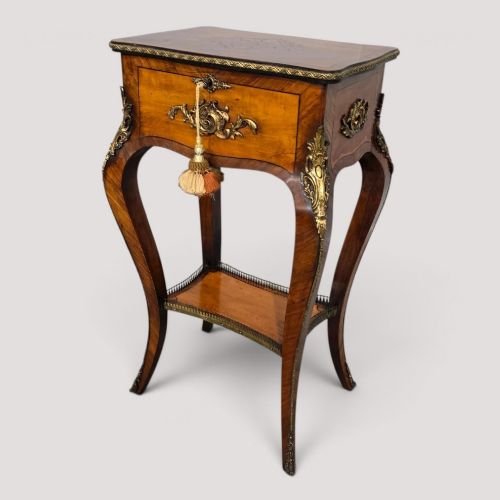
Cabinet makers built these pieces using dense hardwoods such as mahogany, walnut, and rosewood, often selecting burr veneers for decorative grain patterns on the lids and tabletops. Boxwood inlay and ormolu mounts add fine surface detail to select Regency and Victorian examples.
Joinery techniques varied from simple dovetailed internal compartments to complex drop-leaf frameworks and turned supporting legs. Silk or fabric bags, suspended beneath the wooden boxes, required careful hand stitching to maintain tension and durability.
Sewing Box on Legs Retail Price Guide 2026
Typical asking prices for sewing box on legs among the pieces listed under this phrase on Sellingantiques today, from the lower quarter to the upper quarter. They describe what is for sale here now, not the wider market.
Primary timbers include mahogany, rosewood, and burr walnut, enhanced by boxwood inlay.
Factors influencing quality
The choice of timber underpins the distinction between standard items and superior examples, with figured burr walnut and richly grained rosewood commanding greater attention. The precision of boxwood inlay and the crispness of turned wooden legs reveal the cabinet maker's skill.
Internal complexity sets apart finer work tables, particularly those featuring compartmented trays and original fittings. Ormolu mounts and well-executed drop-leaf mechanisms further distinguish high-grade pieces from simpler utility tables.
Lesage
The Sewing Box on Legs Glossary
- Work table
- A multi-functional piece of furniture designed for sewing and needlework, incorporating an enclosed compartment above a fabric bag or shelf.
- Burr walnut
- A highly figured wood grain harvested from the tree's burl, prized for its swirling patterns on Victorian and Edwardian tabletops.
- Ormolu
- Gilded bronze applied as decorative mounts on furniture, seen on finer French and English nineteenth-century pieces.
- Drop-leaf
- A table design featuring hinged flaps on the sides that raise to extend the top surface when extra space is required.
Sewing Box on Legs: Frequently Asked Questions
What is a sewing box on legs?
A sewing box on legs is a small elevated piece of furniture designed to hold needlework supplies, threads, and small personal items within easy reach.
These items combine the utility of a storage box with the stability of a table, often featuring fitted compartments and hanging fabric bags.
How were work tables used historically?
In nineteenth-century drawing rooms and parlours, ladies used these tables to keep their sewing and embroidery organised while sitting in armchairs.
The drop leaves and side surfaces provided a convenient temporary shelf for ongoing needlework projects during social visits.
How do I identify a Victorian work table?
Victorian work tables frequently feature rich timbers like burr walnut and mahogany, often accompanied by carved pedestal bases or turned legs.
Many examples from this era incorporate elaborate inlaid boxwood details and silk storage bags suspended beneath the main wooden compartment.
Where should I place a sewing box at home?
These compact tables fit well beside an armchair or sofa in a living room, serving as an attractive side table for lamps or small decorative objects.
The internal storage compartments also make them practical for organising modern desk accessories or crafting materials in a study.