






Sevres Style Credenza
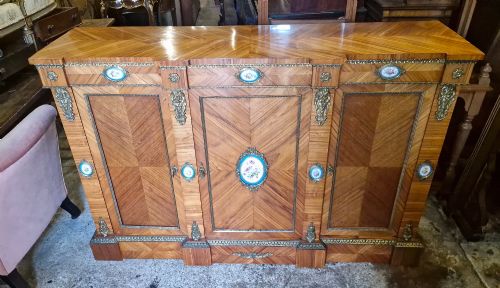
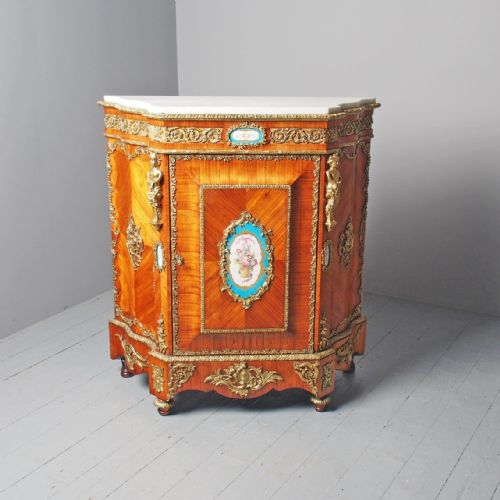
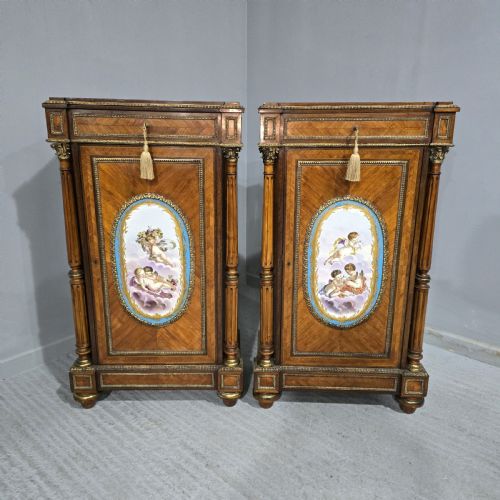
A sevres style credenza brings nineteenth-century French and Victorian grandeur into a room through rich timber, ormolu mounts and painted porcelain plaques.
Sevres Style Credenza
A sevres style credenza represents an intersection of nineteenth-century cabinet-making and decorative porcelain panels, appearing in forms such as side cabinets, display cabinets, sideboards and mirror-back credenzas. These grand furnishings emerge predominantly from Victorian and French revival movements, drawing on Louis XVI styles and Napoleon III aesthetics.
The version most commonly met on this page is the nineteenth-century credenza or side cabinet constructed from burr walnut, ebonised wood or kingwood, set with ormolu mounts and porcelain plaques. Pieces range from large French porcelain-mounted credenzas to table-top credenza cabinets and tall French Louis XVI porcelain-mounted cabinets.
Originating across the nineteenth century, particularly around 1850, 1860 and 1880, these items served as formal display pieces for drawing rooms and reception spaces. They combine timber framing with glazed or panelled doors, offering surface display space alongside enclosed storage.
How they were made
Makers built the carcases of these pieces using timbers like burr walnut, kingwood and ebonised wood, frequently incorporating intricate marquetry and marble tops. These rich woods provided a dark, textured foundation designed to contrast with applied metalwork.
Gilded bronze or ormolu mounts frame the doors, edges and porcelain plaques, fixed securely to the wooden structure. Sevres style painted porcelain plaques are integrated directly into the cabinetry, acting as pictorial centerpieces.
Glass panels feature in display cabinets and pier cabinets, allowing visibility into the lined interior shelving. Brass details and maker stamps occasionally mark the construction of these nineteenth-century items.
Sevres Style Credenza Retail Price Guide 2026
Typical asking prices for sevres style credenza among the pieces listed under this phrase on Sellingantiques today, from the lower quarter to the upper quarter. They describe what is for sale here now, not the wider market.
Materials recorded across the inventory include porcelain, ormolu, glass, burr walnut, kingwood, ebonised wood, walnut, and brass.
What varies in quality
The standard of timber selection and marquetry work dictates the baseline of execution, distinguishing standard production from exhibition-grade examples. Highly figured burr walnut and carefully matched kingwood veneers require greater skill in cutting and laying than plain walnut or ebonised surfaces.
The crispness and weight of the ormolu mounts vary considerably, with finer pieces showing deeply chased detail and secure attachment to the wood carcase. The painting quality on the porcelain plaques also differs, alongside the precision of the brass and glass fittings.
The Sevres Style Credenza Glossary
- Ormolu
- Gilded bronze mounts used extensively as decorative edging and ornamentation on nineteenth-century furniture. This technique provides a bright metallic contrast against dark timbers like kingwood and ebonised wood.
- Burr walnut
- A highly figured wood veneer taken from the growth growths of the walnut tree, prized for its swirling grain patterns. It forms the primary visual surface on many Victorian credenzas.
- Kingwood
- A dense, richly coloured exotic timber utilised in French revival and exhibition-quality cabinetry for contrasting banding and marquetry. Its striped grain adds formal elegance to Louis XVI style pieces.
- Bonheur du jour
- A small, light nineteenth-century lady's writing desk featuring an enclosed cabinet or shelving superstructure above the main desk surface. Examples from this period reflect refined French styling.
- Pier cabinet
- A narrow display cabinet designed specifically to stand against the wall space between windows. These glazed cabinets often incorporate porcelain plaques and mirror backs.
Sevres Style Credenza: Frequently Asked Questions
What is a sevres style credenza?
A sevres style credenza is a nineteenth-century display cabinet or sideboard incorporating painted porcelain plaques in the manner of the Sevres factory, alongside ormolu mounts and rich timber veneers.
These pieces were produced during the Victorian and Napoleon III periods for formal reception rooms, combining enclosed storage with prominent display surfaces.
How do I identify the period?
Dating relies on examining the timber choices, mount styles and construction methods typical of nineteenth-century cabinet-making. Pieces range from mid-century walnut examples to later 1880s French Louis XVI revival designs.
Reference to specific design revivals, such as Napoleon III or Louis XVI style, helps narrow the decade of manufacture within the broader Victorian era.
Where were these cabinets placed?
These large pieces were traditionally positioned against main walls in formal drawing rooms, parlours or dining spaces. Their mirrored backs and glass doors were intended to reflect light and display decorative objects.
Table-top versions offered a similar aesthetic on a smaller scale, suitable for placement on top of sideboards or tables.
How do I care for the wood and ormolu?
Maintenance involves protecting the burr walnut or kingwood veneers from direct sunlight and maintaining stable room humidity. Gentle dusting preserves the polished timber and delicate gilt bronze mounts.
Harsh chemical cleaners should be avoided to protect both the polished wood finishes and the painted porcelain panels.