

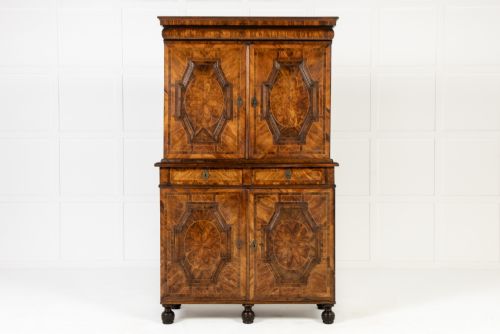


Seventeenth Century Press
A seventeenth century press brings serious architectural presence into a room, offering sturdy storage through centuries-old joinery.
Seventeenth Century Press
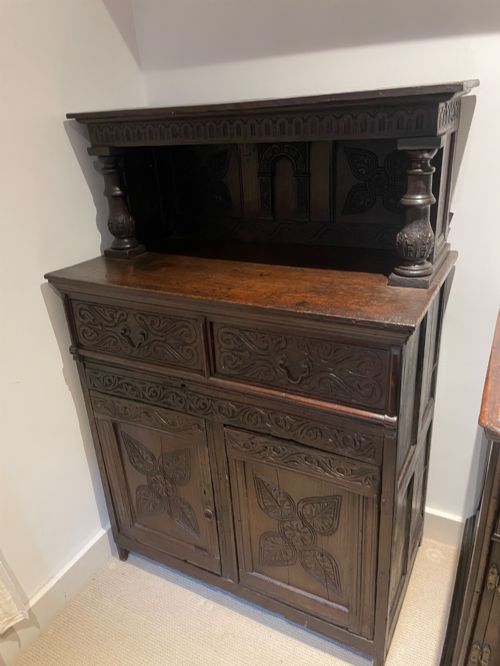
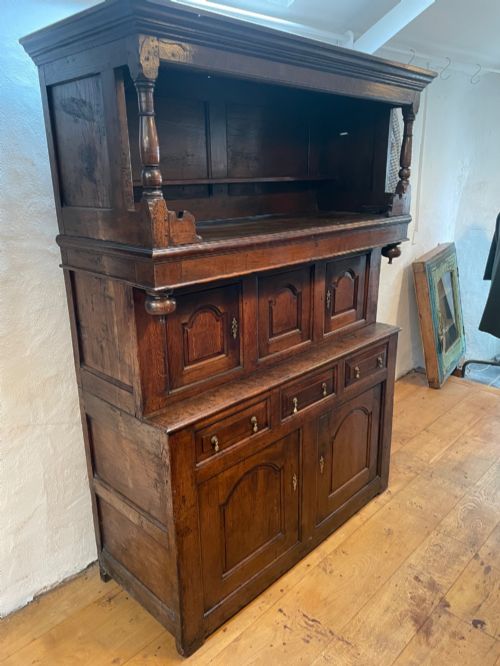
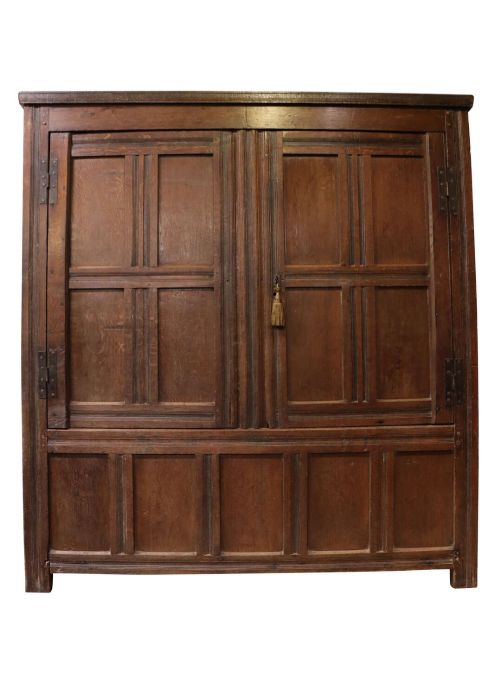
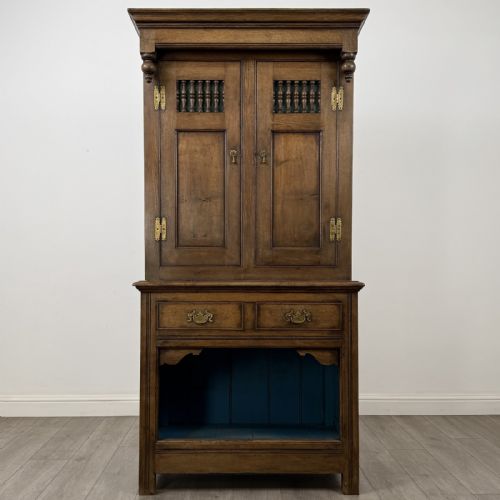
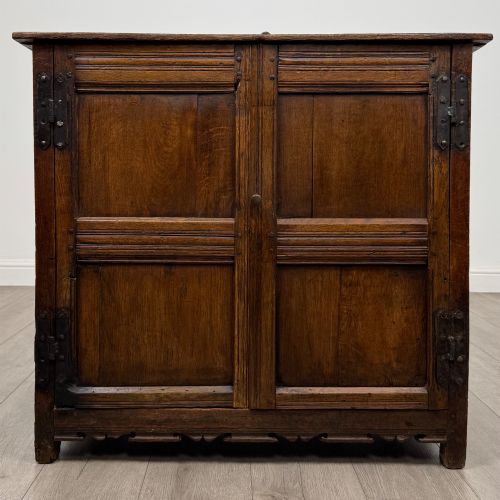
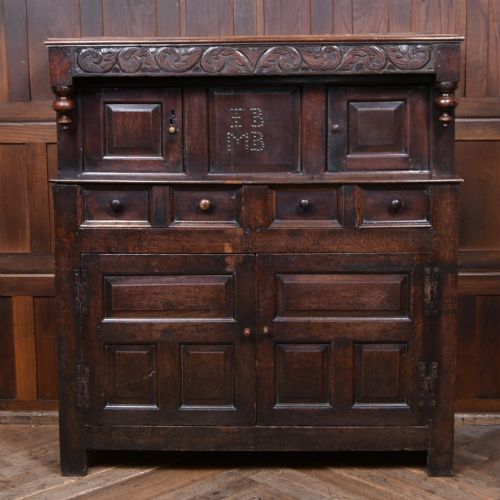
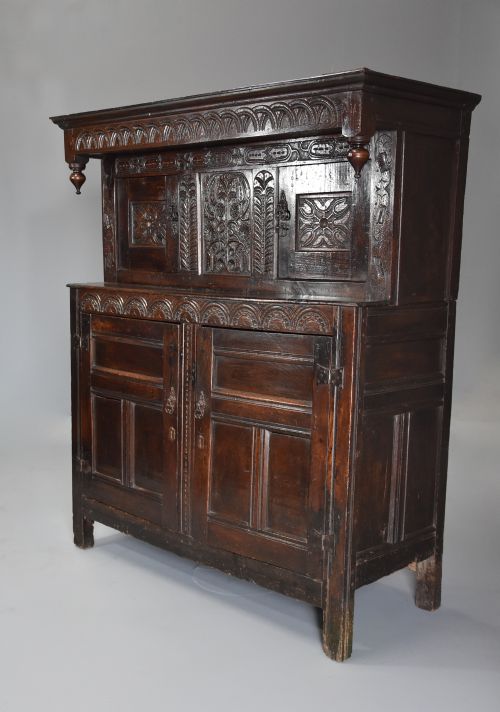
A seventeenth century press encompasses substantial storage forms like court cupboards, livery cupboards, vestment cupboards, and regional deuddarns. These heavy timber items served households for storing linens, clothing, and household goods in period interiors.
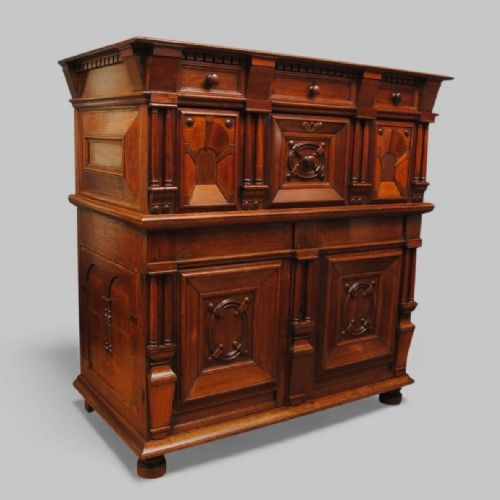
Most pieces encountered here date from the seventeenth century and its later revivals, displaying regional English, Welsh, Dutch, and French origins. Structural variations include multi-tiered court cupboards and cabinet forms set upon chests.
Makers utilised heavy timbers such as oak, walnut, and fruitwood to construct these large storage units. The forms range from simple panelled doors to elaborately carved pillar panels and inlaid façades.
Construction and materials
Makers relied on solid native timbers, predominantly oak and walnut, supplemented by fruitwood and wrought iron hinges or latches. Joined construction methods provided the structural stability needed for heavy multi-tiered cupboards.
Surface decoration involved deep hand-carving, inlay work, and panelled construction techniques typical of the period. Iron and brass hardware secured the heavy doors and drawers while patinas developed naturally over centuries of use.
Seventeenth Century Press Retail Price Guide 2026
Typical asking prices for seventeenth century press among the pieces listed under this phrase on Sellingantiques today, from the lower quarter to the upper quarter. They describe what is for sale here now, not the wider market.
Many seventeenth-century cupboards retain stubborn wooden pegs that have held their heavy doors square through four hundred years of damp winters.
Evaluating quality and condition
Quality rests in the integrity of the original timber and the depth of the hand-carving on panels and pillars. Untouched surfaces with original patinas distinguish period pieces from later revivals and marriage items.
The sophistication of the joinery and the survival of original hardware dictate the standing of a piece. Regional variations in regional craftsmanship also shape the character and desirability of each cupboard.
The Seventeenth Century Press Glossary
- Court cupboard
- A traditional open-backed or enclosed buffet used for displaying plate and storing food or linens. These pieces often feature tiered sections supported by carved columns.
- Deuddarn
- A traditional Welsh two-tier cupboard used for domestic storage. These regional items form a distinct subset of press cupboards.
- Livery cupboard
- A small cupboard traditionally used for storing food and candles before nightfall. They often feature panelled doors for ventilation.
- Joined cupboard
- Furniture constructed using mortise and tenon joints secured with wooden pegs rather than metal nails. This technique defines seventeenth-century cabinet making.
- Kast
- A large Dutch or Flemish wardrobe or linen press. These substantial storage pieces frequently utilise richly grained woods like rosewood or walnut.
Seventeenth Century Press: Frequently Asked Questions
What is a court cupboard?
A court cupboard is a traditional two-tier storage piece used for displaying plate and keeping household goods. They often feature carved pillars and panelled doors.
These heavy items formed the architectural centrepiece of wealthy seventeenth-century rooms.
How do I date an oak press?
Dating relies on examining the joinery methods, tool marks, and timber shrinkage patterns. Pegged mortise and tenon construction indicates period manufacturing techniques.
Revival pieces from later centuries often display machine-cut elements and different surface wear.
Where were these cupboards made?
Surviving examples originate from English workshops, Welsh regions, and continental European centres like the Netherlands and France. Regional styles reflect local timber availability and carving traditions.
Local cabinet makers adapted standard forms to suit domestic storage needs in different areas.
How should I care for old oak?
Maintain stable humidity levels and protect the wood from direct heat sources to prevent timber splitting. Regular gentle dusting preserves the natural wax finish and historic patina.
Avoid modern harsh polishes that can damage the aged surface layers.