

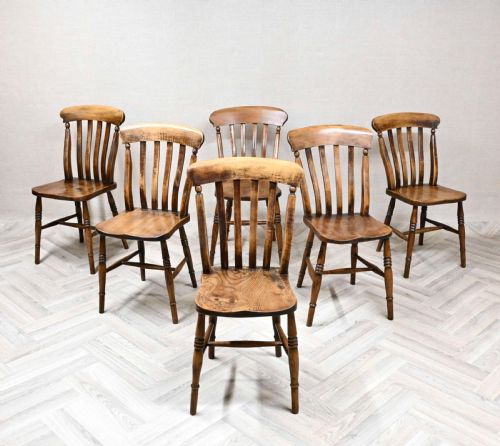
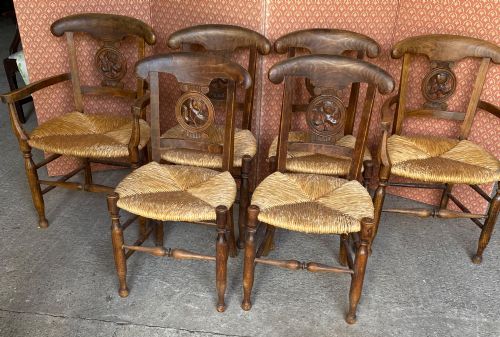
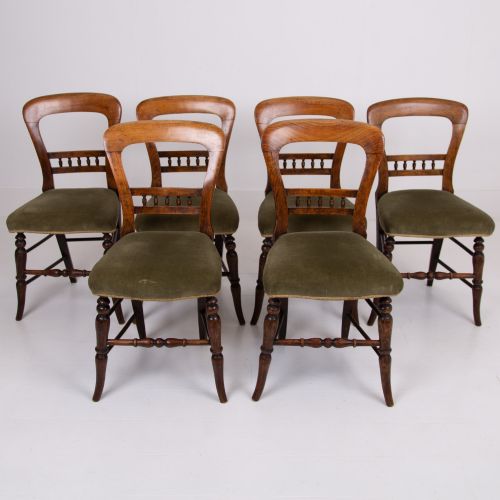
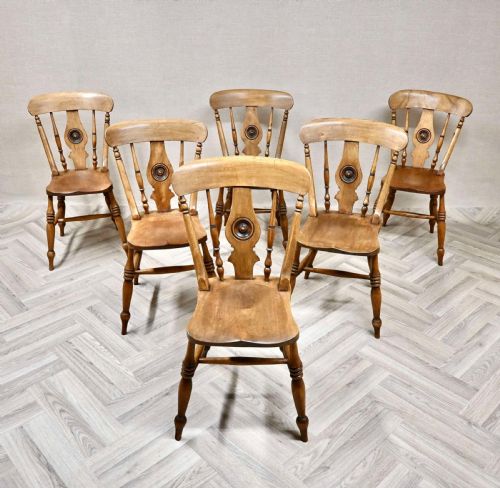
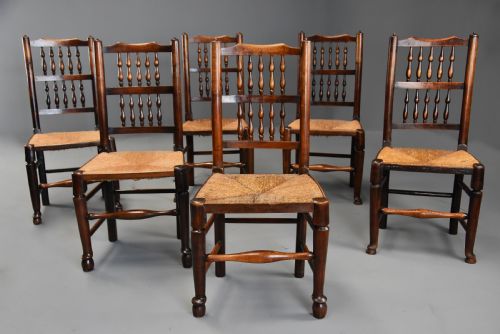
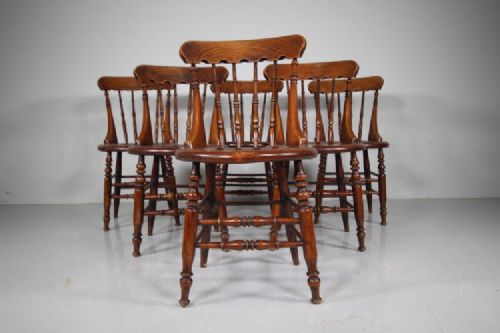
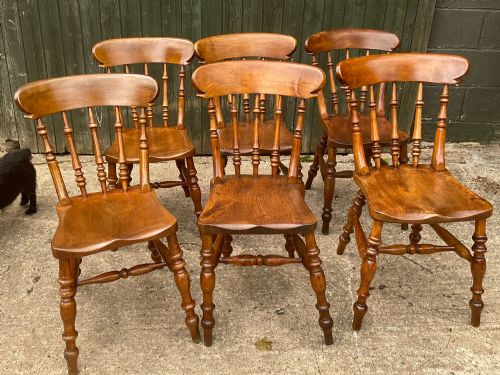

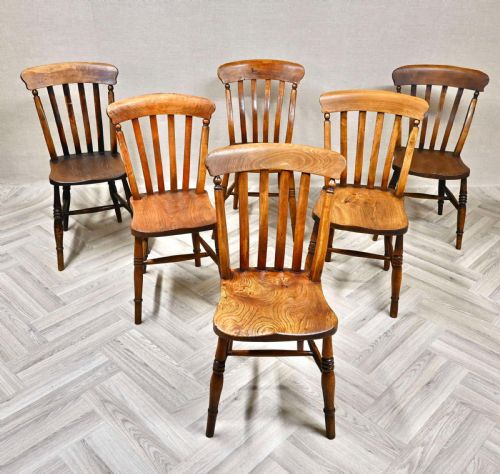




Set of Six Farmhouse Chairs
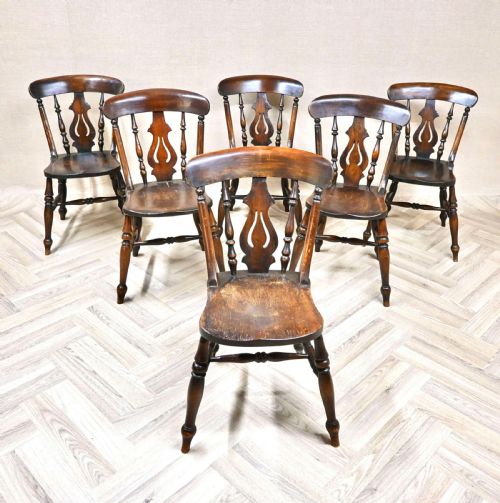
These set of six farmhouse chairs bring utilitarian country character to a dining room, offering sturdy wood construction and vernacular seating forms designed for daily use.
Set of Six Farmhouse Chairs
When you search for a set of six farmhouse chairs, you encounter matched and harlequin dining seating produced primarily across the nineteenth century. These dining chairs originate from English, French, and American vernacular traditions, serving kitchens and everyday eating spaces rather than formal parlours.
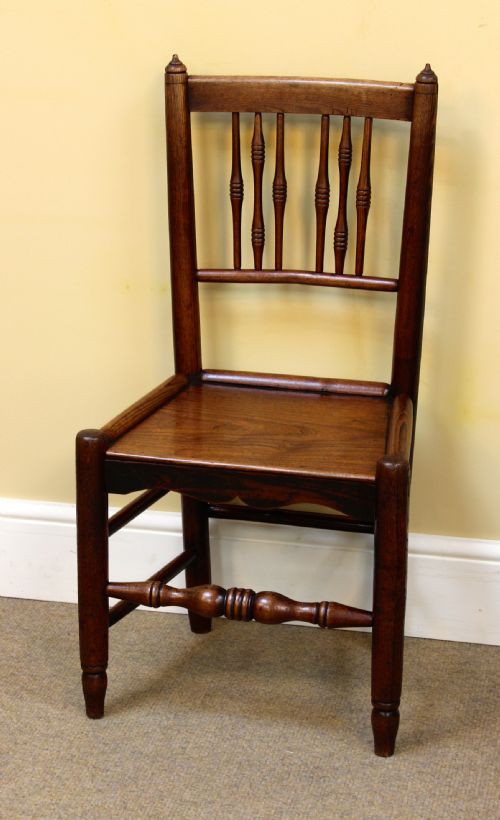
The dominant forms on this page include Windsor variations such as lathbacks, comb backs, and bullseye designs alongside ladder backs and spindle backs. Timber seats predominate, though certain examples feature rush bottoms, reflecting regional domestic habits across the periods seen.
Makers ranged from local carpenters to provincial workshops, utilising native timbers such as elm, ash, beech, and fruitwood. A buyer finds both uniform sets and assembled harlequin groups gathered over time for domestic dining.
How they were made
Construction relies on traditional joinery methods suited to heavy domestic use, including turned legs fitted into solid wood seats and steam-bent components for crest rails and backs. Chair makers selected hardwoods like ash and beech for structural frames and turned spindles, pairing them with elm for carved, comfortable seats.
Surface finishes developed naturally through decades of polishing and handling, creating the patinated timber tones recorded in nineteenth century and Victorian examples. Rush seating where present is hand-woven around internal frames to support daily sitting.
Set of Six Farmhouse Chairs Retail Price Guide 2026
Typical asking prices for set of six farmhouse chairs among the pieces listed under this phrase on Sellingantiques today, from the lower quarter to the upper quarter. They describe what is for sale here now, not the wider market.
Listings span the nineteenth century, Victorian era, and early nineteen-thirties, documenting domestic seating across oak, elm, ash, and pine.
What varies in quality
Quality separates through the integrity of the original timber selection, the crispness of turned spindles, and the uniformity achieved across all six pieces in the set. True matched sets maintain consistent wood grain, identical proportions, and matching joinery details throughout every chair.
The depth of patination and the preservation of original surface finishes dictate the visual strength of each group. Superior examples combine robust structural stability with uncompromised vernacular forms that retain their authentic character.
Worksop
The Set of Six Farmhouse Chairs Glossary
- Windsor
- A chair built with a solid wooden seat into which the legs and back spindles are separately inserted. This vernacular form developed widespread popularity across English and American rural workshops.
- Lathback
- A Windsor chair variation featuring a flat, horizontal wooden splat or lath across the centre of the backrest. This design offers robust structural support for daily kitchen use.
- Harlequin set
- A collection of chairs that match in general style and period but vary in minor details, having been gathered together rather than manufactured as a single batch. Such groups are common in country dining contexts.
- Comb back
- A Windsor chair style where the top rail resembles the teeth of a comb, extending the vertical spindles upwards. This regional variation provides an ergonomic headrest.
- Patina
- The surface sheen and colour depth acquired by wood through decades of handling, cleaning, and light exposure. It indicates age and careful domestic maintenance.
Set of Six Farmhouse Chairs: Frequently Asked Questions
How do I care for antique wood seat chairs?
Maintain stable indoor humidity to prevent timber shrinkage and cracking over seasonal changes.
Apply microcrystalline wax occasionally to nourish the surface without attracting dust or clouding the historic patina.
Are these chairs comfortable for daily dining?
Solid wood seats are contoured to body shapes, offering ergonomic support developed through generations of domestic use.
Adding simple tie-on squabs or cushions provides extra comfort during long meals without altering the chairs.
What is the difference between a true set and a harlequin set?
A true set shares identical manufacture, timber selection, and turning details across all six pieces from the workshop origin.
A harlequin set brings together six individual chairs of compatible period and style that share a cohesive visual rhythm.
How do I identify a nineteenth century country chair?
Look for vernacular construction methods, hand-turned spindles, and native timbers such as elm seats combined with ash or beech frames.
Signs of age include tool marks underneath the seat, wear patterns on footrests, and deep timber patination.