




Set Eight Chippendale Chairs
When you need a set eight chippendale chairs, you are looking at substantial dining suites that bring 18th-century presence to the modern table.
Set Eight Chippendale Chairs
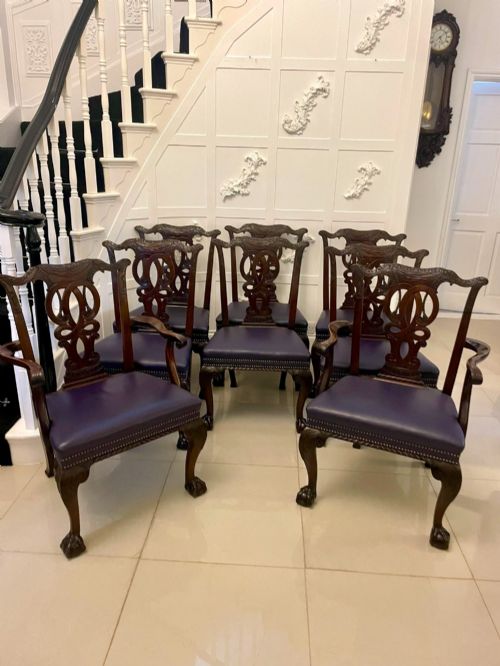
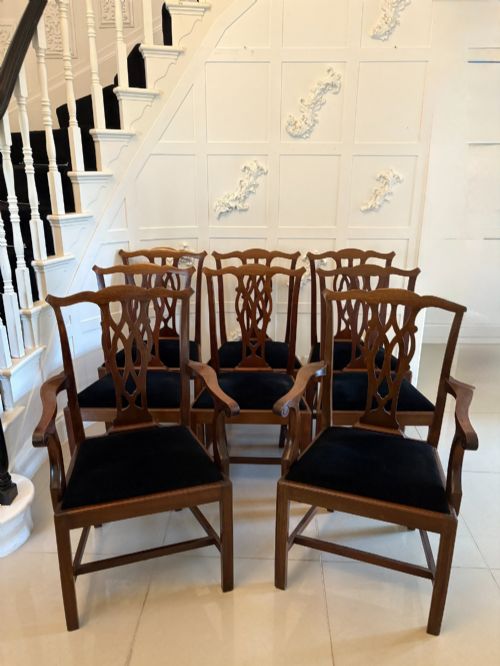
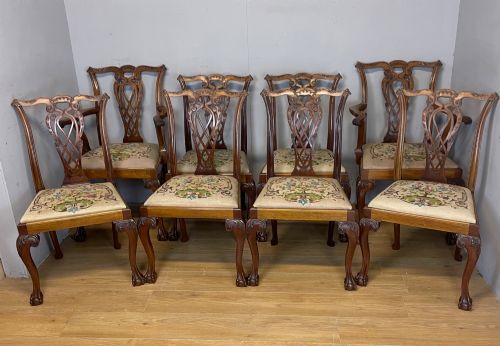
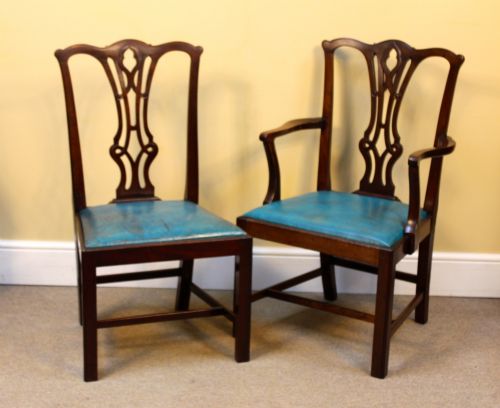
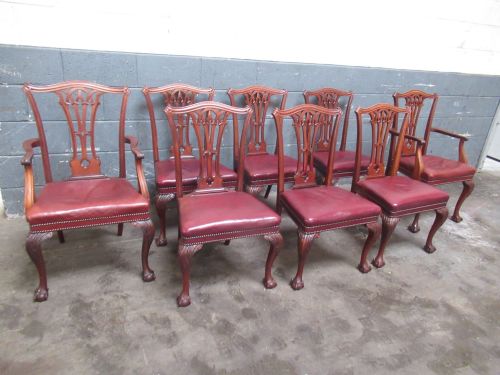
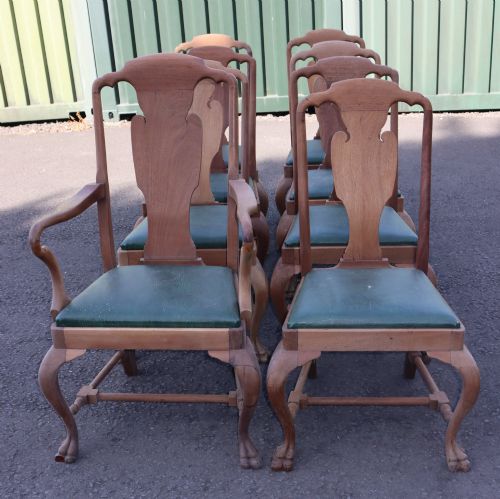
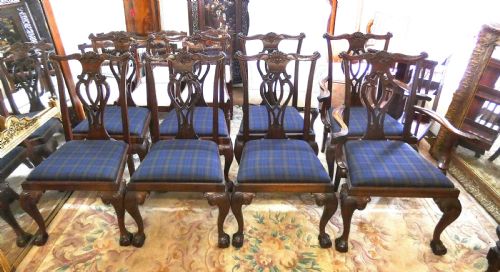
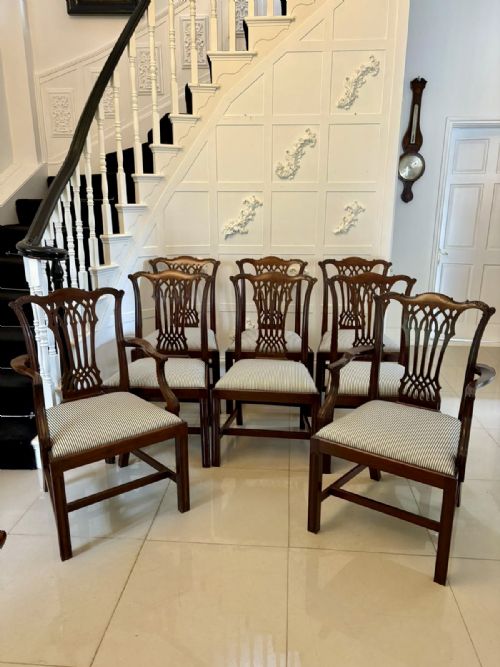
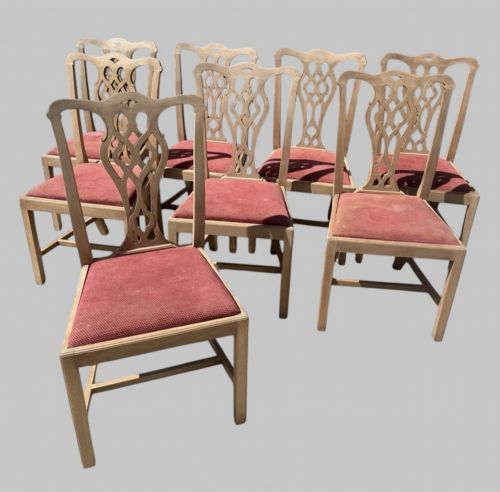
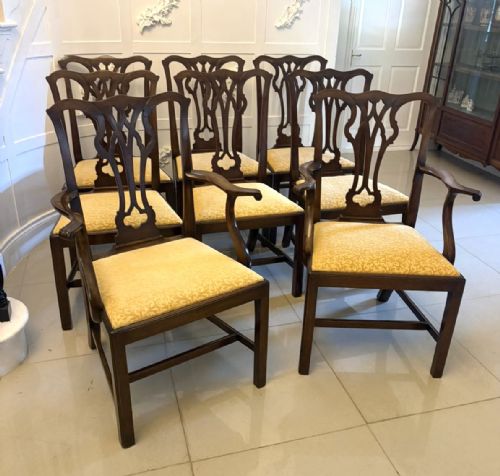
A set eight chippendale chairs gathering comprises eight matching seats intended for a formal dining room, typically divided into six single chairs and two armchairs. Buyers searching this phrase meet both genuine 18th-century Georgian examples and later revivals from the 19th and early 20th centuries.
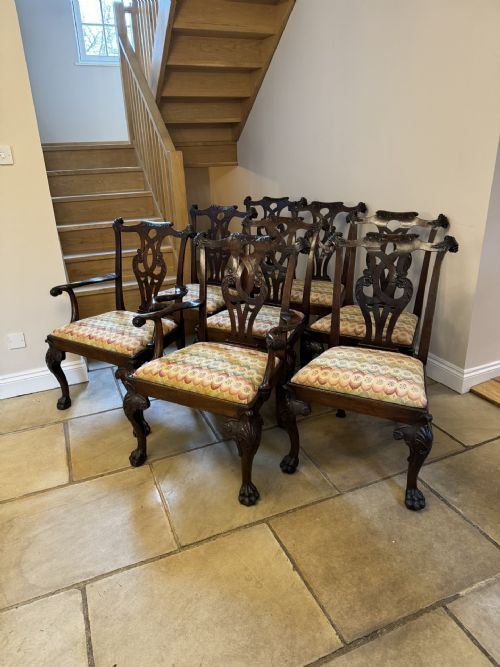
The designs draw heavily on the mid-Georgian pattern books, featuring characteristic pierced splats, carved top rails, and cabriole or straight legs. Revival sets produced during the Victorian and Edwardian periods make up the majority of the options available on the market today.
How They Were Made
Solid mahogany forms the primary structural material across nearly all examples, supplemented occasionally by walnut and oak. Cabinetmakers shaped the intricate backsplats and frames using hand tools, frequently incorporating openwork carving along the crest rail and stiles.
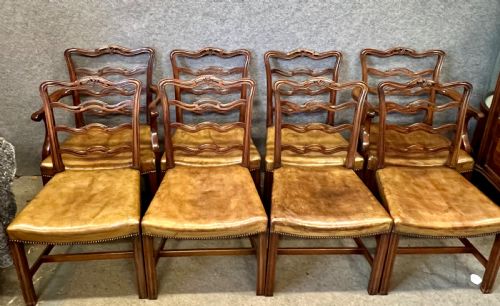
Seating portions were constructed as drop-in pads or upholstered frames, lined with materials such as leather, velvet, fabric, or needlework, and secured with brass tacks.
Listings span the Georgian period through the Edwardian era, predominantly featuring mahogany construction in the Chippendale style.
What Varies in Quality
The crispness and depth of the carved ornament dictate the primary tier of craftsmanship, separating sharply executed ribbon and scrollwork from softer, more generalized moulding. Timber selection also governs the hierarchy, with dense, figured grain commanding greater attention than plain stock.
Structural integrity across a large set depends on matching timber consistency and uniform wear, ensuring that chairs retain a cohesive appearance around a dining table rather than looking assembled from disparate sources.
Warings·William Walker And Sons·Waring And Gillows·Charles Baker
The Set Eight Chippendale Chairs Glossary
- Carver
- An armchair designed with armrests, usually produced as a pair to accompany a larger set of single side chairs.
- Splat
- The vertical wooden member down the middle of a chair back, often intricately pierced or carved in the Chippendale manner.
- Ribbon back
- A decorative chair back design where the central splat resembles interlaced ribbons or bows.
- Drop-in seat
- A removable upholstered frame that drops into the wooden seat rails of the chair.
- Cabriole leg
- A furniture leg that curves outward at the knee and tapers inward toward the foot, frequently ending in a claw and ball.
Set Eight Chippendale Chairs: Frequently Asked Questions
How many armchairs come in a set of eight?
Most matching sets of eight dining chairs comprise six single side chairs and two matching armchairs intended for the heads of the table.
This proportion allows for formal seating arrangements while maintaining visual symmetry around a dining room setup.
Are these chairs comfortable for daily dining?
Traditional 18th-century and revival dining chairs feature upright wooden backs and firm upholstered drop-in pads designed for formal posture.
While supportive during meals, they differ significantly in ergonomic design from modern cushioned lounge seating.
How do I distinguish Georgian originals from later revivals?
Genuine 18th-century pieces display period timber characteristics, hand-cut joinery, and natural wear patterns accumulated over centuries of use.
Revival sets from the Victorian and Edwardian eras often show machine assistance in hidden areas, heavier framing, and standardised 19th-century hardware.
What wood is most common for these dining chairs?
Mahogany serves as the predominant timber across both Georgian originals and subsequent revival periods, prized for its strength and rich dark tone.
Alternative woods such as walnut and oak appear occasionally in regional or specific revival iterations.