

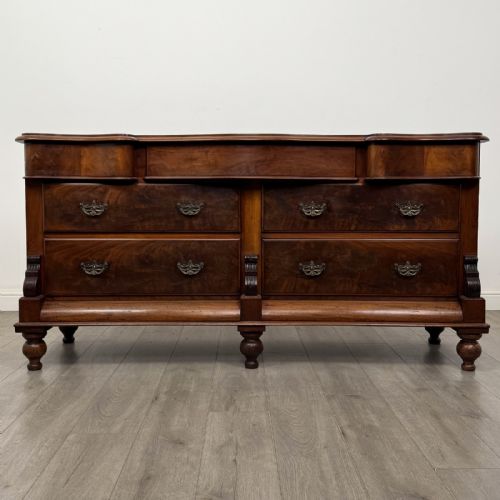
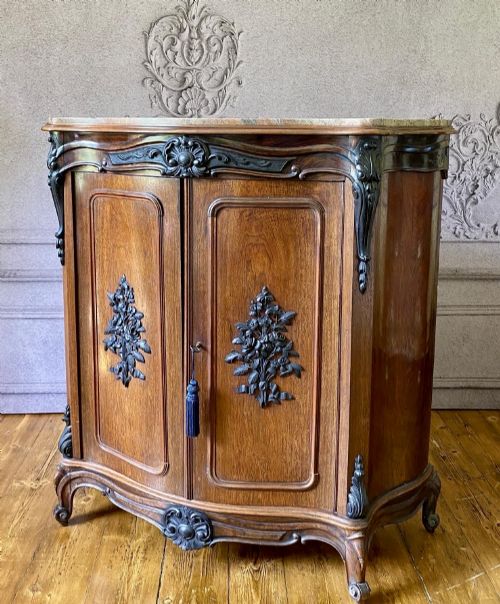
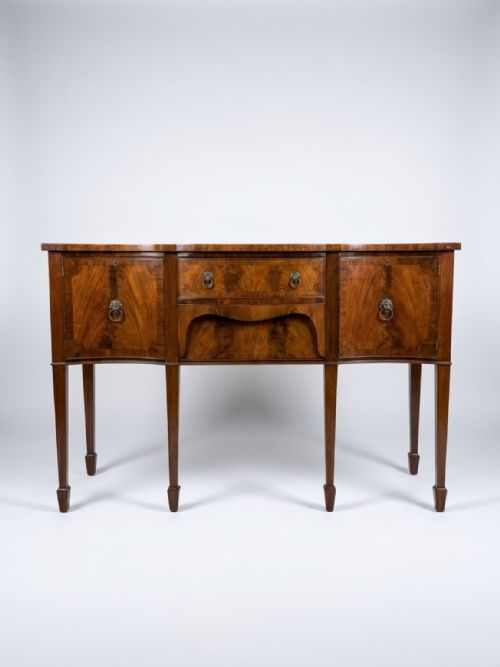
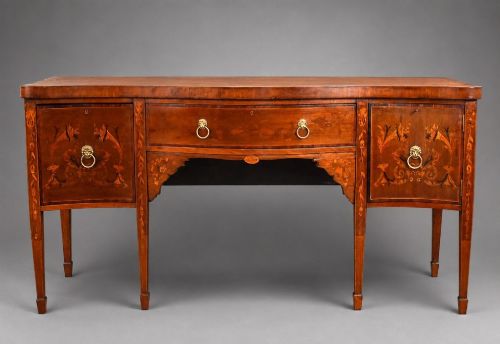
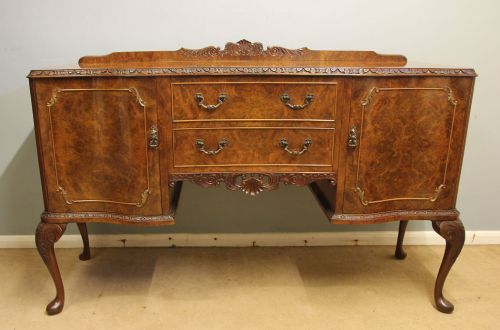
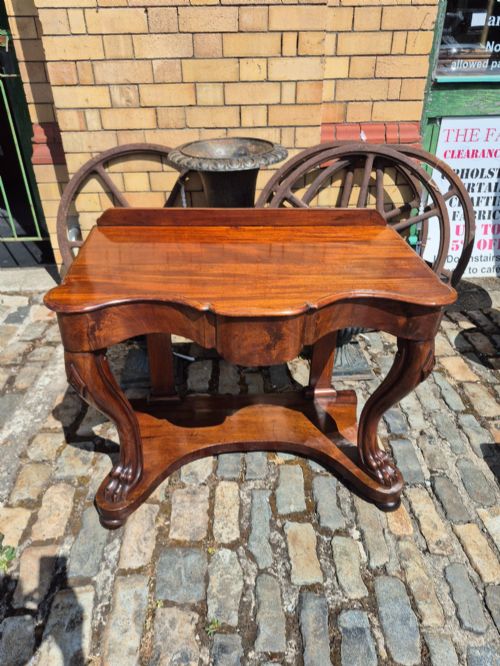
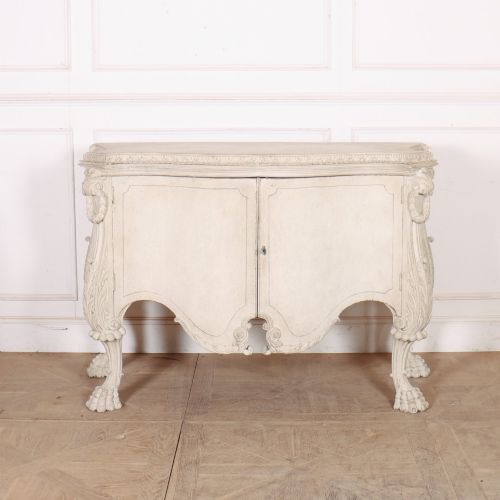
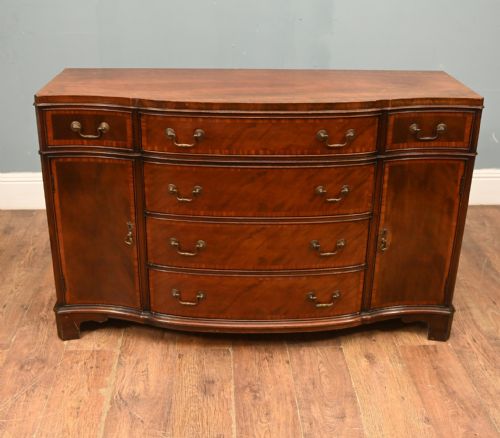


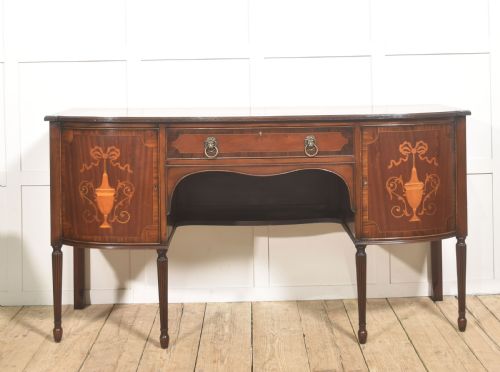
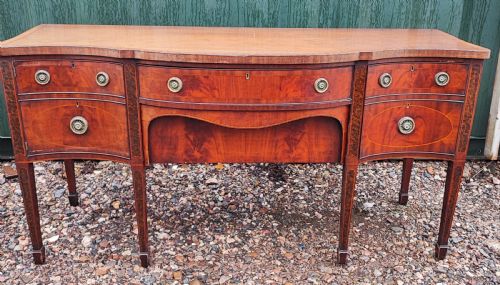


Serpentine Wood Credenza
A serpentine wood credenza brings fluid, undulating curves to a dining room or hall while offering substantial storage.
Serpentine Wood Credenza
When you search for a serpentine wood credenza, you encounter curving sideboards, credenzas, and cabinets originating from the Georgian period through the Edwardian era and into the early twentieth century. These pieces display a distinctive front profile that bows outward in the centre and curves inward toward the ends, creating a rhythmic silhouette.
The most common examples on this page are mahogany sideboards and burr walnut credenzas built during the Georgian, Victorian, and Edwardian periods. They serve as large dining room servers or display pieces, incorporating timber fronts shaped with deep undulating lines.
Makers produced these forms across various revival styles including Chippendale, Queen Anne, and French Revival, often integrating marquetry, inlay, or painted floral decorations. Alongside standard sideboards, the selection includes side cabinets, console tables, and display cabinets sharing the signature serpentine contour.
How they were made
Craftsmen built these pieces using solid timbers and veneers over foundational woods, applying rich face veneers of mahogany, burr walnut, satinwood, and yew. They shaped the serpentine fronts by cutting or steaming wood to follow the continuous undulating curve.
Surface ornamentation involved intricate marquetry inlay, floral painting, and contrasting stringing lines executed in light and dark woods. Cabinetmakers mounted brass hardware and occasionally ormolu details, completing the structures with marble tops on select console and cabinet forms.
Serpentine Wood Credenza Retail Price Guide 2026
Typical asking prices for serpentine wood credenza among the pieces listed under this phrase on Sellingantiques today, from the lower quarter to the upper quarter. They describe what is for sale here now, not the wider market.
Listings feature pieces spanning from the 18th Century through the 1930s, constructed in mahogany, burr walnut, satinwood, and yew.
What varies in quality
Quality rests in the precision of the curving serpentine timber and the complexity of the grain selection, where figured burr walnut or flame mahogany exhibits deep, natural movement across the curved front. Finer examples display meticulous marquetry and inlay work that follows the compound curves without distortion.
The structural integrity of the joinery and the selection of secondary framing woods determine longevity, as does the preservation of original brass mounts and marble surfaces. Pieces with exhibition quality detailing exhibit superior carving, balanced proportions, and careful matching of veneer patterns.
The Serpentine Wood Credenza Glossary
- Serpentine
- A furniture front characterised by a convex centre section flanked by concave curves toward the ends. This flowing shape requires advanced woodworking skill to execute across solid timber and veneers.
- Credenza
- A low cabinet or sideboard designed for storage and display, often featuring glass doors or central cupboards. Victorian iterations frequently incorporate mirrored backs and marquetry panels.
- Marquetry
- The art of applying decorative veneer pieces in geometric or floral patterns onto a structural surface. Craftsmen utilise various coloured woods to create pictorial designs.
- Burr walnut
- Timber taken from a walnut tree outgrowth, producing intricate, swirling grain patterns. It is sliced into fine veneers and prized for decorative cabinet fronts.
- Ormolu
- Gilded bronze ornamentation mounted onto furniture surfaces. It provides metallic contrast against dark woods like mahogany and walnut.
Serpentine Wood Credenza: Frequently Asked Questions
Where did people place a serpentine wood credenza?
These pieces traditionally occupied dining rooms, grand hallways, or formal drawing rooms where they functioned as side servers for food and silver or as display cabinets for valued possessions. Their decorative fronts made them focal points along interior walls.
In modern homes, they serve similar purposes in dining spaces or act as substantial media consoles and storage credenzas in living areas, adding architectural interest through their curved timber profiles.
How do I distinguish Georgian from Victorian pieces?
Georgian examples rely primarily on architectural proportion, flame mahogany, and subtle stringing or crossbanding, reflecting restraint and classical design principles. They date from the eighteenth and early nineteenth centuries.
Victorian and later revival pieces often incorporate busier burr walnut veneers, elaborate marquetry, floral painted motifs, or mirrored backs. They reflect the eclectic decorative tastes of the mid-nineteenth century onward.
How do I care for antique wood finishes?
Maintain timber surfaces by dusting with a soft, dry cloth and avoiding placement near direct heat sources or strong sunlight that can dry out old veneers. Regular application of appropriate furniture wax preserves the lustre of mahogany and walnut.
Protect marble tops from acidic spills and moisture by using coasters and wiping surfaces promptly. Handle brass mounts gently during cleaning to preserve their patination.