
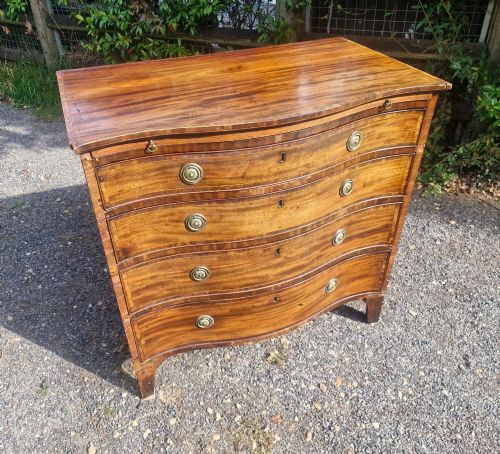
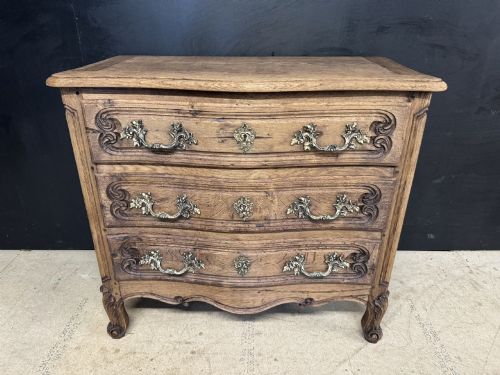
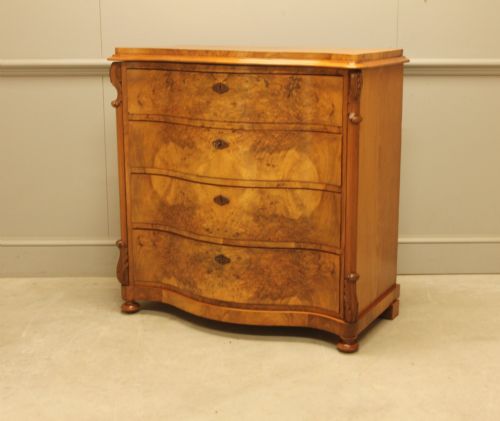
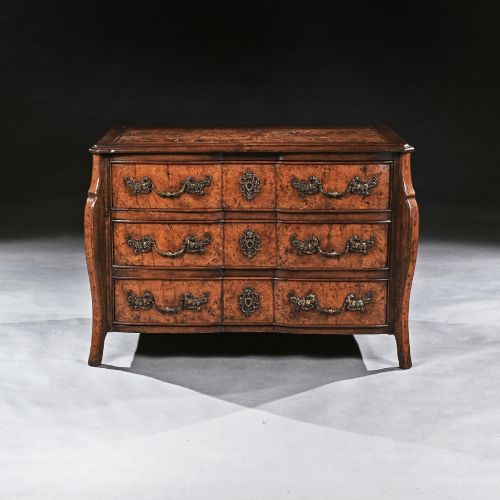
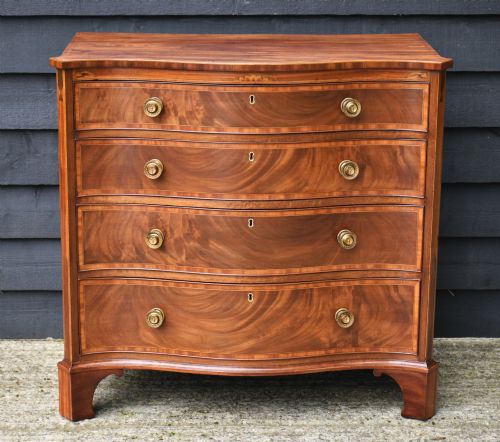
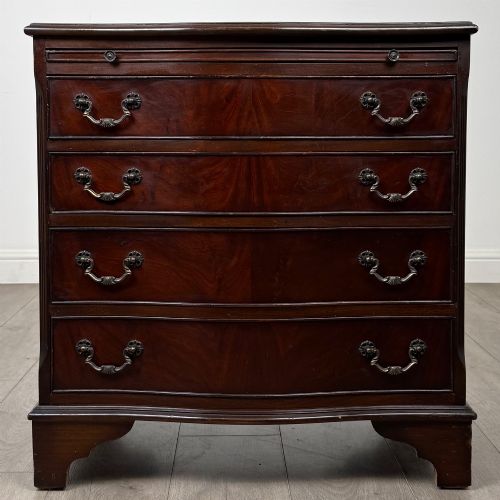
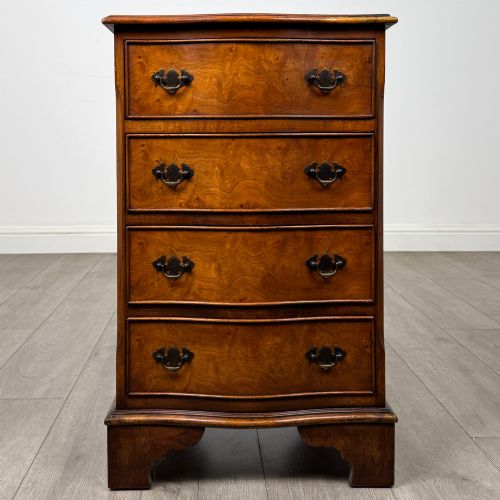
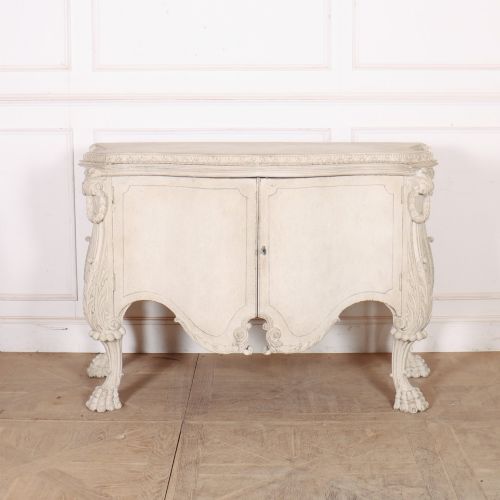
Serpentine Storage Commode
A serpentine storage commode offers sweeping lines and practical depth, combining sculptural elegance with generous capacity for any room.
Serpentine Storage Commode
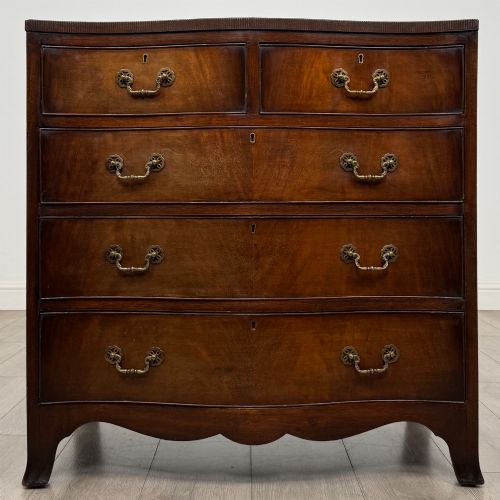
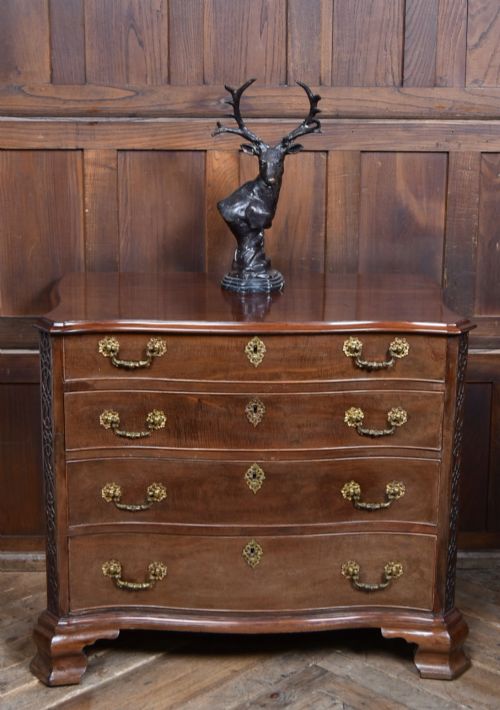
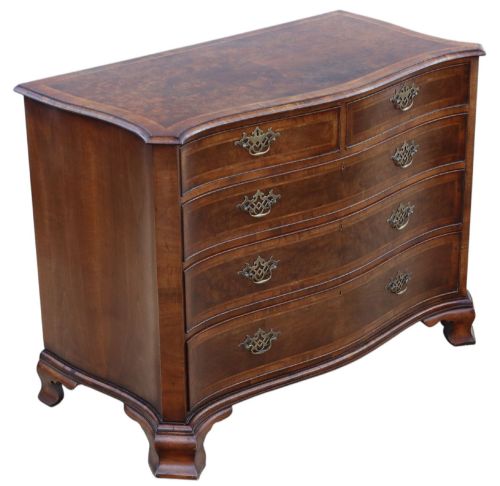
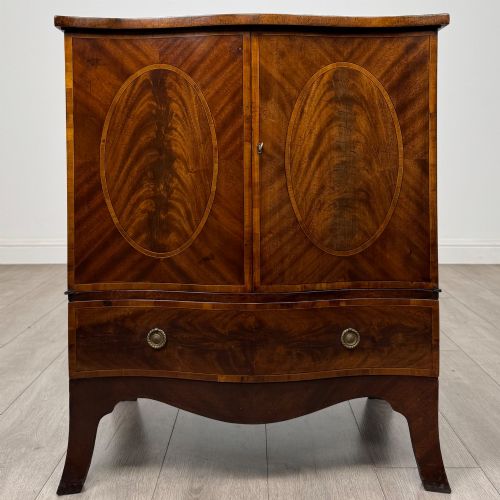
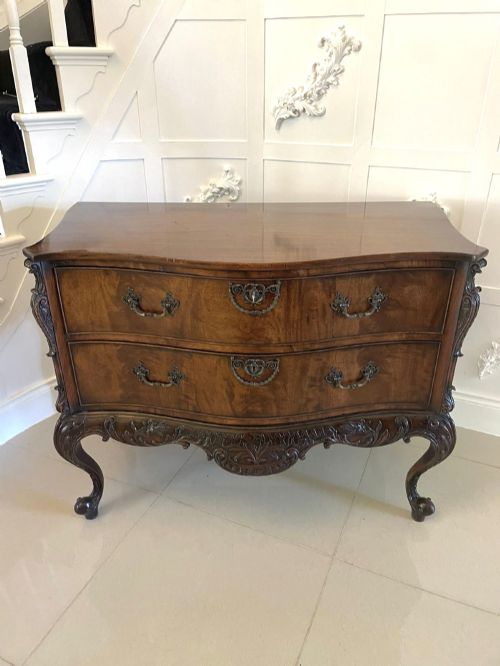
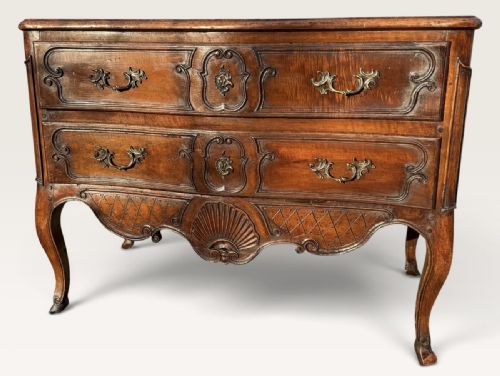
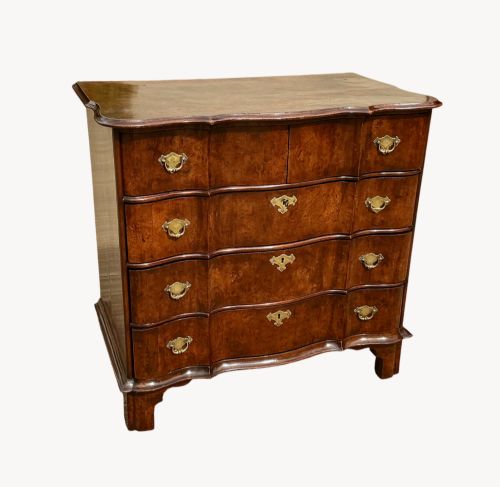
A serpentine storage commode is a case piece defined by its undulating, curving front edge that alternates between concave and convex sections. These items function primarily as chests of drawers, side cabinets, and cupboards designed to hold household goods while serving as a focal point in a room.
The selections span multiple eras, with significant representation from the eighteenth century alongside Georgian, Victorian, Edwardian, and twentieth-century revivals. Buyers frequently encounter mahogany and walnut examples, often featuring burr veneers, alongside marble-topped continental pieces and painted finishes.
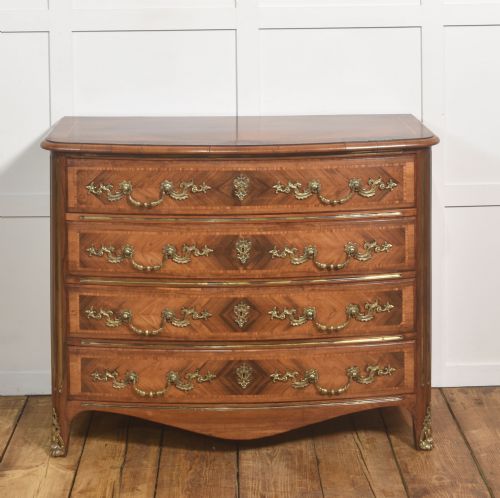
Origin points vary across English workshops, French provincial makers, and Dutch ateliers, yielding distinct regional interpretations of the serpentine form. Whether examining a George III mahogany chest or a French Louis XV style marquetry piece, the underlying purpose remains decorative storage with a contoured silhouette.
How they were made
Cabinetmakers constructed these pieces using solid timbers such as mahogany, oak, and walnut for the structural carcase, applying figured veneers like burr walnut or satinwood to the drawer fronts. Marquetry and parquetry techniques introduced intricate geometric or floral patterns using contrasting woods.
Shaping the characteristic serpentine front required careful reduction of thick timber blocks or steam-bending laminated layers to achieve the smooth, undulating curves. Brass handles, escutcheons, and parfois marble tops completed the construction, adding weight and functional utility to the surfaces.
Current listings feature pieces spanning the eighteenth, nineteenth, and twentieth centuries, utilising mahogany, walnut, burr walnut, oak, satinwood, and marble.
What varies in quality
Quality rests in the precision of the timber matching and the execution of the undulating drawer fronts, where top-tier pieces show seamless grain continuity across multiple drawers. The crispness of inlaid parquetry, marquetry details, and the integration of original brass hardware further distinguish superior examples from standard production.
Structural integrity reveals itself in the dovetail joinery of the drawer boxes and the retention of original elements such as marble slabs or backboards. Pieces created in recognised historical periods or refined revival eras demonstrate a higher standard of cabinetmaking than simpler utilitarian versions.
The Serpentine Storage Commode Glossary
- Serpentine
- A front contour characterised by a central convex curve flanked by two concave sweeps, or vice versa, creating a flowing, wave-like facade. This shape demands advanced cabinetmaking skill to execute across drawer fronts and frames.
- Marquetry
- The art of applying decorative veneer pieces in various woods, metals, or shells to a structural panel to form pictorial or geometric designs. It differs from parquetry through its capacity to depict complex, curving motifs.
- Parquetry
- A geometric mosaic of wood pieces used for decorative veneer on furniture surfaces, often forming repeating patterns like cubes or chevrons. This technique provides durable surface ornamentation on cabinet tops and drawer faces.
- Bombe
- A swollen or bulging commode profile where the sides and front curve outward in a convex swell. This distinct continental form adds substantial visual weight and volumetric capacity.
- Crossbanded
- A border technique where veneer strips are laid perpendicular to the grain of the central panel, framing the drawer front. It creates a contrasting visual boundary around the primary timber.
Serpentine Storage Commode: Frequently Asked Questions
Where should I place a serpentine storage commode?
These pieces suit entrance halls, living rooms, and bedrooms where their curved profile softens rigid architectural lines. Their considerable depth provides ample interior capacity for linens or tableware.
Positioning them away from direct sunlight and heat sources protects delicate veneers and polished timber finishes from drying out or warping over time.
How do I maintain marble tops on commodes?
Marble surfaces require gentle cleaning with a damp cloth and mild, non-acidic soap to preserve the polish without etching the stone. Avoid placing unsealed acidic items directly on the stone.
Applying a specialist stone wax periodically helps repel liquids and maintains the natural lustre of eighteenth-century and nineteenth-century tops.
Are these commodes suitable for everyday storage?
Most pieces feature deep drawers and enclosed cabinet compartments designed specifically for household organisation. The internal dimensions easily accommodate modern storage needs.
Careful handling of antique drawer runners ensures smooth operation and prevents unnecessary wear on historic timber components during daily use.
How can I tell an eighteenth-century piece from a revival?
Examination of internal secondary woods, hand-cut dovetails, and subtle tool marks offers clues to the original period of manufacture. Eighteenth-century examples display construction methods consistent with period workshop practices.
Revival pieces from the Edwardian era or later often utilise standardised machine-sawn components and distinct secondary timbers that reflect nineteenth- or twentieth-century manufacturing standards.