



Serpentine Nightstand Cabinet
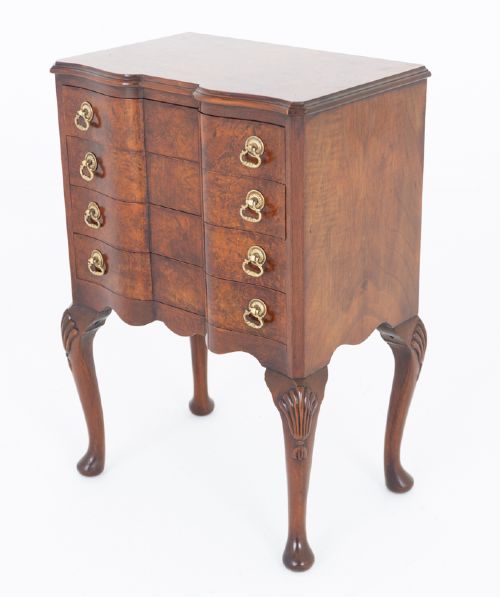
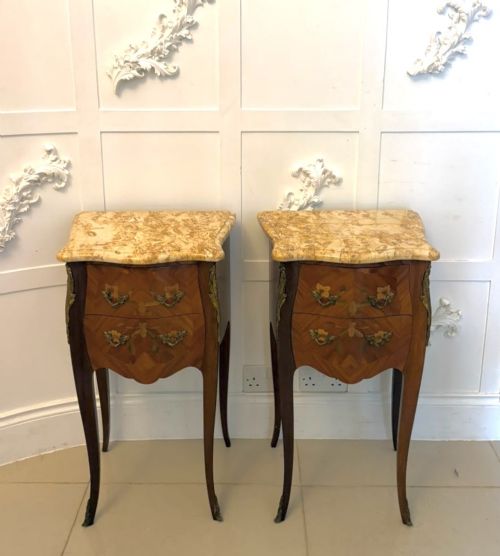
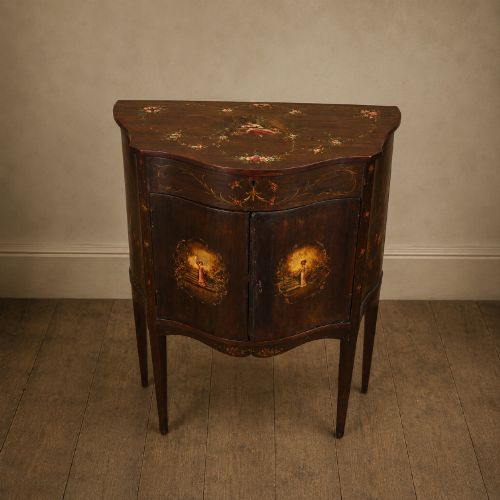
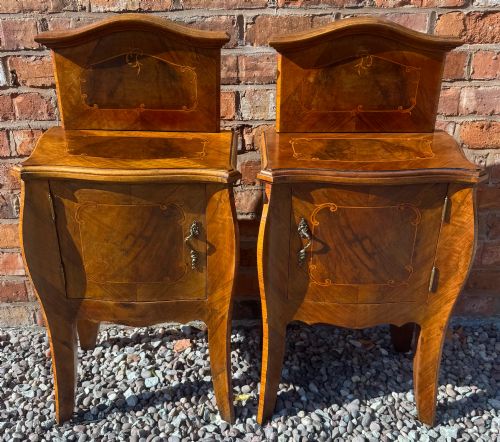
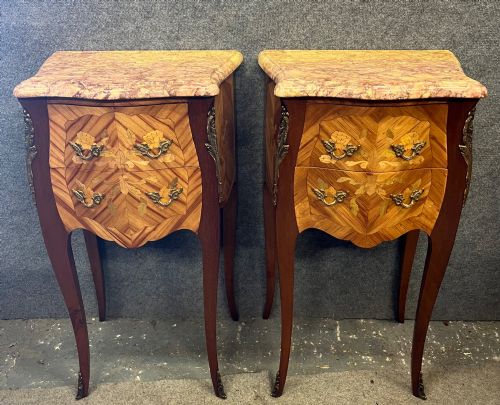
These serpentine nightstand cabinet pieces bring fluid movement and enclosed storage to the bedside, crafted in mahogany, walnut, and kingwood.
Serpentine Nightstand Cabinet
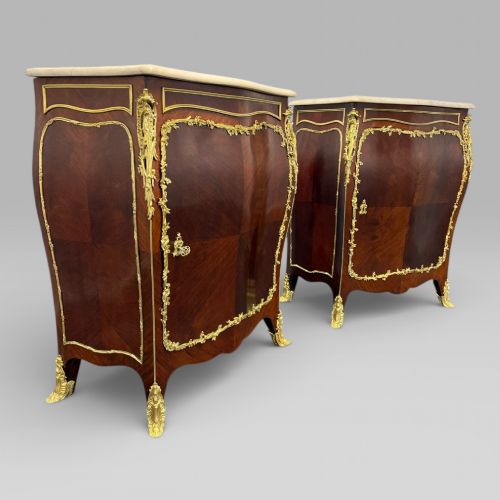
A serpentine nightstand cabinet introduces a distinct undulating front line that softens the corner of a bedroom while offering practical enclosed storage beside the bed. The selection includes compact tables, bedside chests, commodes, and bombe cabinets spanning from the eighteenth century through to the early twentieth century.
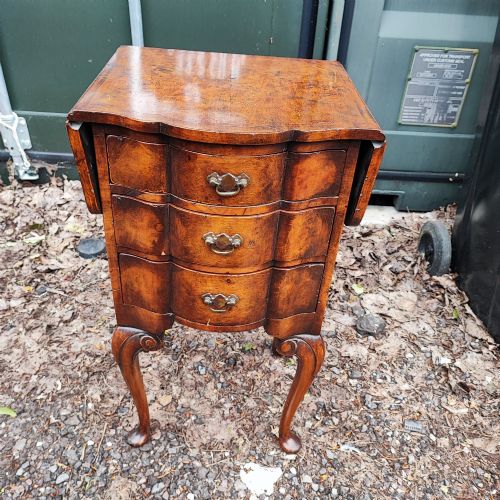
You will encounter pieces rooted in several distinct design traditions, with French Louis XV style and revival works appearing alongside Georgian and Sheraton Revival examples. Eighteenth-century iterations in solid mahogany sit alongside walnut, burr walnut, and kingwood versions from the Victorian and later periods.
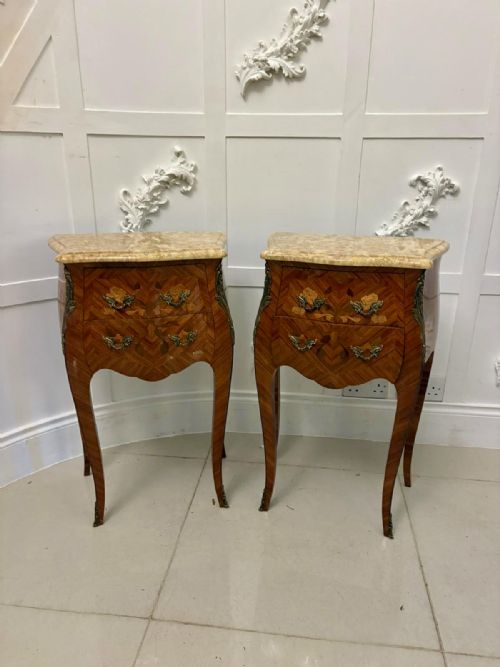
The form functions equally well as a bedside table or a lamp table in a sitting room, providing surface space and concealed compartments behind cupboard doors or drawers. Pairs of cabinets frequently appear, offering symmetry for flanking a bed.
Materials and construction methods
Cabinetmakers utilised rich timber veneers such as kingwood, walnut, and satinwood laid over robust carcases, often incorporating intricate marquetry and parquetry geometric patterns. Solid mahogany also forms the structural base for many eighteenth-century and later English examples.
The undulating serpentine and bombe profiles require specialist curved woodwork and shaped drawer fronts, frequently topped with fitted marble slabs. Cast brass and ormolu mounts accentuate the corners, handles, and sabots on French revival pieces.
Listings feature periods spanning from the eighteenth-century Georgian era through Victorian times up to 1930.
Distinguishing quality in construction and detail
Superior examples display crisp, hand-cut marquetry and tightly figured timber veneers that follow the complex curves of the serpentine front without buckling. The integration of original marble tops and high-grade cast brass ormolu mounts elevates the standing of a piece.
Finer construction is evident in the precision of the drawer dovetailing, the smooth operation of shaped doors, and the retention of period hardware. Pieces bearing maker attributions or emerging from established workshops demonstrate higher craftsmanship.
E. Kahn
The Serpentine Nightstand Cabinet Glossary
- Serpentine front
- A furniture front characterised by a concave central section flanked by two convex ends, creating a gentle S-shape wave. This profile demands advanced woodworking skill to shape timber accurately.
- Bombe
- A swelling, outward-curved commode or cabinet shape associated with continental furniture. The sides and front bulge outward before tapering toward the base.
- Marquetry
- Decorative veneer work forming pictures or patterns using various tinted woods, shells, or ivories. Craftsmen cut these elements precisely to fit flush into the surface.
- Parquetry
- Geometric wood mosaic work used for floors or cabinet surfaces. The small wooden blocks form repeating patterns such as cubes or chequers.
- Ormolu
- Gilded bronze mounts applied to furniture for decoration and edge protection. The technique involves coating bronze with a mercury-gold amalgam.
Serpentine Nightstand Cabinet: Frequently Asked Questions
What is a serpentine nightstand cabinet?
A serpentine nightstand cabinet is a small bedside storage piece featuring an undulating, wave-shaped front.
These cabinets range from eighteenth-century mahogany commodes to twentieth-century revival pieces with marquetry inlay.
How do I date a serpentine cabinet?
Dating relies on examining the secondary timbers, construction methods, handles, and veneer styles.
Eighteenth-century pieces typically show hand-dovetailed solid mahogany, while later revival works often employ machine-cut elements and distinct decorative vocabularies.
Are these cabinets used only beside beds?
While designed for bedside storage, many examples function effectively as lamp tables or side cabinets in reception rooms.
Their compact footprints and decorative finishes suit various spaces requiring surface area and enclosed storage.
What is the difference between a commode and a bedside cabinet?
A commode traditionally denotes a low chest of drawers or cupboard with decorative mounts, often originating from French designs.
Bedside cabinets are generally scaled specifically for placement next to a bed, though the terms frequently overlap in antique listings.