


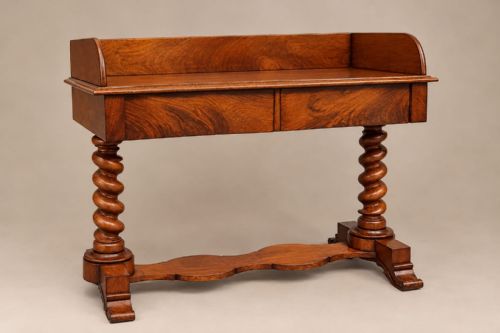
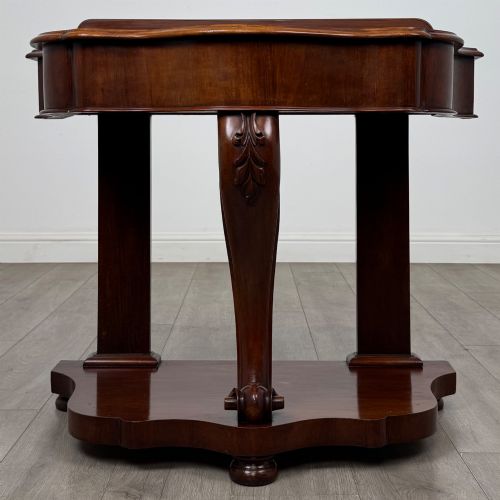
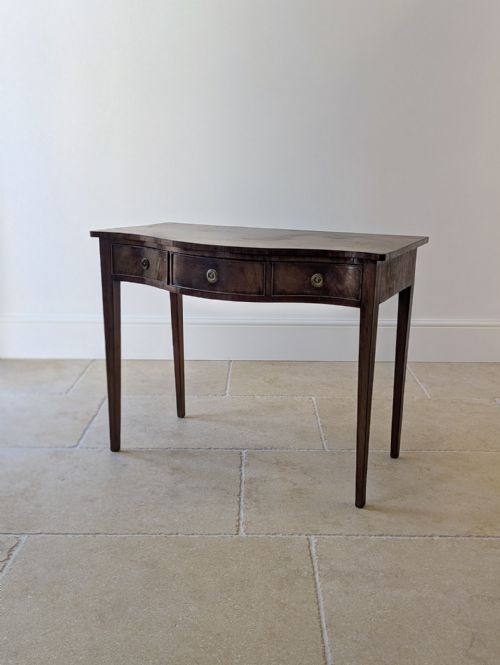
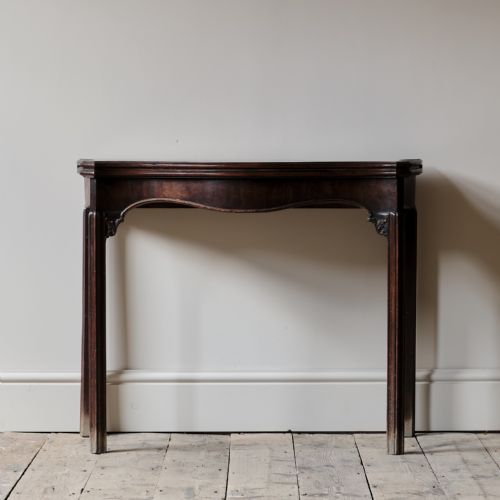
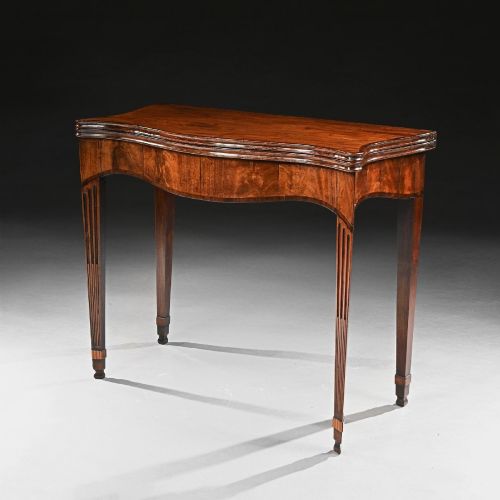
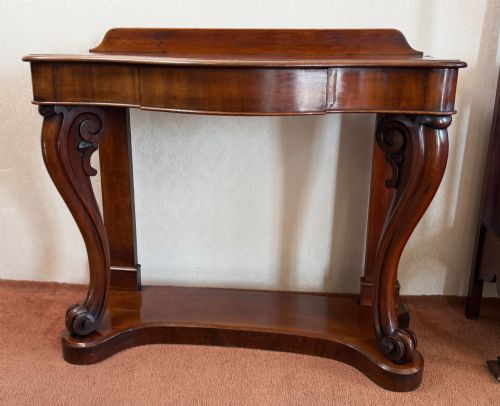
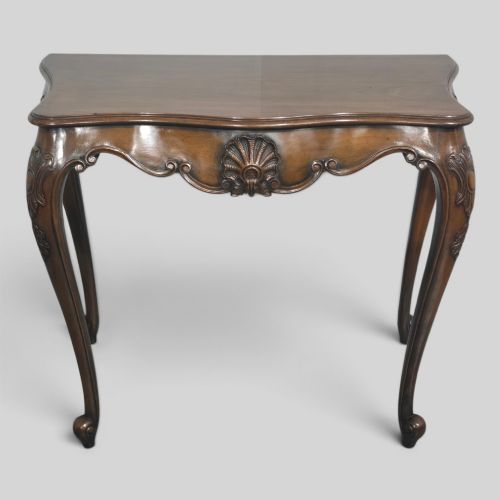

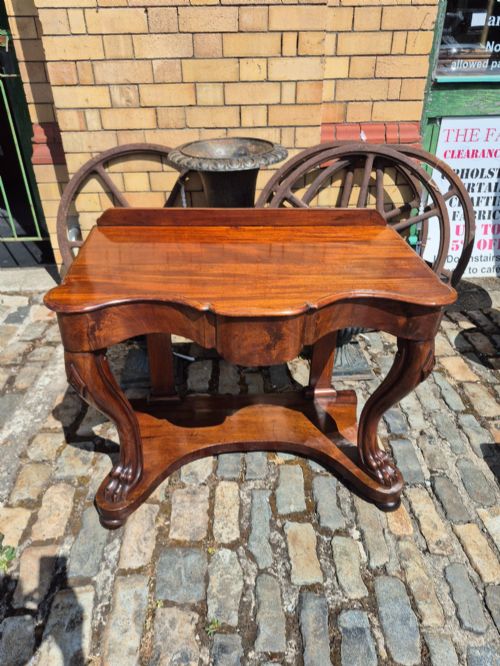
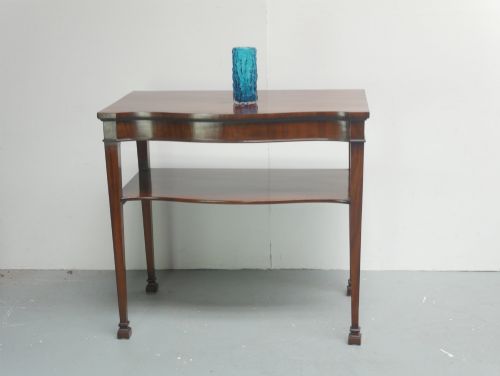
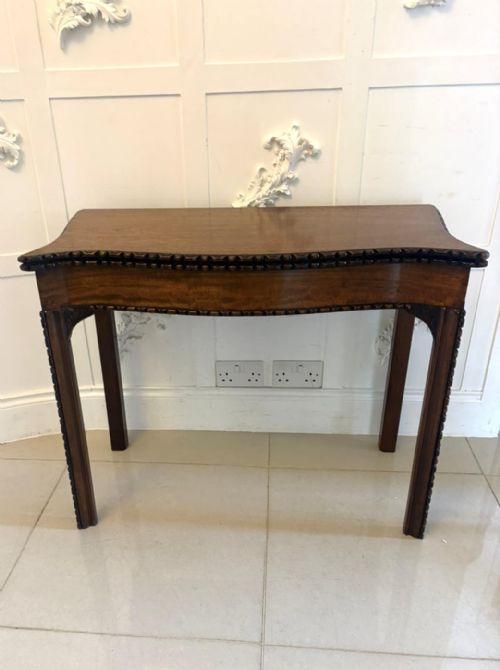
Serpentine Mahogany Console Table
A serpentine mahogany console table brings an undulating silhouette and rich timber grain to an interior.
Serpentine Mahogany Console Table
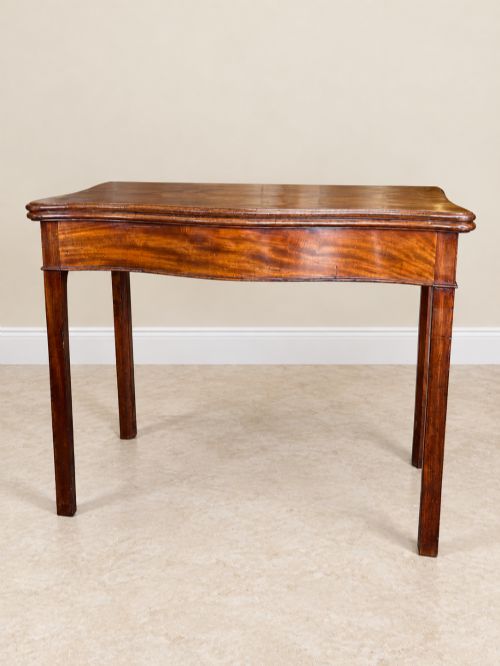
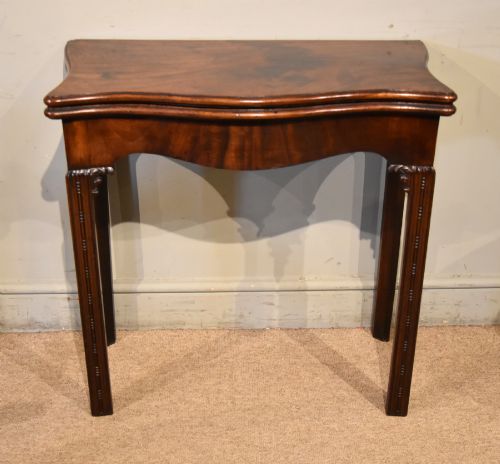
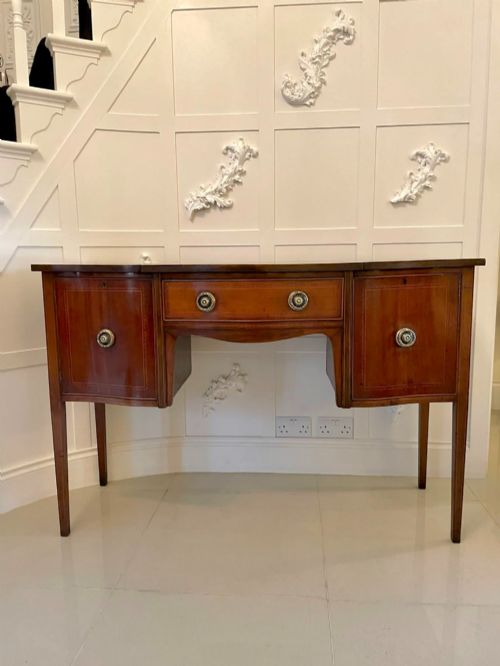
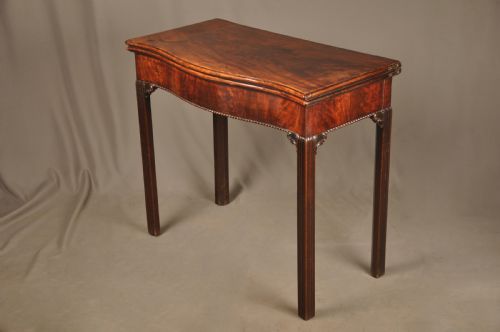
A serpentine mahogany console table is a curving wall table designed for formal reception rooms, taking various forms from dedicated serving surfaces to folding card tables. The examples found here span the Georgian and Victorian eras through to the early twentieth century, incorporating George III, Chippendale, and Neoclassical styles.
The most common formats on this page are serving tables, side tables, and games tables featuring the characteristic undulating front. Many examples display the craftsmanship of eighteenth-century cabinet makers or later revivals, utilising the serpentine shape to catch the light and soften room layouts.
How they were made
Cabinet makers constructed these tables using solid mahogany and flame mahogany veneer applied to secondary framing timbers. Selected pieces incorporate satinwood, boxwood, and brass details to accent the curving friezes and tabletops.
The distinctive serpentine profile required skilled hand-sawing and precise planing of the timber rails to create the convex centre and concave sides. Carved ornamentation, such as Neoclassical motifs and Chippendale-influenced details, was executed directly into the solid mahogany framing.
Serpentine Mahogany Console Table Retail Price Guide 2026
Typical asking prices for serpentine mahogany console table among the pieces listed under this phrase on Sellingantiques today, from the lower quarter to the upper quarter. They describe what is for sale here now, not the wider market.
Some card tables hide secret storage wells beneath their folding tops for storing forgotten gaming counters.
What varies in quality
Quality rests in the depth of timber figure and the crispness of any hand-carved decoration along the frieze and legs. Tables with rich natural patination and well-matched flame mahogany veneers sit at the upper end of the range.
Structural integrity of the curving frame and the precise execution of the serpentine line dictate the overall merit of a piece. Finer examples maintain tight joints along the complex curves without distortion of the timber over time.
Gillow
The Serpentine Mahogany Console Table Glossary
- Serpentine
- A shaped furniture front featuring a convex central section flanked by two concave curves. This design requires advanced carpentry to follow the undulating line smoothly.
- Console table
- A table designed to stand against a wall, historically supported by brackets or legs at the front. These pieces served decorative and functional roles in grand hallways and drawing rooms.
- Flame mahogany veneer
- A thin slice of timber cut from the fork of the mahogany tree, displaying a flickering flame-like grain pattern. Cabinet makers laid this over a stable base timber to create decorative surfaces.
- Card table
- A folding table intended for gaming, featuring a hinged top that opens to reveal a baize-lined playing surface. Many serpentine examples double as console tables when closed against a wall.
- Patina
- The surface sheen and mellow colour developed by aged wood through decades of handling and polishing. This quality signals age and is valued by collectors.
Serpentine Mahogany Console Table: Frequently Asked Questions
Where should I place a serpentine mahogany console table?
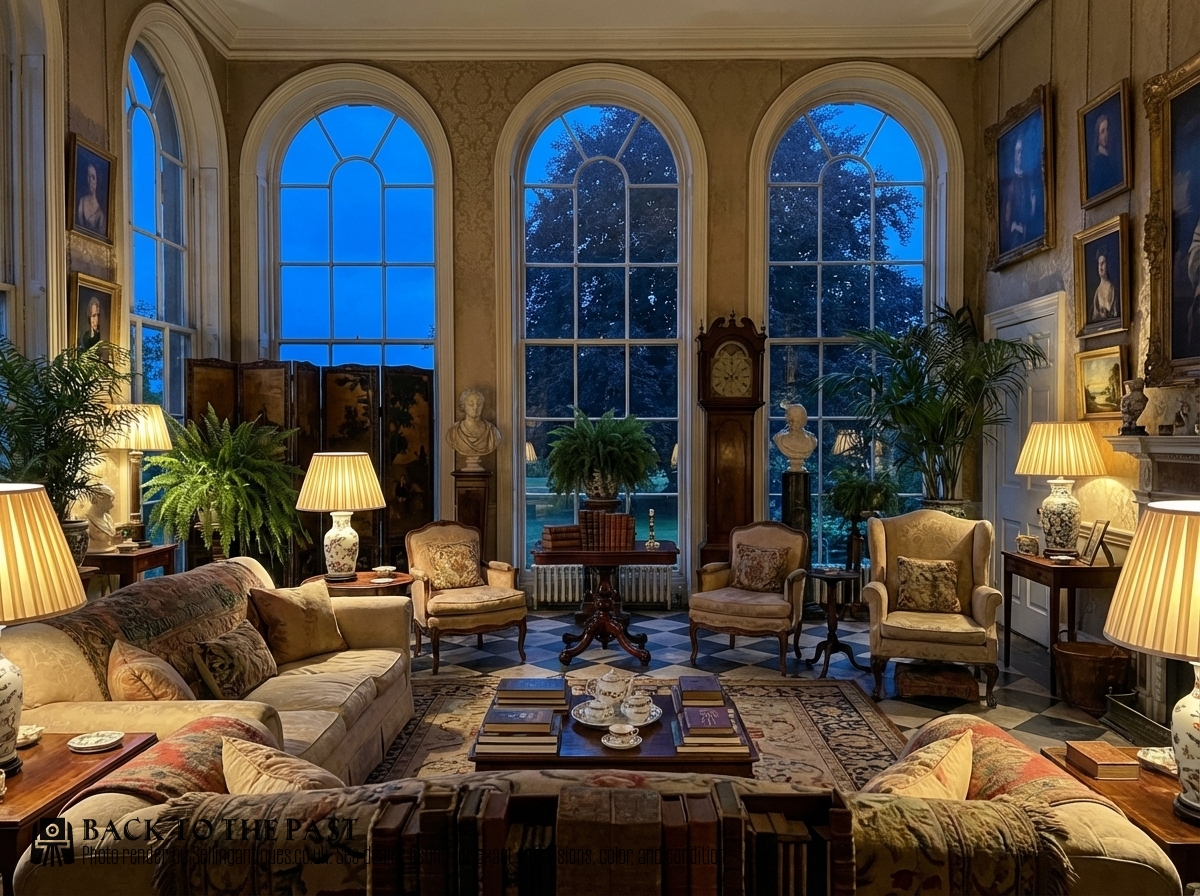
These tables suit hallways, living rooms, and dining spaces where a wall-mounted surface enhances the room. Their curved profile softens rigid architectural lines in traditional interiors.
Position them beneath mirrors or paintings to create a balanced focal point in a reception area.
How do I care for antique mahogany surfaces?
Maintain the timber by dusting with a soft cloth and applying traditional beeswax periodically. Avoid placing these tables in direct sunlight or near heat sources to prevent the wood from drying out.
Keep moisture away from the polished top by using coasters beneath any objects placed on the surface.
How can I tell a Georgian table from a later revival?
Examine the construction methods and timber characteristics underneath and inside the frame. Eighteenth-century pieces often show hand-tool marks and older secondary woods that differ from twentieth-century manufacturing.
Stylistic details and the nature of the timber figure also help distinguish original period pieces from Edwardian or later reproductions.
Did these tables always have folding tops?
Not all serpentine tables feature folding tops, as many were built specifically as serving or side tables. The surviving inventory includes both solid-top console tables and dual-purpose card tables.
Folding versions were primarily used for entertaining and closed when not in use to save space.