

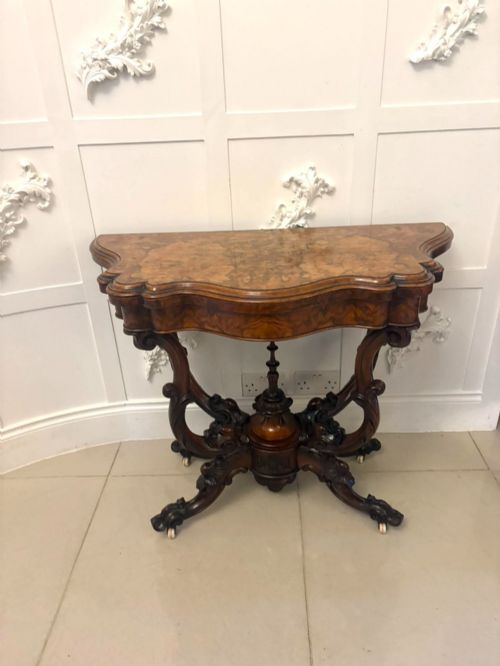
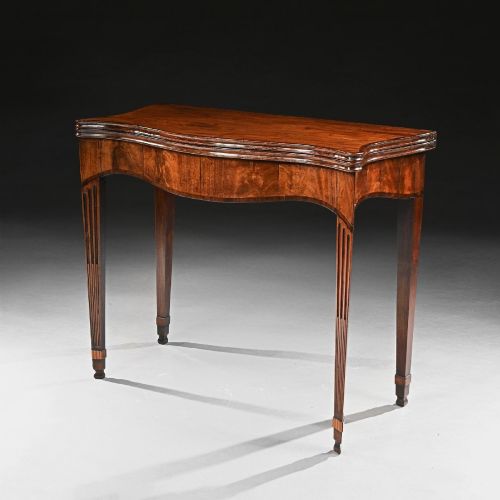

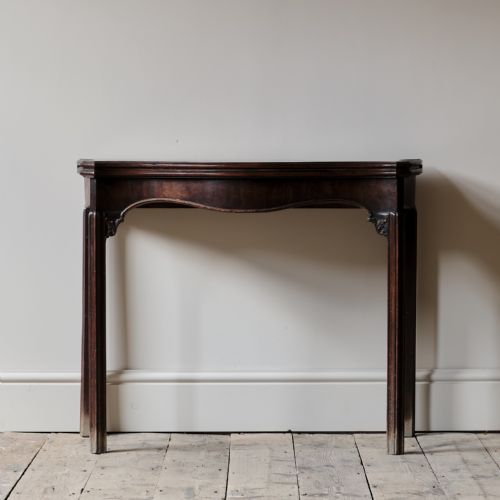
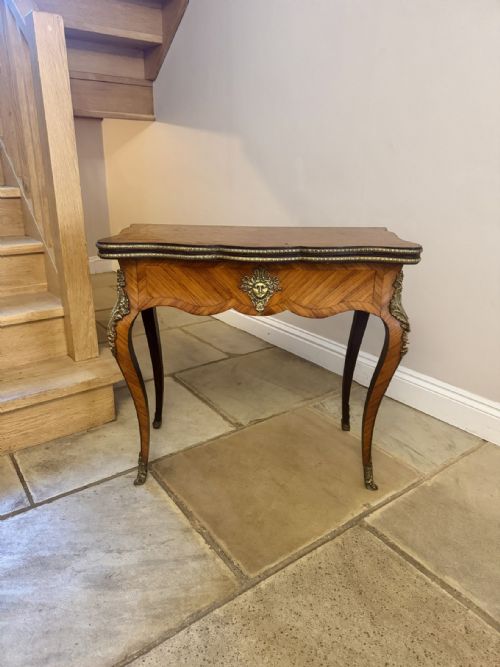
Serpentine Gaming Table
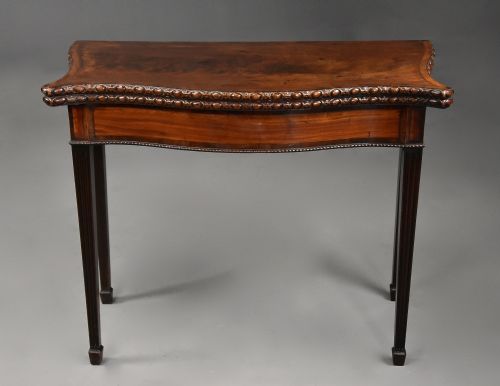
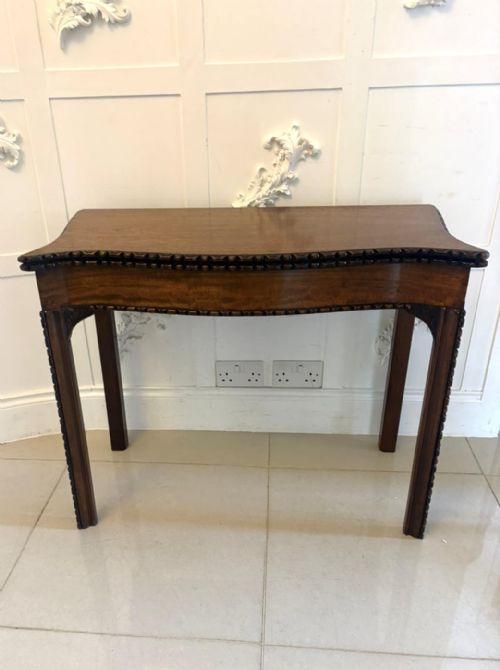
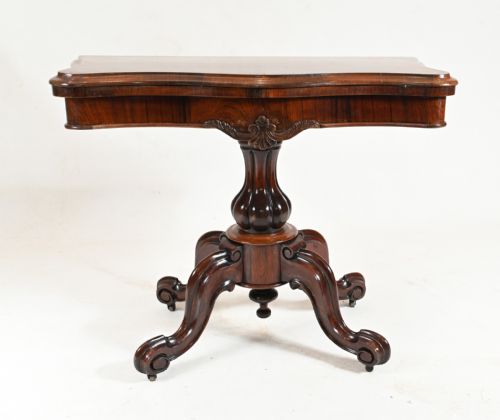
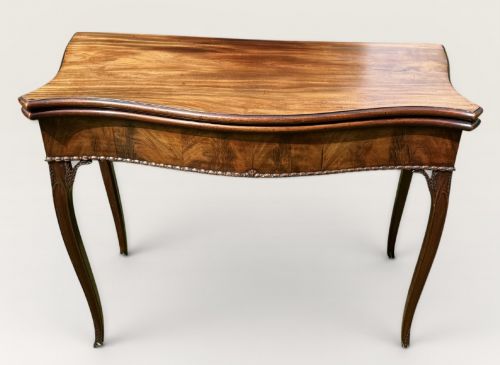
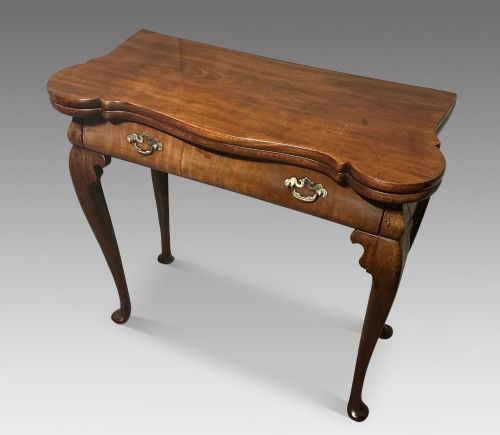
A serpentine gaming table combines clever folding mechanics with the sinuous, curving lines characteristic of Georgian and Victorian craftsmanship.
Serpentine Gaming Table
The form encompasses card tables, tea tables, and console tables that double as gaming surfaces through clever swivel or concertina actions. These pieces served a central role in period entertaining, housing cards, chess, and social gaming.
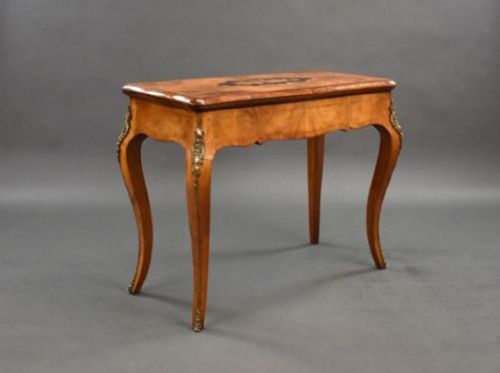
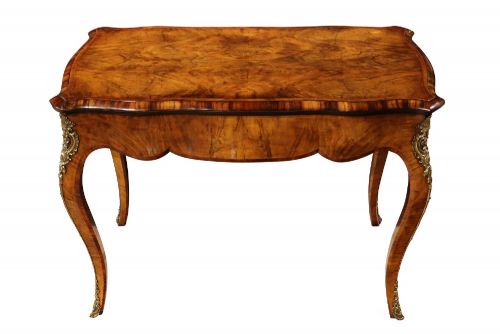
Mahogany and burr walnut dominate the selection on this page, appearing in both restrained English interpretations and ornate French revival styles. Buyers seek these tables for their dual functionality as striking console furniture and functional antique gaming surfaces.
Materials and Construction
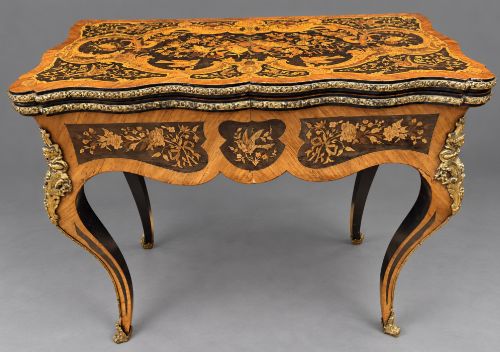
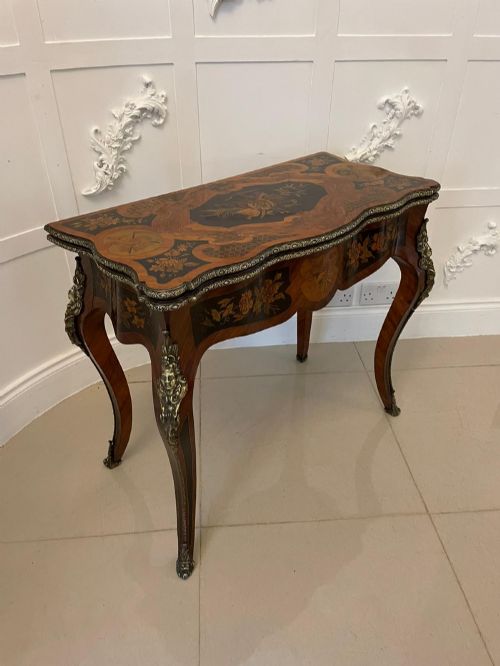
Cabinet makers built these tables using solid primary timbers like mahogany and walnut, frequently applying fine veneers such as burr walnut, kingwood, and satinwood to create patterned surfaces. Cross-banding and intricate marquetry inlay add decorative contrast to the flowing serpentine curves.
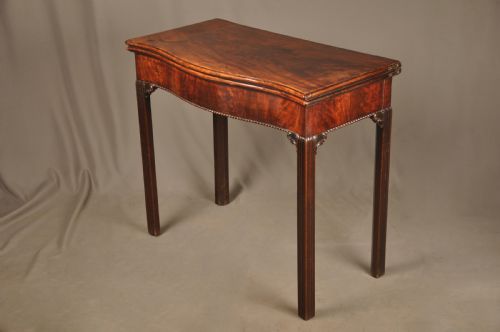
Mastering the serpentine outline required exceptional skill in shaping solid timber and bending veneers to follow the undulating contours of the front apron and top. Workshops also integrated brass hinges, swivel mechanisms, and cast ormolu mounts to support the heavy fold-over tops.
Serpentine Gaming Table Retail Price Guide 2026
Typical asking prices for serpentine gaming table among the pieces listed under this phrase on Sellingantiques today, from the lower quarter to the upper quarter. They describe what is for sale here now, not the wider market.
Some tables hide secret compartments beneath the fold-over top, reminding us that eighteenth-century parlour games involved high stakes and hidden card hands.
Assessing Quality
The distinction between ordinary and exceptional tables rests in the depth of the carving, the richness of the timber's grain, and the precision of the joinery along the curved edges. Superior examples display seamless movement in their concertina or swivel actions and retain their original patination.
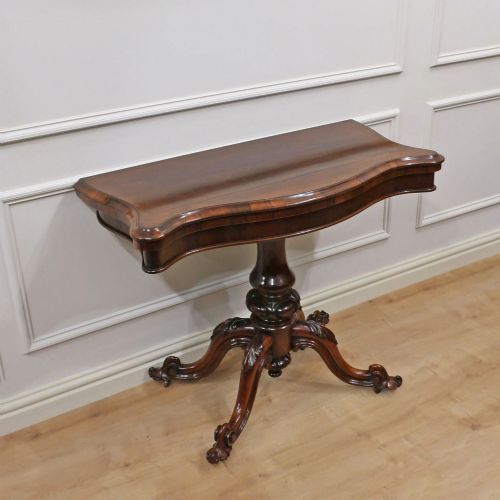
Decorative elaboration also separates the tiers, with top-tier pieces featuring finely chased ormolu mounts, intricate marquetry, or carved basket bases. The integration of secondary woods and the crispness of the serpentine shaping reveal the hand of a skilled workshop.
Maison Millet·Edwards & Roberts
The Serpentine Gaming Table Glossary
- Serpentine
- A furniture outline characterised by a double curve, convex at the centre and concave at the sides, resembling a snake's movement. This shaping requires precise woodworking to execute successfully.
- Concertina action
- An expanding frame mechanism that allows a table top to pull forward and open fully while supported on extended legs. It provides stable support for fold-over gaming surfaces.
- Marquetry
- Decorative patterns formed by fitting together thin slices of various woods, veneers, and sometimes metals onto a structured core. It frequently decorates the top surfaces of Victorian and French style tables.
- Ormolu
- Gilt bronze mounts applied to furniture for decorative enrichment, popular in French revival pieces. These metal accents highlight the contours of the cabinet work.
- Patination
- The natural sheen and surface alteration developed on antique wood through age, handling, and waxing over centuries. Original patination is highly prized by collectors for its warmth.
Serpentine Gaming Table: Frequently Asked Questions
How do I use a serpentine gaming table?
These pieces function primarily as console or side tables against a wall when the top remains folded shut. Lifting and rotating or unfolding the top reveals a concealed surface designated for cards or board games.
Owners typically keep them closed for daily display and open them when hosting or for detailed viewing of the internal veneers and baize.
What is the difference between Georgian and Victorian examples?
Georgian tables tend to rely on the natural grain of solid mahogany, featuring restrained carving associated with Chippendale or Hepplewhite designs. Their proportions are generally classic and architectural.
Victorian pieces embrace burr walnut veneers, marquetry inlay, and French revival influences like ormolu mounts and Louis XV styling. They often showcase more exuberant wood figuring and elaborate serpentine curves.
How do I care for the timber surface?
Protect the polished wood from direct sunlight and extreme humidity fluctuations to prevent veneer lifting or timber cracking. Use clean, soft cloths for dusting and apply quality beeswax periodically to nourish the historic finish.
Avoid placing damp items or unpadded objects directly onto the antique polish to preserve the original patination.
What mechanisms should I check?
Examine how the top opens, noting whether the swivel, pivot, or concertina action moves smoothly without binding or sagging. The hinges and supporting legs should bear the weight of the fold-over top securely.
Well-maintained mechanisms operate with the balanced precision intended by the original cabinet maker.