




Serpentine Bedside Drawers
Serpentine bedside drawers combine a distinctive undulating front with compact proportions, offering practical bedside storage paired with sculptural eighteenth-century to twentieth-century design.
Serpentine Bedside Drawers
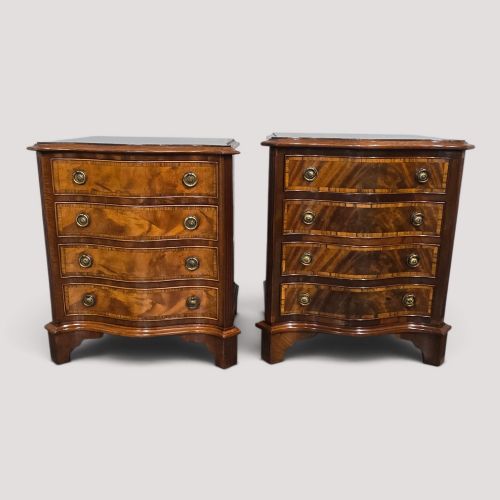
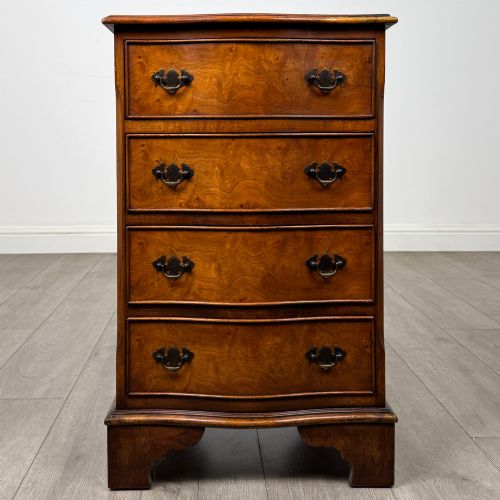
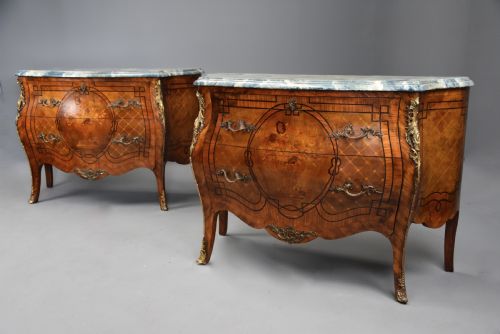
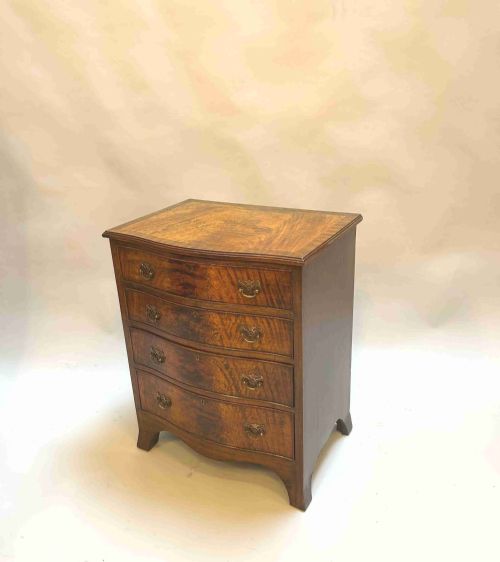
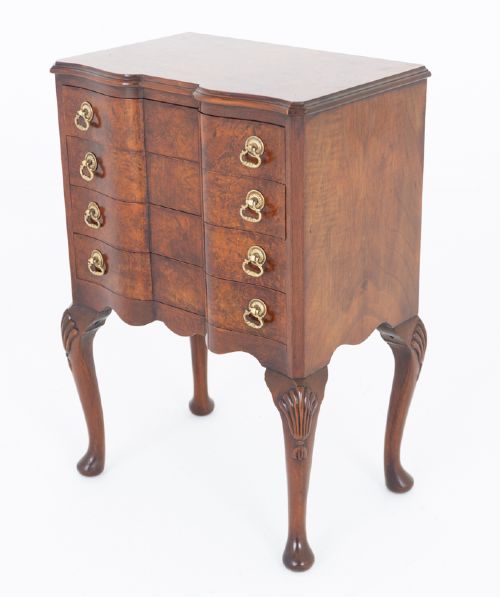
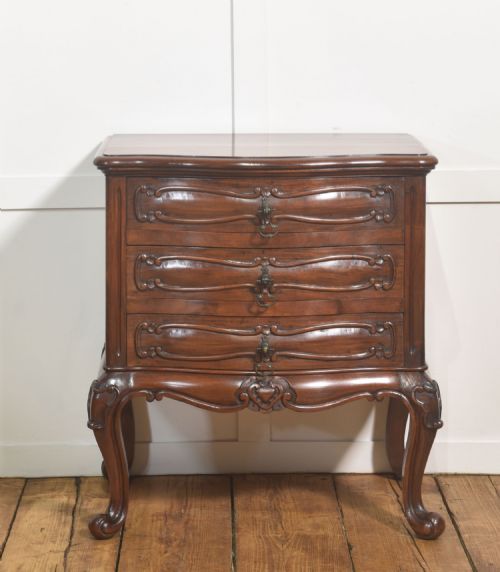
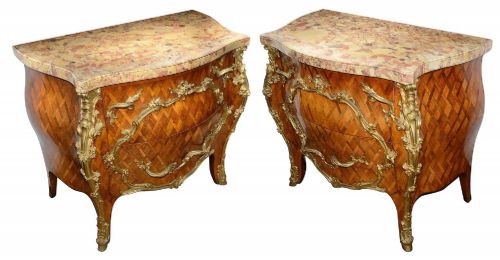
When searching for serpentine bedside drawers, a buyer encounters pieces originating from the eighteenth century up through the 1930s. The selection spans compact bedside tables, small chests of drawers, and French-inspired commodes featuring the characteristic sweeping serpentine outline.
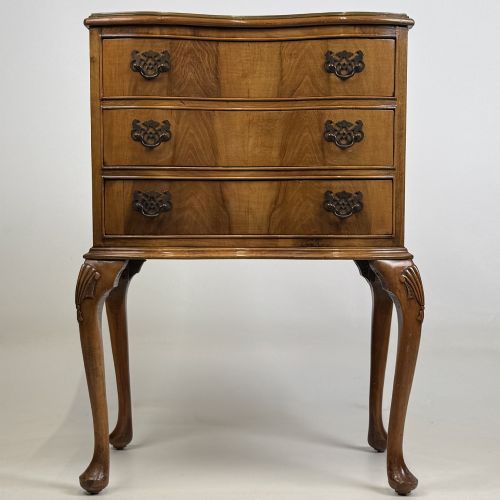
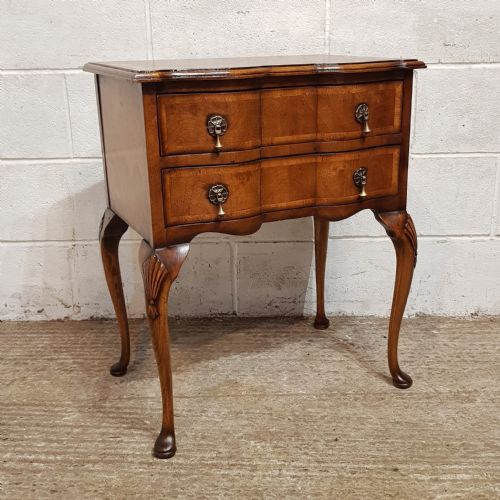
Most examples found on this page lean towards twentieth-century revivals including Georgian and Queen Anne styles, alongside continental French and Italian pieces. These items serve primarily as bedside cabinets or lamp stands while retaining the curved silhouette typical of historic commodes.
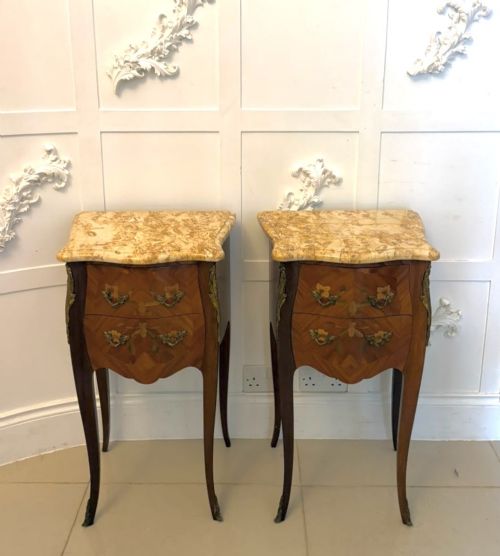
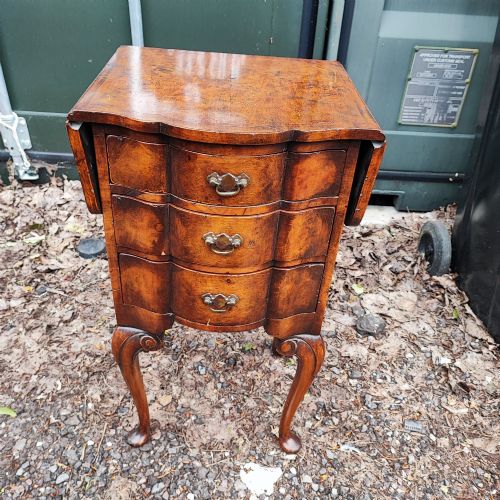
Origins vary from English mahogany and burr walnut cabinet-making to continental kingwood and marquetry work. Buyers frequently discover pairs suited for flanking a bed, alongside single statement chests in various walnut and mahogany finishes.
Materials and construction techniques
Cabinet-makers constructed these pieces using dense timber carcases of mahogany, walnut, and kingwood, often enhanced by burr walnut veneers. These woods provided the stable foundation required to cut and shape the curving serpentine fronts.
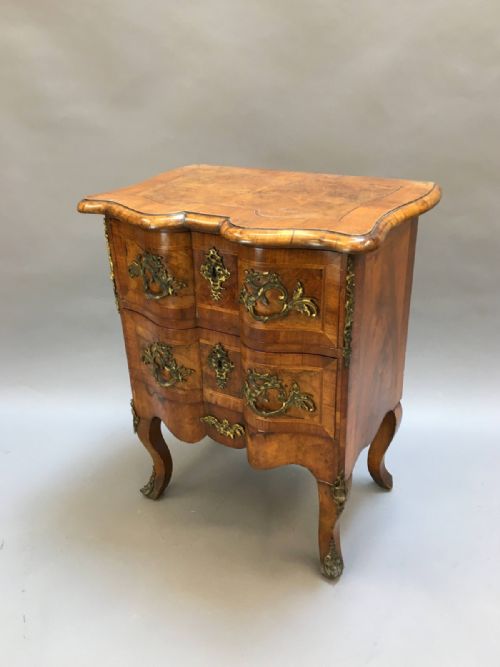
Surface decoration frequently incorporates intricate marquetry or parquetry inlay, combining contrasting timbers in geometric or floral patterns. Many continental and revival pieces are finished with fitted marble tops and cast brass or ormolu mounts framing the drawers.
Listings feature pieces spanning the eighteenth century through the 1930s, constructed predominantly in mahogany, walnut, and kingwood with marble and brass additions.
Distinctions in craftsmanship
The distinction between ordinary and superior pieces rests on the execution of the curved timber and the crispness of the serpentine shaping. Finer examples display seamless veneer matching across the undulating drawer fronts, whereas simpler items rely on plain timber surfaces.
Hardware and secondary materials also dictate standard, with top-tier pieces featuring heavy chased ormolu mounts, genuine marble slabs, and precise dovetail joinery in the drawer construction. The integration of fine marquetry inlay further separates standard production items from master cabinet work.
The Serpentine Bedside Drawers Glossary
- Serpentine
- A front profile characterised by a convex central section flanked by two concave curves. This S-curve shape requires advanced cabinet-making skill to execute in solid timber or veneer.
- Commode
- A low chest of drawers or cabinet originating in France, often featuring decorative mounts and a marble top. They serve as ornamental storage units in bedrooms and living spaces.
- Kingwood
- A dense, richly figured Brazilian timber utilised in high-end cabinet-making and marquetry. It appears frequently on continental commodes and revival bedside cabinets.
- Ormolu
- Gilded bronze mounts applied to furniture edges and feet for decorative effect. This technique was favoured by French makers during the Louis periods and later revivals.
- Marquetry
- The art of applying decorative veneer pieces to a structure to form intricate pictures or patterns. Craftsmen use contrasting woods to achieve tonal depth.
Serpentine Bedside Drawers: Frequently Asked Questions
How do I identify a true serpentine front?
A true serpentine front bows outward in the middle and curves inward toward each corner, forming a continuous undulating line. This shape is physically carved or bent into the wood rather than simply applied with surface moulding.
Lower-quality or modern imitations may lack the smooth transition between the convex and concave sections. Examining the grain alignment across the curves helps confirm the solid construction of historic pieces.
Are these pieces suitable for modern bedside use?
These compact chests and commodes fit well beside contemporary beds, offering enclosed storage drawers for books and personal items. Their varied heights and surface materials, such as marble or polished wood, accommodate modern bedside lamps easily.
Buyers should measure bed frame heights carefully before purchasing, as historic proportions can differ from standard contemporary furniture dimensions.
What is the difference between a commode and a bedside chest?
A commode is traditionally a low French-style cabinet with deep drawers, often topped with marble and ornate mounts. A bedside chest is specifically scaled in width and depth to sit comfortably next to a bed.
Many pieces listed as commodes function equally well as large bedside tables depending on the proportions of the bedroom.
How do I care for marble-topped bedside cabinets?
Marble surfaces require gentle cleaning with a damp cloth and mild, pH-neutral soap to avoid damaging the stone polish. Acidic liquids like citrus juice or vinegar should be kept away from the marble to prevent etching.
Applying a specialised stone sealer periodically protects the porous surface from water rings left by drinking glasses placed on the bedside table.
How can I tell the period of a walnut chest?
Dating walnut furniture involves examining the interior drawer construction, timber colour, and secondary woods like oak or pine used inside the carcase. Eighteenth-century pieces display hand-cut dovetails and deep patination, while revival pieces from the Edwardian era or 1920s show machine assistance and lighter internal linings.
Stylistic cues such as Queen Anne cabriole legs or Louis XV Revival mounts also provide reliable clues to the exact era of manufacture.