




Serapi Medallion Carpet
These serapi medallion carpet examples bring monumental Northwest Persian weaving into a room, offering grand scale and geometric design.
Serapi Medallion Carpet
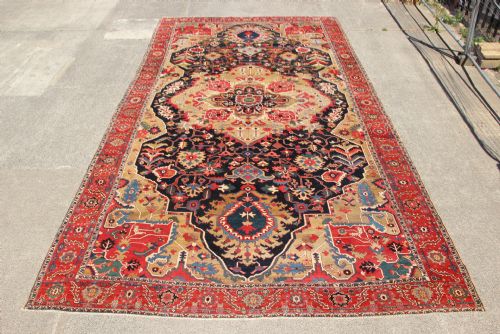
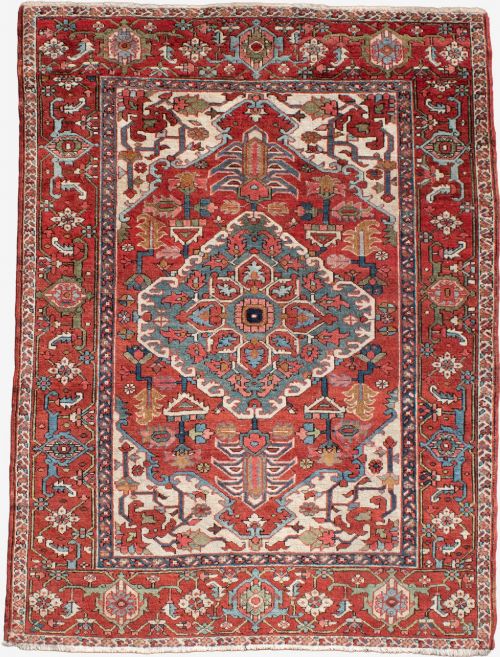
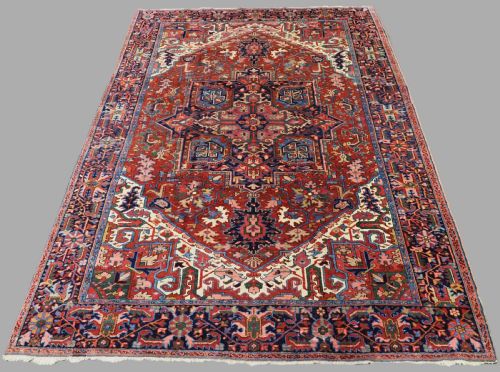
A serapi medallion carpet represents a specific regional style of large-scale Persian weaving originating from the Heriz district. Buyers examine these room-sized floor coverings for their characteristic geometry, featuring a prominent central medallion set against an open field.
The pieces on this page span several decades from the late nineteenth century through to the early twentieth century. Most examples appear under designations of Persian Heriz or Persian Serapi, often taking the form of substantial carpets or area rugs.
Proportions vary from intimate smaller rugs to expansive room formats exceeding six metres in length. Hallway runners and large rectangular carpets also appear among the selections available on this page.
Materials and construction
These carpets are constructed using wool pile knotted onto a cotton foundation. The interplay between wool and cotton provides both the supple surface texture and the structural stability required for heavy floor use.
Weavers utilised durable materials that absorbed natural dyes effectively, resulting in the saturated hues visible across nineteenth and early twentieth century examples. The knotting technique binds the wool firmly to the cotton warps and wefts, producing a resilient textile.
Listings span production dates from the 1860s through to the 1930s, utilising wool and cotton exclusively.
Factors that separate the range
Quality in these carpets rests upon the precision of the geometric drawing within the medallion and field. Finer pieces display crisp, deliberate lines where the motifs articulate clearly against the background.
The nuance and depth of the palette distinguish finer weaving from simpler production. Variations in wool quality also affect the handle and the way the pile reflects light across the surface.
The Serapi Medallion Carpet Glossary
- Medallion
- The central ornamental motif dominating the field of the carpet. In these pieces, it typically takes a bold geometric form.
- Warps
- The vertical foundation threads stretched lengthwise on the loom. Cotton warps provide the rigid framework upon which the wool knots are tied.
- Wefts
- The horizontal threads passed across the warps between rows of knots. They bind the structure together and determine the rigidity of the carpet.
Serapi Medallion Carpet: Frequently Asked Questions
How do I place a large carpet in a room?
Position the carpet so that furniture sits either fully upon it or with just the front legs resting on the wool. This anchors the room and displays the central medallion properly.
Ensure adequate clearance around the edges to let the borders frame the floor space effectively.
Are these carpets suitable for heavy foot traffic?
The dense wool pile and sturdy cotton foundations make these woven pieces robust enough for daily use in busy living spaces. Regular rotation helps distribute wear evenly across the surface.
Gentle care preserves the integrity of the natural materials over decades of household habitation.
How do Heriz and Serapi styles differ?
Serapi carpets generally exhibit slightly earlier nineteenth-century weaving with bolder, more open designs and restrained palettes. Heriz pieces from later periods often feature denser geometric detailing across the field.
Both styles share the same Northwest Persian regional origin and robust construction methods.
What size options exist in these listings?
The inventory ranges from small scatter rugs measuring around one metre to monumental carpets exceeding six metres in length. Hallway runners also appear to accommodate narrower architectural spaces.
Dimensions are recorded in both metric measurements and older formats within individual listings.