


Seated Woman Portrait
These seated woman portrait pieces capture individual likenesses across centuries, offering collectors a direct glimpse into past lives through diverse artistic traditions.
Seated Woman Portrait
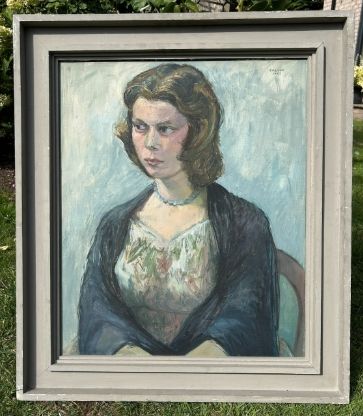
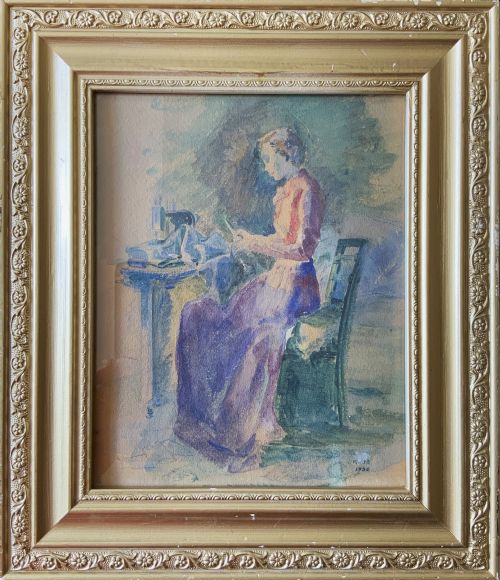
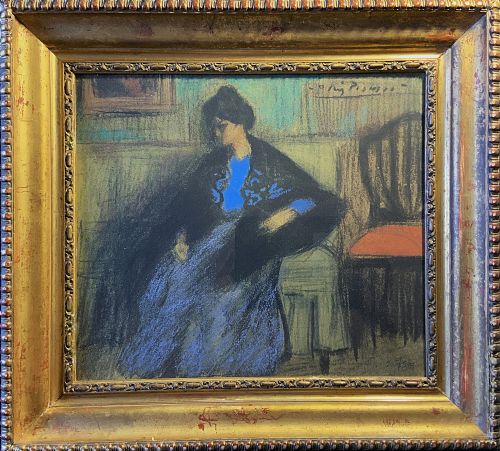
A seated woman portrait brings historic presence into a room, spanning periods from the eighteenth century through to mid-century modernism. These works capture female subjects posed at leisure, at work, or framed within landscapes and interiors.
Buyers will most frequently meet nineteenth century canvases and mid-century oil paintings on this page. Examples range from formal Regency and Georgian depictions to impressionist sketches and modernist prints.
Materials and methods
Artists relied primarily on oil paint applied to canvas, supplemented by watercolour and chalk on paper. Gilded wood and gesso frames often enclose these works, reflecting the framing styles of their respective periods.
Techniques vary from detailed stipple work and graphite drawing to loose mid-century impressionist brushwork. Lithography and pochoir printing also appear among the later twentieth century works.
Listings feature works spanning the eighteenth, nineteenth, and twentieth centuries, using oil paint, watercolour, and graphite.
Assessing quality
Quality rests in the handling of facial expression and the psychological depth captured by the artist. Stronger pieces reveal confident brushwork and anatomical clarity rather than stiff rendering.
The integration of the subject within their setting distinguishes finer works from more formulaic productions. Original framing and documented attribution further elevate the standing of a piece.
Kenneth Cozens·Pablo Picasso·J Cecil Bradshaw·William Owen·Sonia Mervyn·Jelle Troelstra·Julius Paulsen·Olaf Simony Jensen
The Seated Woman Portrait Glossary
- Oil on Canvas
- Pigment mixed with drying oil applied to a stretched woven fabric support. This traditional medium allows for rich colour blending and textured surfaces.
- Watercolour on Paper
- A painting method where fine pigment particles are suspended in a water-soluble binder. It produces translucent washes well suited to delicate paper portraits.
- Pochoir
- A stencil-based printing technique used to apply crisp, vibrant colours by hand. It frequently accompanies lithography in mid-century graphic works.
- Gesso
- A plaster-like mixture applied to wooden frames as a smooth base for gilding. It creates the hard surface required for traditional gold leaf application.
Seated Woman Portrait: Frequently Asked Questions
How do I date an antique portrait?
Dating relies on clothing styles, hair arrangement, and framing materials recorded in the evidence. Comparing the technique to established periods helps narrow the timeframe.
Signatures, artist dates, and stretcher construction also provide reliable clues for establishing when the artwork was produced.
Where should I hang an oil portrait?
These works suit traditional living spaces, studies, or hallways where lighting can be controlled. Keeping them away from direct sunlight protects the canvas and paint layers.
Pairing a historic canvas with a simple contemporary wall allows the subject to command attention without visual competition.
What is the difference between an oil and a watercolour?
Oils use pigment suspended in drying oil on canvas, offering rich texture and deep tones. Watercolours utilise water-soluble binders on paper for a lighter, translucent effect.
Oil paintings generally require a protective frame with canvas support, whereas watercolours need glazing to safeguard the paper.
How do I care for a canvas painting?
Maintain a stable room temperature and avoid humid environments that affect canvas tension. Dust the surface gently with a soft, dry brush without applying pressure.
Refrain from using liquid cleaners on painted surfaces and consult a professional conservator for any cleaning needs.