




Seated Male Portrait
A seated male portrait captures a gentleman at rest or work, offering a direct window into past lives through skilled observation and character study.
Seated Male Portrait
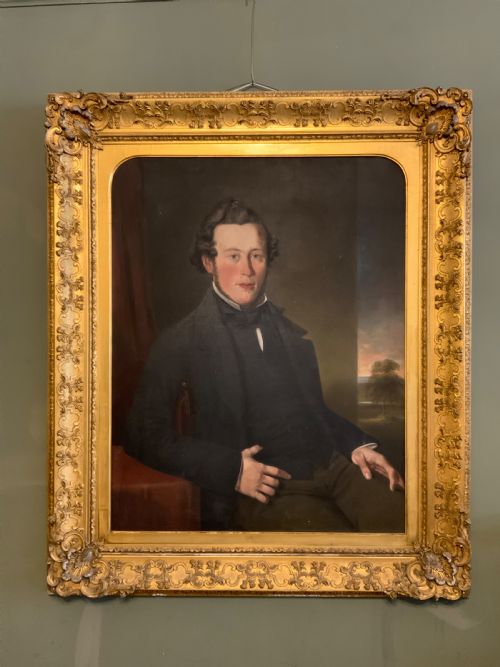
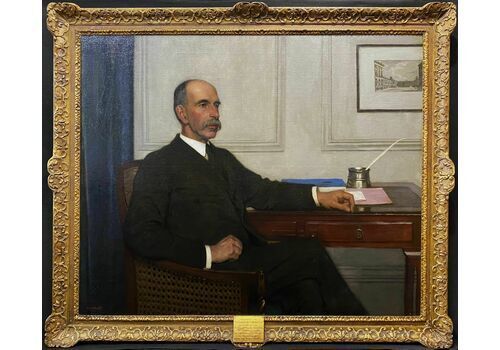
A seated male portrait brings historical figures, artists, writers, and engineers directly into view across various centuries. When exploring a seated male portrait, one encounters subjects posed formally or informally, often seated at desks or within interiors.
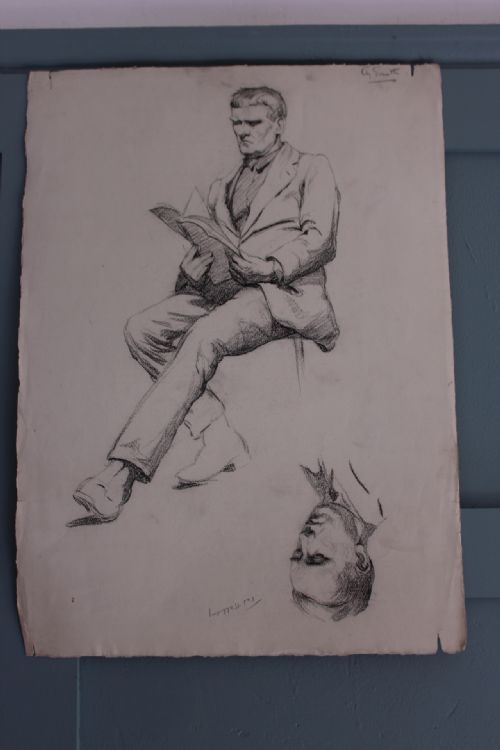
The pieces on this page span from the eighteenth century through the Edwardian era and into the mid-twentieth century. Works frequently record specific identities, such as geologists, writers, and military figures, painted in oil on canvas or captured in pencil on paper.
Materials and construction
Artists relied primarily on oil paint applied to canvas or board to build depth and luminosity. Graphite on paper and watercolour also appear, offering more intimate and immediate studies of the sitter.
Frames of gilt wood frequently accompany these works, complementing the palette and protecting the edges of the canvas or paper support.
Several sitters recorded on this page held distinct nineteenth-century occupations, including sadlers, brewers, and mining engineers.
Distinctions in quality
The reputation of the painter and the documented identity of the subject elevate certain pieces above anonymous commissions. Materials also play a role, with finely woven canvases and substantial original frames marking superior examples.
Harold Knight RA·Arthur Spooner·Henry William Pickersgill·Ramsay Richard Reinagle RA·Cowan Dobson·Joseph Clover·William Dring RA·Francis Dodd
The Seated Male Portrait Glossary
- Academic Realism
- A style of painting and sculpture produced under the influence of European academies of art. It emphasises traditional techniques and accurate anatomical depiction.
- Canvas
- A heavy woven fabric used as a surface for oil painting. It is typically stretched over a wooden frame before work begins.
- Regency
- A period in British history spanning from 1811 to 1820, characterised by distinct trends in architecture, literature, and portraiture. Pieces from this time often display restrained elegance.
- Gilt Wood
- Wood that has been treated with a thin layer of gold leaf or gold paint. It is commonly found on traditional picture frames.
Seated Male Portrait: Frequently Asked Questions
How should I hang a large portrait?
Ensure the wall can support the weight of the frame, particularly for large oil paintings on canvas. Position the centre of the canvas at eye level to create a natural viewing angle in a room.
Keep the piece away from direct sunlight and excessive temperature fluctuations to protect both the paint layer and the canvas support.
Are these portraits of real people?
Many works record named individuals, including writers, geologists, military leaders, and local figures. Inscriptions on the reverse or contemporary documentation often verify their identities.
Other examples depict anonymous sitters whose names were lost over time, though their clothing and setting still anchor them to a specific historical era.
What framing is typical for these works?
Many canvases retain period gilt wood frames that complement the aesthetic of the nineteenth and early twentieth centuries. These frames often show minor signs of age that reflect their history.
When a piece lacks its original surround, selecting a sympathetic traditional frame helps preserve the visual balance of the artwork.
How do I identify the period of a painting?
Clothing style, facial hair, and interior furnishings offer immediate clues to the date of execution. Sitters from the Regency era dress differently from those of the Edwardian period or the 1920s.
Signatures, dates, and stretcher frame construction provide further evidence for dating the work accurately.