
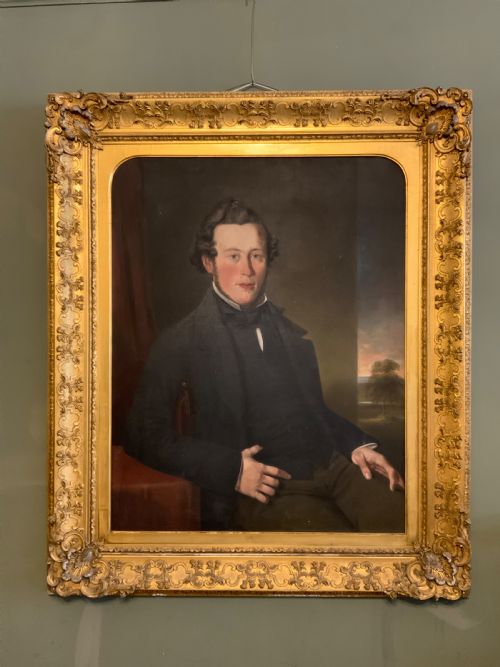
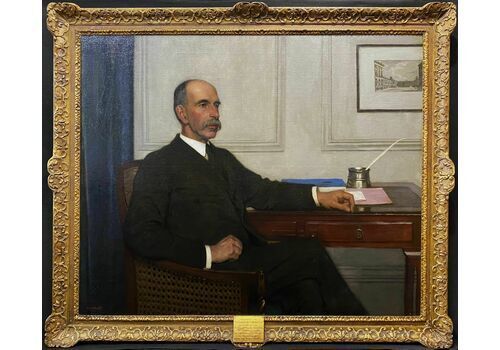


Seated Gentleman Oil Artwork
These seated gentleman oil artwork pieces capture character across centuries, offering timeless focal points for study and display.
Seated Gentleman Oil Artwork
A seated gentleman oil artwork presents a portrait of a male subject in a seated posture, rendered in oil paint upon canvas or panel. These works range from early nineteenth-century portrayals and Regency depictions to Edwardian and mid-twentieth-century pieces, spanning varied academic and realist traditions.
The subjects include named historical figures, literary editors, scientists, and clergymen, alongside sitters recorded simply as gentlemen or framed within specific interiors. Most examples on this page are substantial oil paintings, often housed in wood or giltwood frames that complement the scale of the canvas.
Stylistic approaches vary from nineteenth-century British and French portraiture to Newlyn School compositions and mid-century British realism. Buyers searching for a seated gentleman oil artwork encounter both intimate framed studies and large historical canvases reflecting distinct periods of portraiture.
Materials and construction
The primary medium across these listings is oil paint applied to canvas, utilising the rich texture and layering capabilities characteristic of traditional oil painting. Canvases are frequently supported by wooden stretchers and housed within wood or gilt wood frames, occasionally incorporating plaster ornamentation.
The creation of these works relies on academic techniques developed across the nineteenth and twentieth centuries, where artists built up tones and subject likenesses through precise brushwork. The physical survival of these pieces depends on the stability of the canvas support and the protective housing of the surrounding frames.
Listings feature works from the Regency period through to mid-century British realism, created using oil paint on canvas.
Distinctions in quality
Quality in a seated gentleman oil artwork rests upon the skill of the brushwork and the psychological depth achieved by the artist in rendering the sitter. Works by named painters with established exhibition records demonstrate a higher degree of anatomical precision and handling of light.
The integrity of the original canvas and the preservation of the paint surface distinguish superior examples from heavily restored ones. Additionally, the craftsmanship of the accompanying wood or giltwood frame contributes significantly to the overall presence and historical completeness of the piece.
Harold Knight RA·Arthur Spooner·Henry William Pickersgill·James Archer·John A.A. Berrie·Cowan Dobson·Stephen Taylor·William Dring RA·John Dalziel Kenworthy·Neville Stephen Lytton·Frank Samuel Eastman
The Seated Gentleman Oil Artwork Glossary
- Oil on Canvas
- Pigments bound in a drying oil medium, typically linseed, applied to a woven fabric stretched across a wooden frame. This combination allows for rich blending and enduring flexibility.
- Gilt Wood
- Wood that has been coated with a thin layer of gold leaf or metallic powder. It frequently surrounds these portraits in decorative mouldings.
- Academic Realism
- A style of painting produced under the influence of European academies of art, emphasising precise draftsmanship, accurate anatomy, and traditional finish.
- Stretcher
- The internal wooden frame upon which the canvas is tensioned. Original stretchers help confirm the historical integrity of the painting.
Seated Gentleman Oil Artwork: Frequently Asked Questions
How do I hang a large portrait?
Large oil paintings require secure wall anchors fixed into masonry or heavy studs to support the substantial weight of the canvas and frame.
Position the centre of the canvas at approximate eye level to maintain correct visual balance within the room.
Are these paintings original?
The listings comprise original oil paintings created by individual artists across the nineteenth and twentieth centuries rather than modern reproductions.
Each work reflects the specific materials, techniques, and aesthetic conventions of its respective period.
How do I clean an oil painting?
Dust accumulation on the canvas surface should be removed gently using a soft, dry brush without applying pressure to the paint.
Chemical cleaners or damp cloths must be avoided to prevent moisture damage or lifting of the oil layers.
What framing is typically used?
Many works are housed in period wood or gilt wood frames that match the era in which the portrait was painted.
These frames often feature moulded plaster details and provide structural protection for the edges of the canvas.