

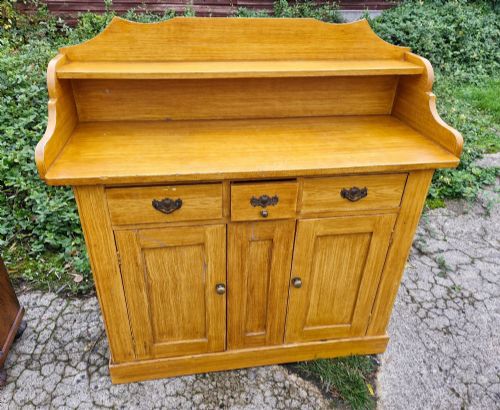
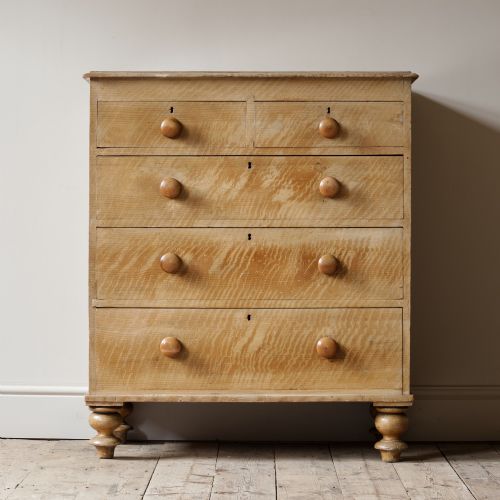
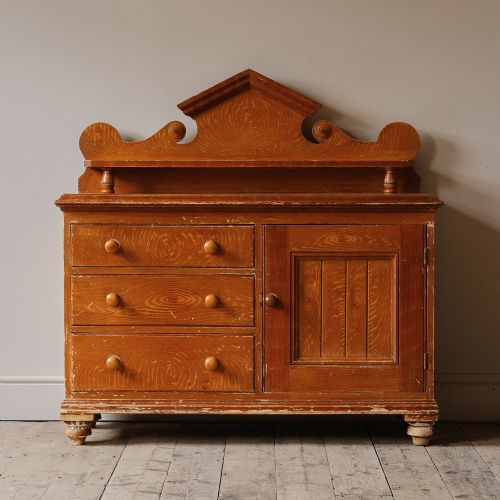
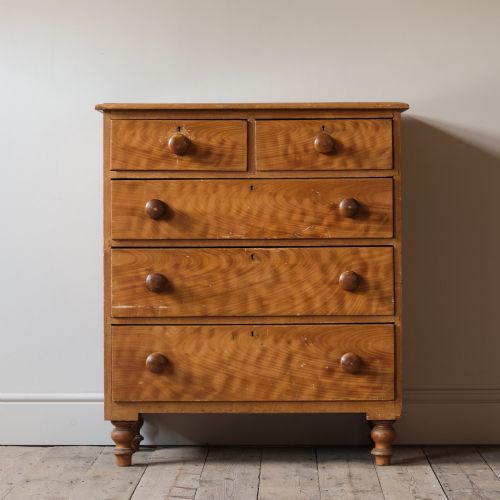
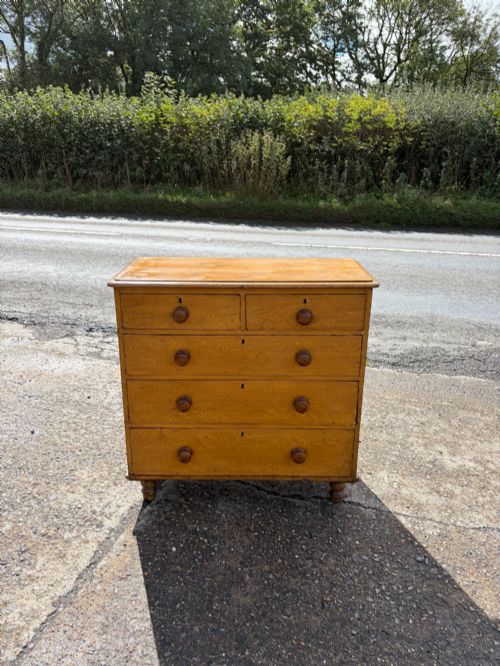
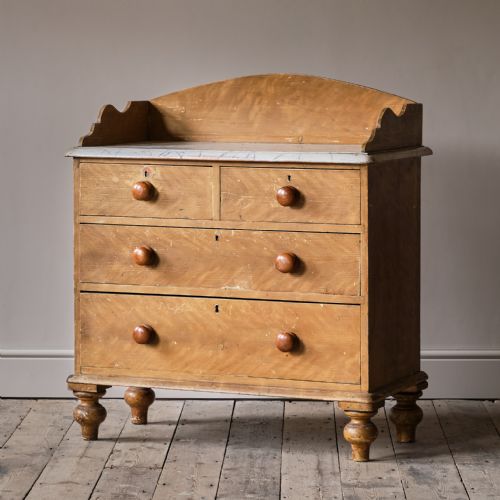
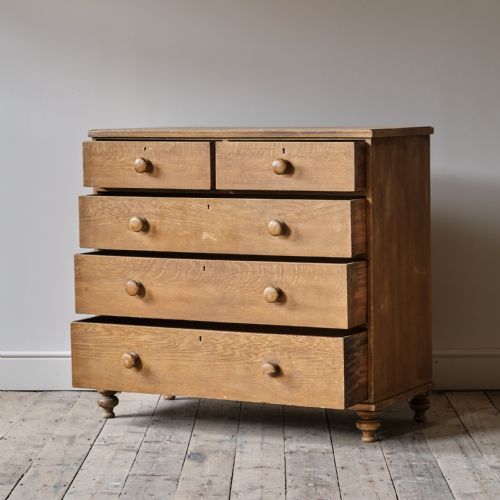
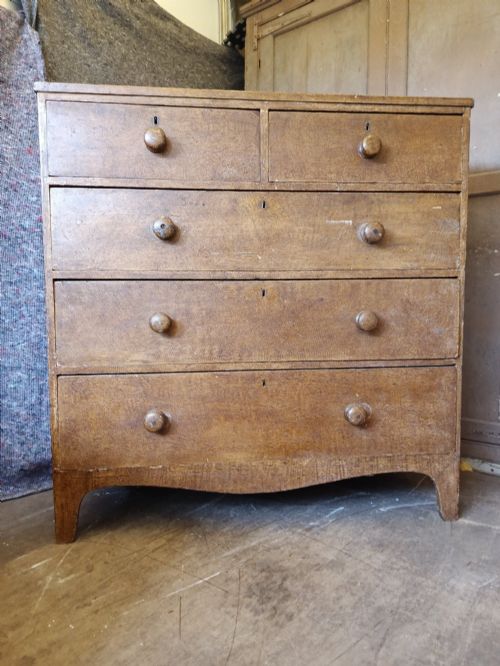


Scumble Painted Dresser
A scumble painted dresser brings the rich texture of nineteenth-century country interiors straight into a modern room through distinctive, patterned wood finishes.
Scumble Painted Dresser
When buyers search for a scumble painted dresser, they are looking at utilitarian storage furniture transformed by decorative surface treatments. These pieces primarily date from the nineteenth century, including Victorian and Regency eras, encompassing items from kitchen dressers and dresser bases to housekeeper cupboards and chests of drawers.
The most common forms encountered on this page are sturdy pine chests of drawers and kitchen dressers finished in original painted or scumbled surfaces. Regional pieces, such as those from Scotland or the West Country, sit alongside Victorian country and rustic farmhouse styles.
These items were originally built for practical domestic use in farmhouses and townhouses alike. Today, they appeal for their honest construction and the expressive, decorative character of their aged painted finishes.
How they were made
Makers constructed these pieces predominantly from solid pine, utilising local timber to build heavy carcases, drawers, and shelving units. Metal hardware such as brass handles and brass or glass pulls frequently accompany the wooden frames.
The defining technique involves scumble paint, where craftsmen applied a translucent top glaze over a lighter base coat and then manipulated it with combs, feathers, or rags to simulate the richer grain patterns of more expensive hardwoods like oak or mahogany. This layered paint finish protected the softer pine underneath while offering an affordable decorative flourish.
Scumble Painted Dresser Retail Price Guide 2026
Typical asking prices for scumble painted dresser among the pieces listed under this phrase on Sellingantiques today, from the lower quarter to the upper quarter. They describe what is for sale here now, not the wider market.
Victorian decorators dragged combs through wet glaze just to trick visitors into thinking humble pine was expensive mahogany.
What varies in quality
The division between the ordinary and the exceptional lies in the survival and execution of the original surface. Pieces retaining untouched, richly patterned scumble glaze or early hand-painted decoration stand apart from those with later overpainting or stripped surfaces.
Proportion and regional carpentry also dictate distinction. Well-proportioned Scottish kitchen dressers or substantial West Country housekeeper cupboards demonstrate superior cabinet-making that elevates them beyond standard utilitarian storage.
The Scumble Painted Dresser Glossary
- Scumble paint
- A translucent decorative glaze applied over a solid base coat and manipulated with tools to create faux wood grain or patterned textures. It was widely utilised in the nineteenth century to elevate inexpensive pine furniture.
- Dresser base
- The lower cabinet portion of a kitchen dresser, often featuring drawers and cupboards beneath a sturdy timber top. These pieces function independently as sideboards or serving surfaces.
- Housekeeper cupboard
- A large, upright storage piece traditionally used in grand country houses for storing linens, provisions, or domestic supplies. They are heavily proportioned and robustly constructed from pine.
- Graining
- The decorative technique of painting a surface to imitate the natural grain patterns of fine hardwoods. Artisans used combs and brushes while the top glaze was wet to achieve the desired effect.
- Regency
- A British design period spanning the early nineteenth century defined by classical restraint and elegance. Pieces from this era often display clean structural lines combined with decorative surface finishes.
Scumble Painted Dresser: Frequently Asked Questions
What is a scumble painted dresser?
A scumble painted dresser is a nineteenth-century storage piece, such as a kitchen dresser or chest of drawers, finished with a decorative translucent glaze over a painted base. This technique created faux wood grain or textured patterns on humble pine.
These items originated in utility rooms and farmhouses where durable, decorative surfaces added warmth to practical furniture. Today, they serve as focal storage points in living spaces and kitchens.
How do I care for original paint?
Original painted and scumbled surfaces require gentle maintenance to preserve the aged finish. Dusting with a dry, soft cloth is sufficient for daily care, avoiding harsh chemical cleaners or abrasive pads that lift the glaze.
Keep these pieces away from direct sunlight and excessive moisture to prevent the nineteenth-century pine and paint layers from drying out or flaking. Natural beeswax can occasionally nourish untreated timber elements.
Where were these dressers made?
These items hail primarily from nineteenth-century British workshops, ranging from Scottish joiners to West Country cabinet makers. Regional workshops adapted local pine into sturdy forms tailored to domestic needs.
Regional traits often appear in the proportions of kitchen dressers or the specific patterns of the scumble glaze. This local provenance links each piece directly to nineteenth-century rural craftsmanship.
How do I date a painted pine chest?
Dating relies on examining construction methods, timber choice, and the characteristics of the paint finish. Nineteenth-century pieces typically feature hand-cut dovetails, solid pine secondary woods, and genuine period scumble glazes.
Stylistic cues such as Victorian country proportions or Regency lines help narrow the decade. Original surface wear provides further evidence of age and continuous domestic use.