

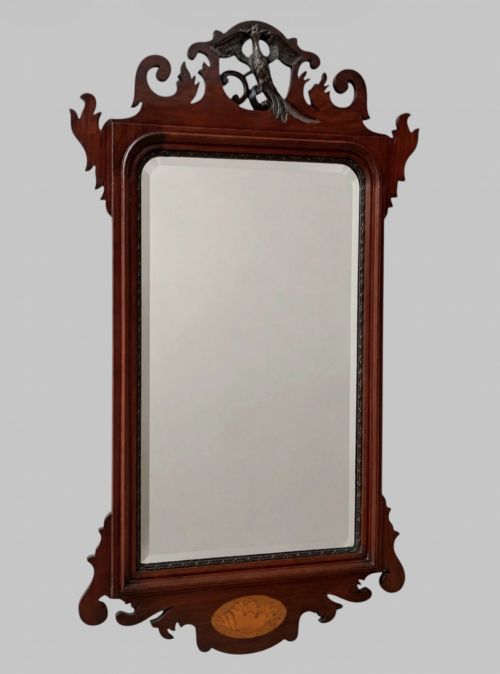
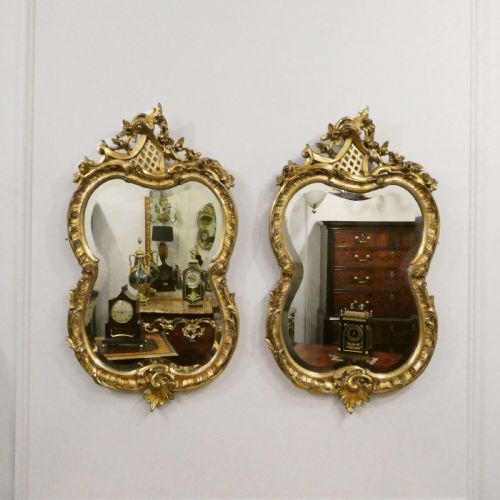


Scrollwork Wood Mirror
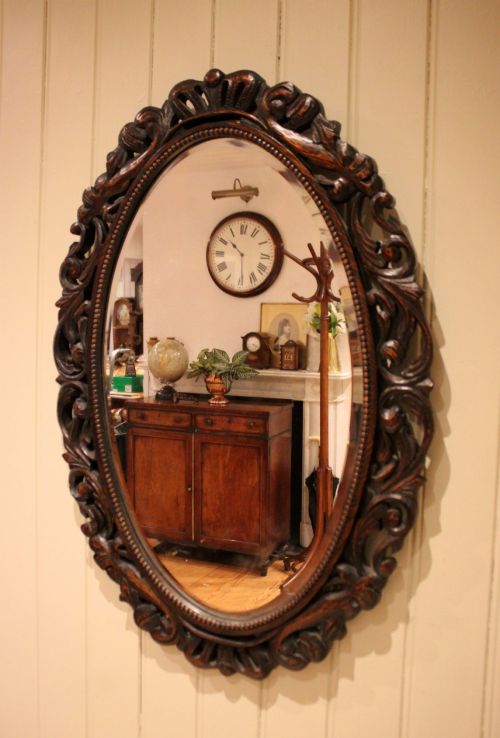
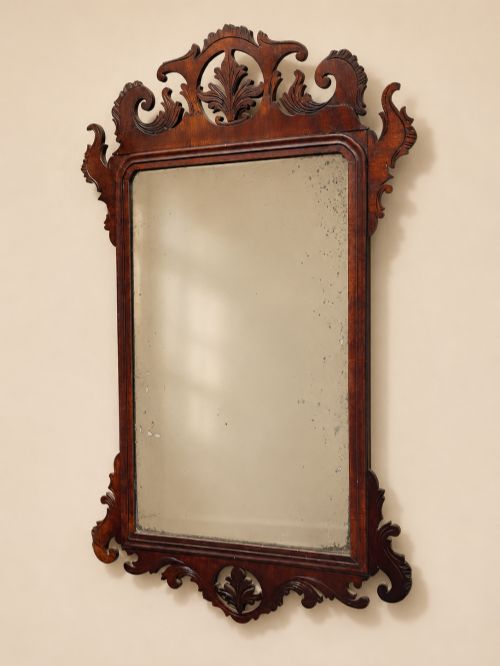
Scrollwork wood mirror pieces are decorative looking glasses shaped by carved foliage and pierced fretwork, bringing movement and warmth to a room.
Scrollwork Wood Mirror
A scrollwork wood mirror brings together carved timber frames and reflective glass, drawing on Georgian, Victorian, and early twentieth-century designs. You will encounter wall hanging versions alongside larger overmantle pieces shaped by revival styles.
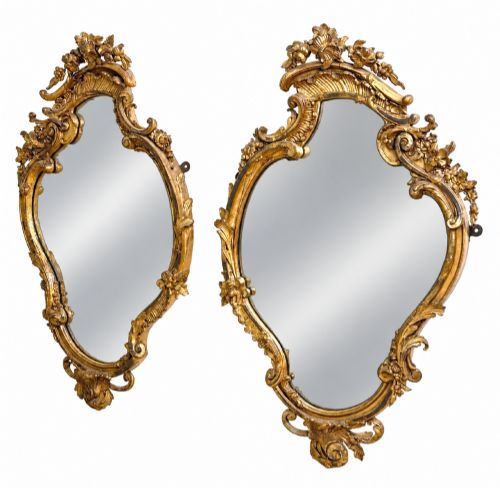
The selections span mahogany and walnut timbers alongside gilded surfaces, representing periods from the eighteenth century through to nineteen twenty. These items serve both functional and ornamental roles within domestic spaces.
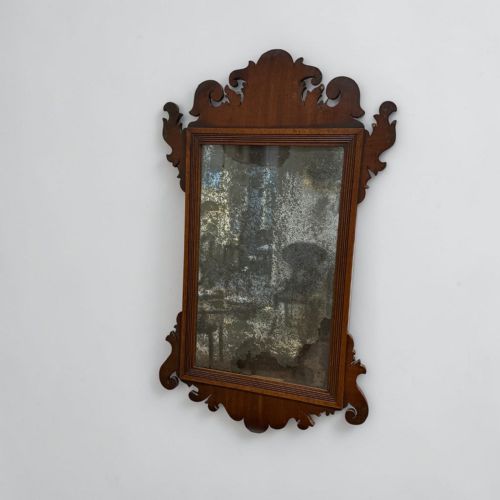
Makers drew on Rococo and Chippendale aesthetics, producing intricate pierced frets and flowing curves. Surviving examples reflect centuries of interior decoration traditions across English, Italian, and Spanish workshops.
What varies in quality
The finesse of the hand carving separates finer pieces from simpler production, particularly in the depth and undercut relief of the wooden scrollwork. Crisp execution of pierced fret patterns dictates the visual success of mahogany and walnut frames.
The integrity of the original gilding or timber patina influences overall desirability. Superior examples retain their early mirror glass and structural joinery without heavy alterations.
Scrollwork Wood Mirror Retail Price Guide 2026
Typical asking prices for scrollwork wood mirror among the pieces listed under this phrase on Sellingantiques today, from the lower quarter to the upper quarter. They describe what is for sale here now, not the wider market.
Listings feature mahogany, walnut, and giltwood materials across Georgian, Victorian, and early twentieth-century periods.
The Scrollwork Wood Mirror Glossary
- Giltwood
- Timber coated with fine gold leaf applied over a prepared gesso ground. This technique creates a bright, reflective metallic surface on decorative frames.
- Fretwork
- Ornamental perforated wooden patterns cut into thin boards. It provides the intricate pierced borders seen on many eighteenth and nineteenth-century hanging mirrors.
- Overmantle
- A large mirror designed to hang directly above a fireplace mantel. These pieces often anchor the proportions of a reception room.
- Rococo Revival
- A nineteenth-century design movement resurrecting eighteenth-century asymmetrical scrollwork and naturalistic leaf motifs. It heavily influenced mirror frame ornamentation.
Scrollwork Wood Mirror: Frequently Asked Questions
Where should I hang a scrollwork wood mirror?
These mirrors suit principal reception rooms, hallways, or above fireplaces where their carved frames catch the light. They function well as central focal points on plain walls.
Ensure the wall fixings match the weight of the timber and glass structure to support the piece securely.
How do I identify a Georgian scrollwork mirror?
Georgian pieces typically employ figured mahogany or walnut with hand-cut fretwork borders and modest proportions. They often feature gilded accents and proportional scroll terminals.
Later revival versions from the nineteenth and twentieth centuries can replicate these traits using machine assistance or heavier construction.
What is the difference between giltwood and painted frames?
Giltwood involves laying real gold leaf over a gesso and bole foundation on wood. This finish develops a soft, warm lustre as it ages.
Painted or plain wood finishes rely on stains or pigments, offering a different visual weight within an interior scheme.
How should I clean my antique mirror glass?
Use a soft microfiber cloth and a minimal amount of mild glass cleaner sprayed onto the cloth rather than the mirror. Avoid letting liquid seep behind the frame edges.
Old silvering is fragile and can degrade if harsh chemicals or excessive moisture penetrate the backing.