

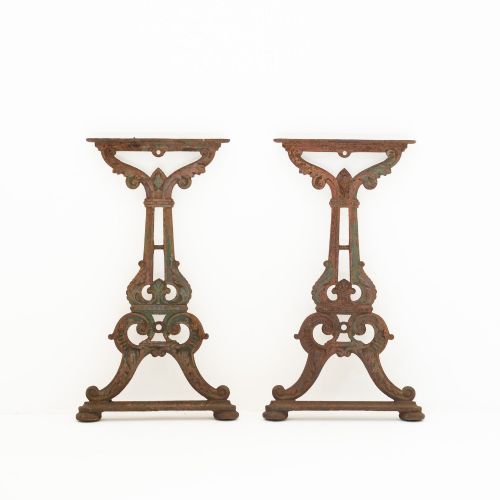


Scrolled Iron Table
These scrolled iron table designs bring durable metalwork and classic stone or glass together, offering enduring character for any interior or garden.
Scrolled Iron Table
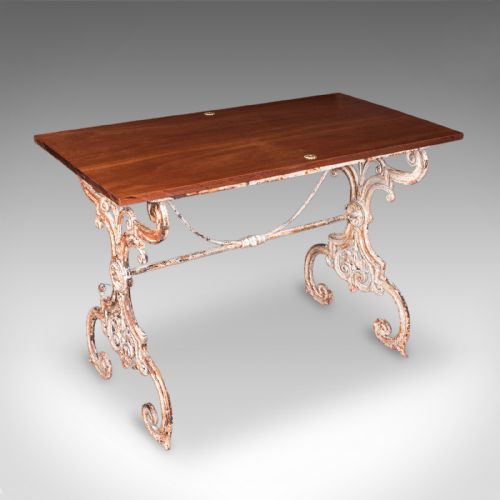
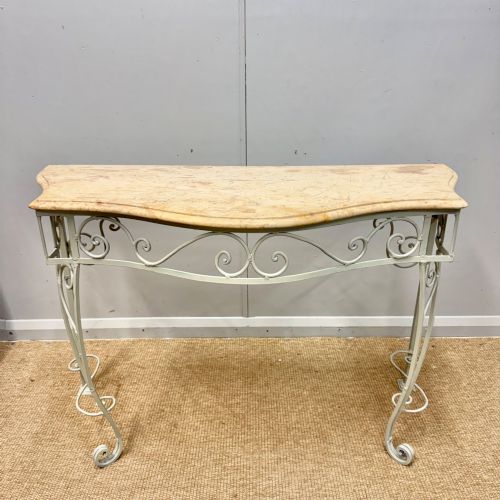
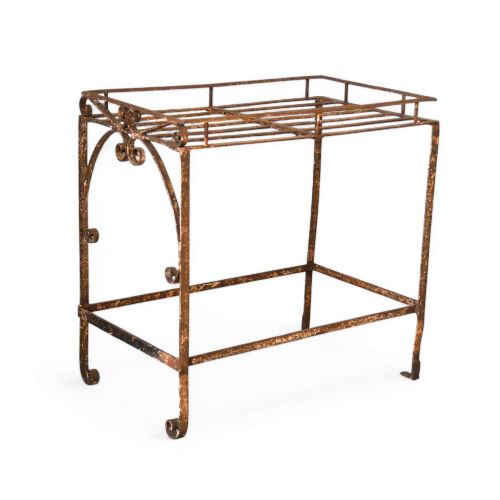
A scrolled iron table combines robust metal frames with surfaces of marble, glass, mirror, or wood, spanning console tables, coffee tables, plant stands, and garden tables. You will frequently encounter French provincial, French chateau, and Victorian styles alongside industrial forms.
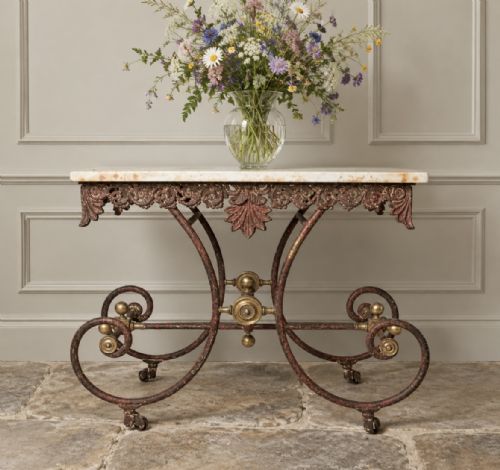
The selections on this page range from nineteenth-century estate pieces and Victorian cast iron bases to nineteen-twenties and thirties French baker tables and coffee tables. These diverse forms serve as practical surfaces while displaying decorative scrollwork and strapwork details.
Makers and artisans from the nineteenth century onward utilised both wrought iron and cast iron to shape these practical domestic and garden furnishings. Console tables and coffee tables dominate the current selection, often paired with contrasting marble tops.
How they were made
Blacksmiths and manufacturers shaped wrought iron and cast iron into curves and scrolls using traditional heating, bending, and casting techniques. These structural metal frames provide robust support for heavy marble slabs, mirrored glass, and wooden tops.
Designers incorporated brass accents, gilt finishes, and painted surfaces such as green iron to enhance the visual appeal of the metalwork. Marble tops, including black marble variants, were precisely fitted to the iron bases to create stable console and coffee tables.
Scrolled Iron Table Retail Price Guide 2026
Typical asking prices for scrolled iron table among the pieces listed under this phrase on Sellingantiques today, from the lower quarter to the upper quarter. They describe what is for sale here now, not the wider market.
Listings feature periods from the nineteenth century through the nineteen-thirties, incorporating wrought iron, cast iron, marble, brass, and wood.
What varies in quality
The refinement of the scrollwork and strapwork distinguishes standard utility pieces from more ambitious decorative works. Crisp casting in Victorian table bases and hand-forged details in French wrought iron console tables demonstrate superior craftsmanship.
The choice and thickness of the top material, whether veined marble, mirrored glass, or solid wood, alters the tactile and visual weight of the furniture. Finer examples balance the heavy metal framework with harmonious proportions and well-preserved original finishes.
The Scrolled Iron Table Glossary
- Wrought iron
- A tough, malleable form of iron that blacksmiths heat and hammer into decorative scrolls and structural shapes.
- Cast iron
- Molten iron poured into a mould to create rigid, patterned table bases and decorative components.
- Strapp work
- Flat bands of metal arranged in geometric or decorative strap patterns across garden and occasional tables.
- Console table
- A long table designed to stand against a wall, frequently topped with marble or mirror in nineteenth-century French interiors.
- Baker table
- A sturdy utility table featuring a stone or marble top, originally utilised for food preparation and later adapted for domestic use.
Scrolled Iron Table: Frequently Asked Questions
What rooms suit a scrolled iron table?
These versatile tables fit easily into hallways, living rooms, and conservatories where durable surfaces are required. Console variants anchor narrow spaces, while coffee tables provide a central focal point.
Garden tables and plant stands also transition smoothly between sheltered outdoor areas and interior garden rooms. Their open metal bases keep spaces feeling light and uncluttered.
How do I care for a marble top iron table?
Marble surfaces benefit from regular wiping with a damp cloth and mild soap to prevent staining from liquids. Avoid harsh acidic cleaners that can etch the polished stone.
The iron bases require only occasional dusting and gentle cleaning to preserve painted or patinated finishes. Keeping the metal dry prevents moisture damage over time.
Are these tables heavy to move?
The weight of a scrolled iron table depends heavily on its top material, as marble and thick glass slabs add substantial mass. The iron frames themselves provide sturdy, weighty foundations.
Larger console tables and baker tables usually require two people to lift and reposition safely. Smaller occasional tables and plant stands remain easy to move about a room.
How do I distinguish nineteenth-century pieces?
Nineteenth-century examples often show hand-forged marks in the wrought iron or heavier, more intricate casting in Victorian table bases. Estate pieces and early garden racks display patination accumulated over decades of use.
Later pieces from the nineteen-twenties and thirties tend towards sleeker French coffee tables and mirrored low table designs. Comparing the construction methods helps clarify the era of manufacture.