



Scrolled End Bench
These scrolled end bench selections bring architectural lines and classic forms into a room, offering both seating and striking historic presence.
Scrolled End Bench
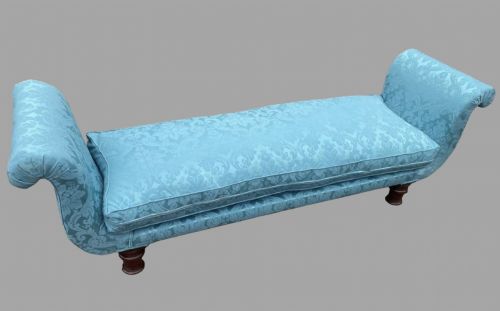
When you search for a scrolled end bench, you are looking at seating forms defined by distinctive curved or scrolled terminations at one or both ends. These pieces span window seats, daybeds, settees, and large sofas drawn from the nineteenth and early twentieth centuries.
The versions you are most likely to meet on this page include Regency mahogany scroll end sofas, Edwardian and Victorian window seats, and French daybeds. These forms range from compact window seating to substantial double-ended settees and specific variants like the Chinese Qing Dynasty Kang table.
Originating across English, French, and Chinese traditions, these pieces display stylistic influences from Regency, William IV, French Empire, and Rococo periods. They serve functional roles in halls, bedrooms, and drawing rooms while carrying strong decorative qualities.
What varies in quality
The caliber of a piece rests in the crispness of its woodwork carving and the integrity of its timber frame construction. Finer examples show fluid, uninterrupted lines in the scrollwork and superior joinery that withstands centuries of use.
Upholstery execution and the choice of covering material dictate the finish of the piece, with higher quality examples maintaining sympathetic period textiles and robust interior webbing or padding.
Scrolled End Bench Retail Price Guide 2026
Typical asking prices for scrolled end bench among the pieces listed under this phrase on Sellingantiques today, from the lower quarter to the upper quarter. They describe what is for sale here now, not the wider market.
Even Chinese Kang tables decided to join the scroll-end party.
Gillows
The Scrolled End Bench Glossary
- Scroll end
- A terminal feature on a sofa, daybed, or bench curving outward or inward in a spiral profile. This architectural detail defines the silhouette of Regency and Victorian seating.
- Window seat
- A long, narrow bench designed specifically to fit within the recess of a window. These pieces typically feature upholstered tops and supportive wooden frames.
- Daybed
- An elongated seating form intended for reclining, combining elements of a chair and a bed. Examples often incorporate scrolled ends or raised headboards.
- Chaise longue
- An upholstered couch shaped like a chair that is long enough to support the legs. The form evolved through various French and English periods.
- Kang table
- A low platform table originating from China, utilised for sitting, resting, or displaying objects. Scroll-end variants incorporate traditional Asian joinery and carved hardwood.
Scrolled End Bench: Frequently Asked Questions
Where should I place a scrolled end bench?
These pieces suit positions against walls in hallways, at the foot of a bed, or beneath large windows where their silhouette remains visible. Their narrow profile allows them to occupy transitional spaces without crowding a room.
Larger double-ended settees and daybeds function effectively as central seating elements in sitting rooms, provided the surrounding floor plan accommodates their length.
How do I identify a Regency period piece?
Regency pieces often display classical proportions, dark mahogany timbers, and characteristic scroll ends that mimic ancient Greek or Roman furniture forms. Carved details tend to be restrained yet sharp.
Makers from this era frequently incorporated brass accents or simulated rosewood finishes to achieve specific decorative effects.
Are these seats comfortable for daily use?
Comfort depends entirely on the internal padding and the firmness of the upholstery. Many historic window seats and benches were built with firm support suited for short periods of sitting.
Pieces that have undergone recent upholstery work may offer a softer sit while retaining their original historic frame structure.
What is the difference between a window seat and a daybed?
Window seats are generally shallower and designed to sit low beneath window frames, functioning primarily as narrow benches for intermittent seating. They often lack backrests or feature low, padded rails.
Daybeds are deeper and built for full reclining, featuring elevated ends or backs that support a person lying down for extended periods.