





Scroll End Bed
A scroll end bed brings classic architectural line to a room, offering both daybed and sleeping forms shaped by centuries of stylistic revival.
Scroll End Bed
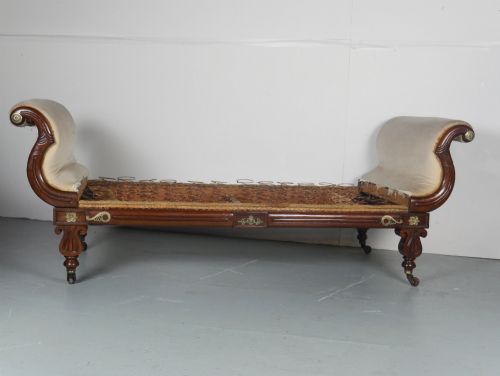
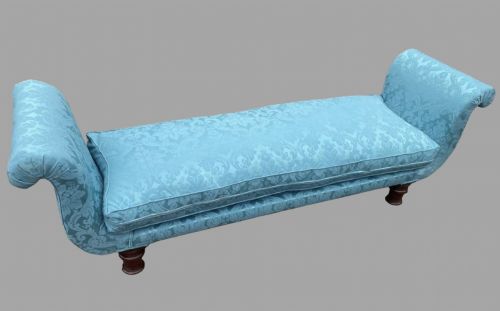
When you search for a scroll end bed, you encounter a selection of seating and sleeping forms including daybeds, window seats, and sleigh beds. These pieces originate from various periods spanning the nineteenth and early twentieth centuries, reflecting diverse European designs.
The versions most frequently met on this page include nineteenth-century French lit bateaux and Edwardian mahogany or walnut window seats. Makers drew upon Regency, French Rococo, and Empire revival styles to shape the characteristic curving ends.
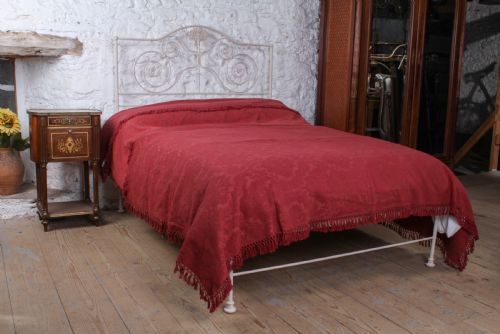
Forms range from compact benches and stools designed for window recesses to full double beds and daybeds with upholstered or painted wooden frames. Each piece incorporates distinctive scrolling woodwork, ironwork, or fabric panels that define its period silhouette.
Materials and construction
Construction relies primarily on timbers such as mahogany, walnut, and painted woods, alongside forged iron for structural stability. Cabinetmakers shaped solid and veneered woods to form the sweeping curves characteristic of the scroll ends.
Upholstery forms an essential component of many pieces, utilising traditional textiles and modern replacement fabrics like velvet over padded foundations. Cabriole legs, turned supports, and carved wooden details are integrated directly into the frames.
Scroll End Bed Retail Price Guide 2026
Typical asking prices for scroll end bed among the pieces listed under this phrase on Sellingantiques today, from the lower quarter to the upper quarter. They describe what is for sale here now, not the wider market.
Distinguishing quality
Quality rests upon the crispness of the wood carving, the integrity of the joinery in the scrolling ends, and the balance of the proportions. Finer examples display carefully selected mahogany or walnut grain and harmonious revival styling.
The execution of the frame upholstery and the robustness of the supporting structure separate standard pieces from those demonstrating higher craftsmanship.
Willian Trotter
The Scroll End Bed Glossary
- Lit Bateau
- A French bed style featuring parallel head and footboards that curve outward like the sides of a boat. This form dominates nineteenth-century continental designs.
- Cabriole Leg
- A furniture leg that curves outward at the knee and tapers inward at the ankle, ending in a pad or foot. This shape is common on revival window seats.
- Window Seat
- A long bench designed specifically for placement beneath a window, often upholstered and featuring low arms or scroll ends. These function as both seating and decorative room elements.
- Daybed
- A piece of furniture serving as a bed during the night and a sofa during the day, frequently incorporating scrolled ends and upholstered backs.
Scroll End Bed: Frequently Asked Questions
What is a scroll end bed?
A scroll end bed is a form of bed or daybed where the headboard and footboard curve outward in a scroll shape. These designs often draw inspiration from French Empire or sleigh bed traditions.
They function as prominent focal points in a bedroom or sitting room, combining structural timber or iron with upholstered surfaces.
How were window seats used historically?
Window seats were placed in deep window recesses of large homes to provide a comfortable place for reading or looking outside. They often matched the decorative style of the room's other furniture.
Over time, these versatile benches moved to hallways and living spaces as auxiliary seating.
Are these beds suitable for daily sleeping?
Many daybeds and single beds from this selection can accommodate standard mattresses, though historical dimensions may vary. It is important to check the internal length and width before sourcing a mattress.
Some pieces are better suited to occasional guest use or lounging rather than heavy every night sleeping.
How do I identify a revival style?
Revival pieces imitate historical periods like French Rococo, Regency, or Empire, utilising characteristic motifs and sweeping woodwork. Makers in the nineteenth and early twentieth centuries reinterpreted these classic forms using contemporary techniques.
Details such as painted finishes, specific wood types, and upholstery styles help pinpoint the actual period of manufacture.