


Scroll Arm Mahogany Armchair
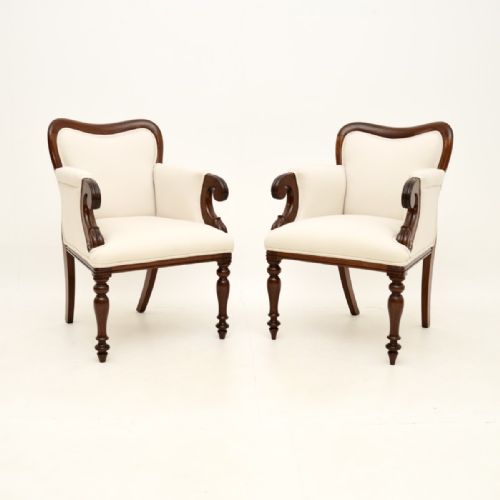
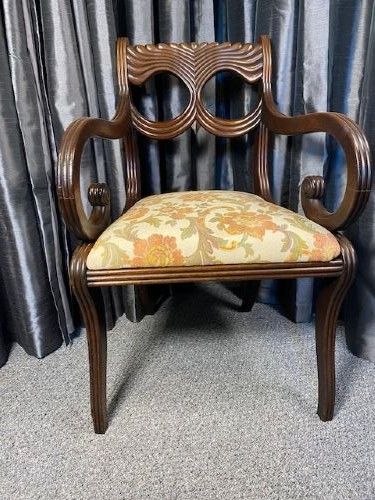
Scroll arm mahogany armchair examples bridge architectural formality and comfort, offering sturdy timber frames paired with sweeping arm supports.
Scroll Arm Mahogany Armchair
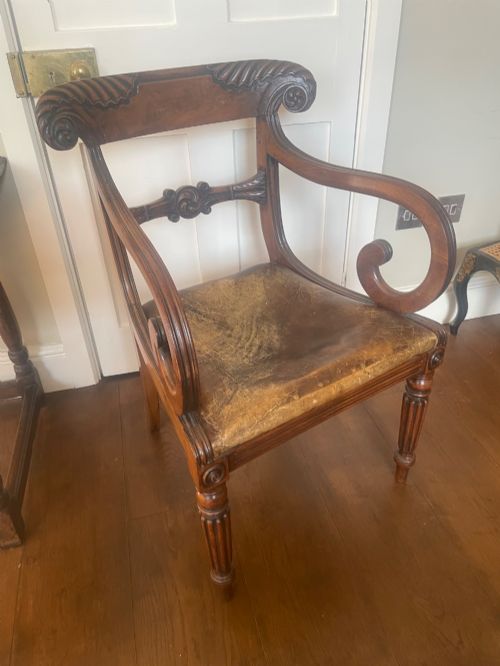
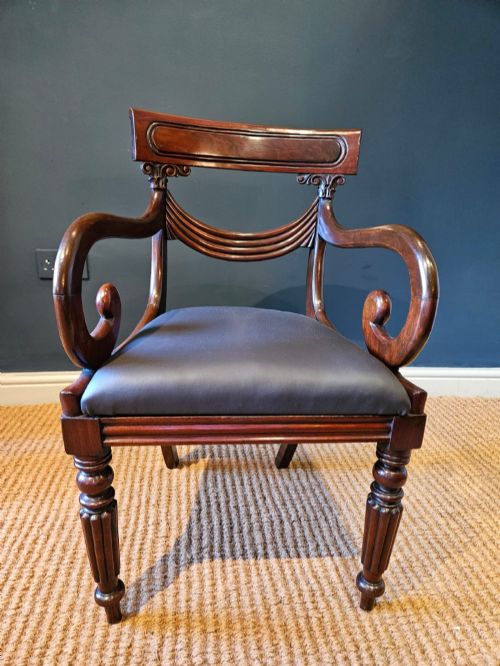
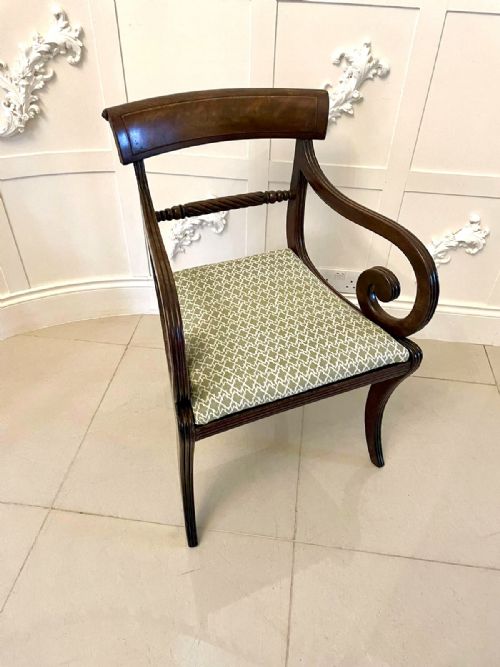
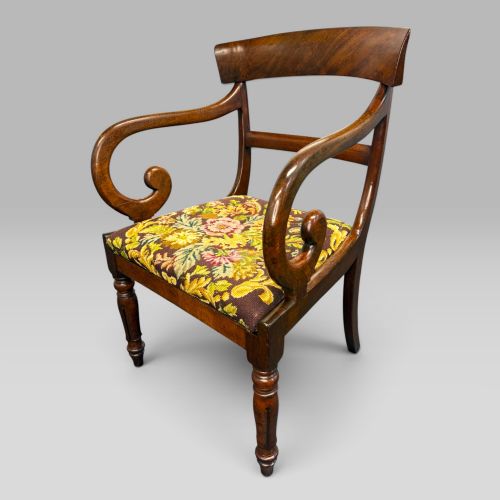
A scroll arm mahogany armchair combines dense tropical hardwood frames with characteristic downward-curling arm rests designed for domestic sitting rooms, libraries and studies. The phrase encompasses everything from light desk chairs to heavy library seating and matching dining carvers.
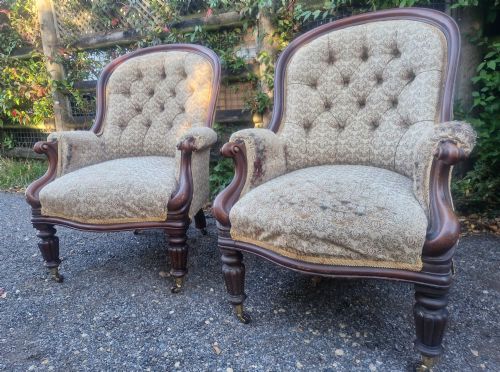
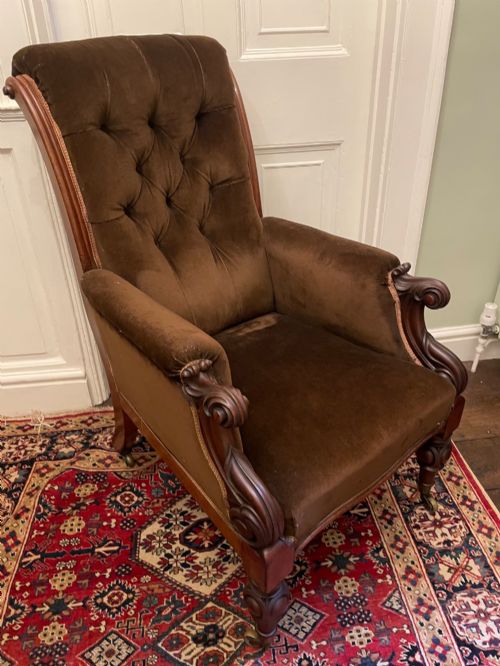
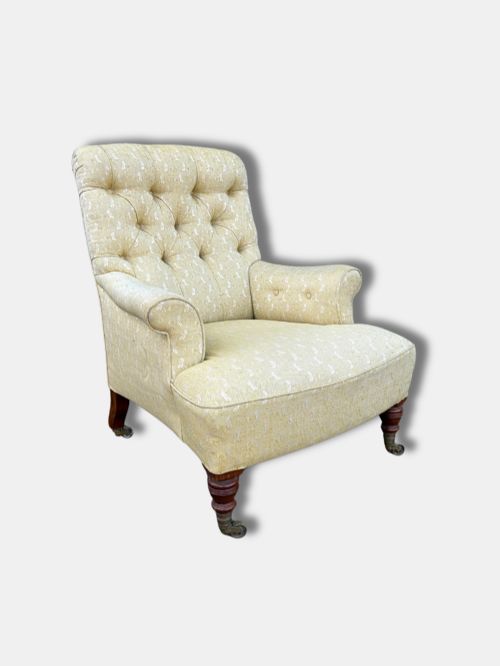
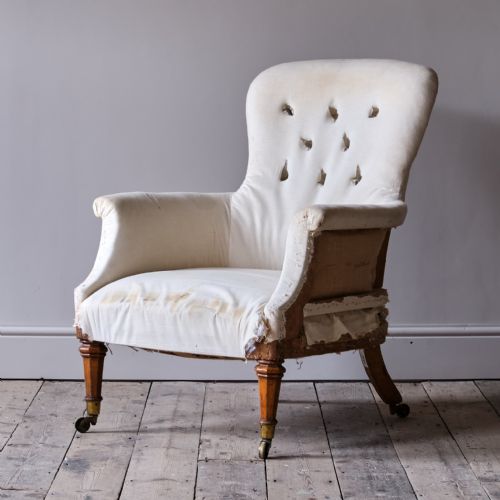
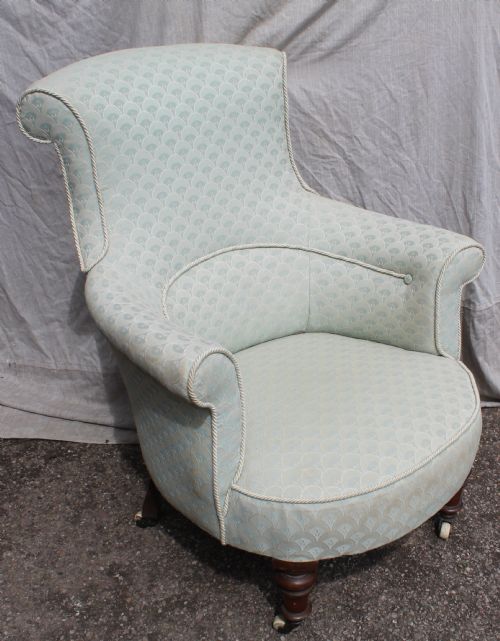
The Regency and William IV periods dominate the surviving selection, bringing architectural balance and rich timber grains to the foreground. Victorian interpretations follow closely, often introducing button upholstery, sprung seats and deeper frames for fireside comfort.
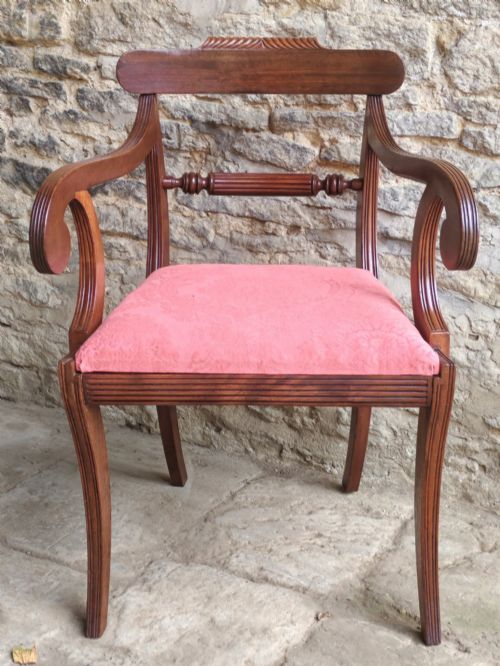
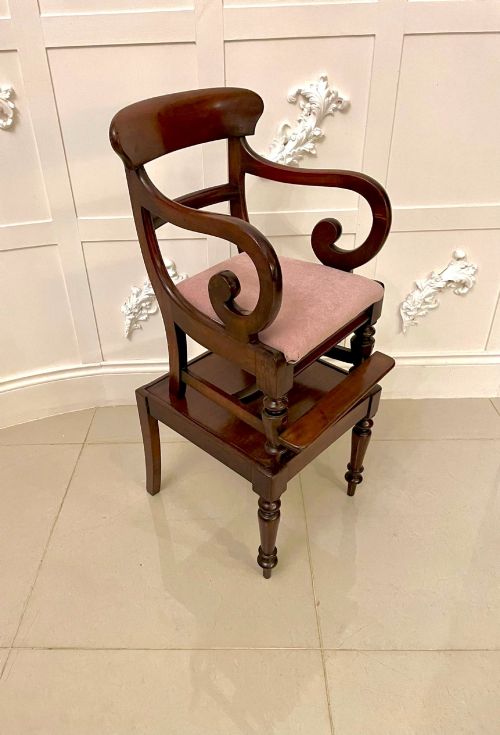
Buyers encounter variations ranging from simple elbow chairs on sabre legs to complex metamorphic library steps and deeply padded club seats. These pieces served diverse roles in nineteenth-century homes, functioning as reading seats, desk chairs and reception furniture.
Materials and Construction
Cabinet makers relied heavily on solid mahogany for its tensile strength and rich reddish-brown colour, which allowed workshops to carve tight scrolls along the arm terminals and forelegs without fracturing the grain. Secondary timbers served for internal framing, while brass castors frequently aided movement on heavy library and desk models.
Upholstery methods evolved across the decades, moving from tensioned webbing and horsehair stuffing in Regency examples to deeper coil springs in later Victorian and Edwardian iterations. Coverings varied from plain leather and velvet to patterned silk damask and floral woven fabrics.
Joinery combined mortise and tenon frames with steam-bent timber for the sweeping scroll arms, ensuring the wood maintained its curved profile under daily pressure. Show-wood frames displayed polished timber surfaces alongside upholstered panels.
Scroll Arm Mahogany Armchair Retail Price Guide 2026
Typical asking prices for scroll arm mahogany armchair among the pieces listed under this phrase on Sellingantiques today, from the lower quarter to the upper quarter. They describe what is for sale here now, not the wider market.
Object forms span library armchairs, desk chairs, dining carvers, and fireside seating.
Factors That Separate Examples
The crispness of the timber carving distinguishes standard utility seating from high-workshop production. Sharp, hand-cut acanthus leaves, cleanly turned legs and symmetrical scroll terminals indicate skilled cabinet work.
Proportion and timber selection dictate overall visual harmony. Dense, figured mahogany with deep natural chatoyancy commands attention over plain, pale stock, while balanced seat heights and supportive back angles determine the functional success of the chair.
Integrity of the frame construction and original brass hardware play a major role in evaluation. Tight joints, minimal structural timber replacement and surviving period castors separate well-preserved library and desk seats from heavily restored items.
Howard and Sons
The Scroll Arm Mahogany Armchair Glossary
- Carver chair
- An armchair designed to match a set of dining chairs, usually featuring open arms and a slightly wider seat.
- Bergere
- An enclosed upholstered armchair with exposed wooden framing and woven cane panels lining the sides or back.
- Sabre leg
- A concave, outwardly curving leg shape popular during the Regency period that tapers towards the floor.
- Metamorphic
- Furniture engineered to transform into another object, such as a library armchair that unfolds into a set of steps.
- Show-wood
- Exposed polished timber frame parts left visible around upholstered panels on Victorian and Edwardian chairs.
- Elbow chair
- A traditional term for an armchair with low arm supports, frequently used in studies, offices and dining rooms.
Scroll Arm Mahogany Armchair: Frequently Asked Questions
What is the difference between a library chair and a desk chair?
Library chairs generally prioritise deep padding, lower seats and generous proportions for prolonged reading. Desk chairs feature firmer support and upright angles suited for writing.
Many incorporate swiveling actions, leather upholstery or narrower frames to fit comfortably beneath writing tables.
How can I tell a Regency scroll armchair from a Victorian one?
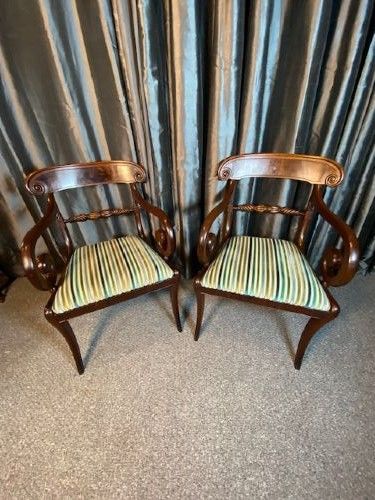
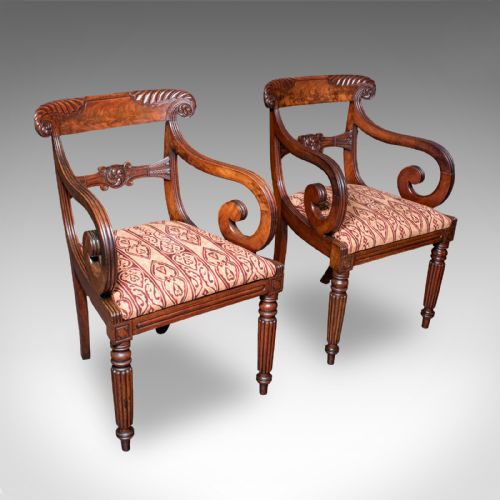
Regency models typically exhibit clean architectural lines, sabre legs, reeded frames and restrained mahogany surfaces. The proportions feel lighter and more linear.
Victorian versions introduce button tufting, spoon backs, heavy show-wood frames and sprung upholstery designed for fireside lounging.
Were these chairs used only in libraries?
While frequently associated with libraries and studies, these chairs populated morning rooms, reception spaces and dining tables as carvers. Different models suited different domestic tasks.
Smaller elbow chairs served dressing rooms and parlours, while heavy leather-topped versions worked in professional offices.
What kind of leather was used on nineteenth century desk chairs?
Workshops applied dyed sheepskin or cowhide leather to writing surfaces and seat pads, often embellishing the borders with blind tooling or gold leaf embossing. This material provided a durable, wipeable finish for daily study.
Over decades of use, the leather develops a soft patina that reflects its age and handling.