






Scottish Regency Mahogany Table
These scottish regency mahogany table examples bring formal cabinet work and striking timbers into a room, offering both practical surface area and architectural presence.
Scottish Regency Mahogany Table
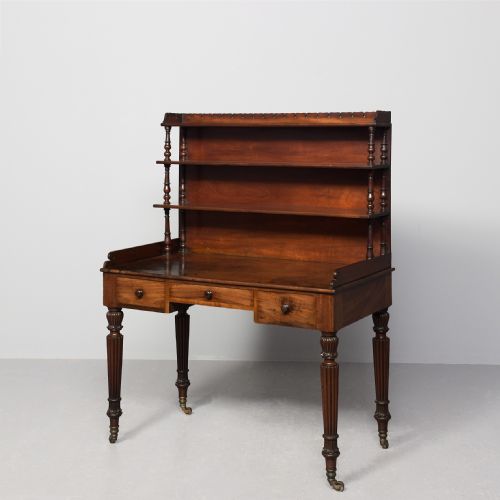
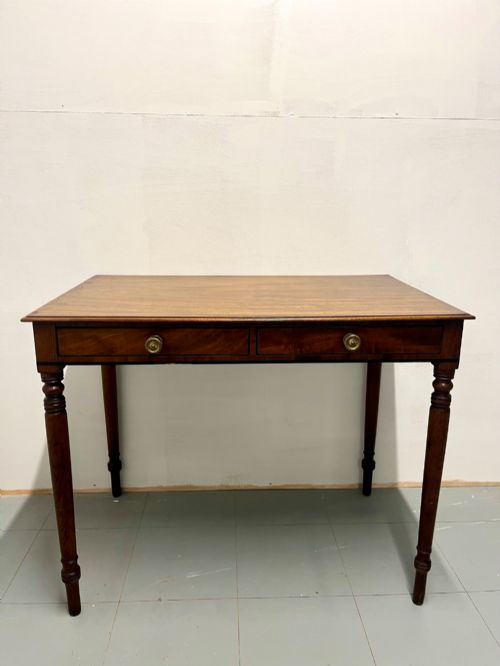
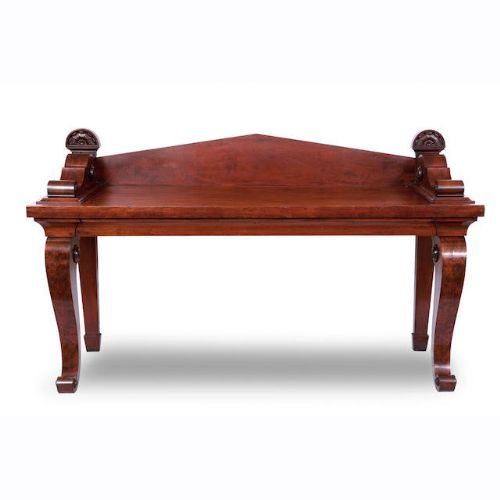
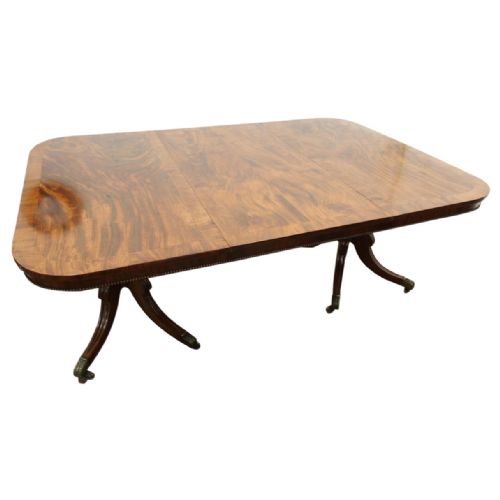
A scottish regency mahogany table spans several forms associated with the nineteenth century, including dining tables, side tables, sofa tables, tea tables, and pedestal wine tables. The pieces documented here originate primarily from the Regency and Georgian periods, alongside examples from the eighteenth century and mid nineteenth century.
Buyers seeking a scottish regency mahogany table will encounter diverse functional shapes, from breakfast and centre tables to writing desks and serving tables. These objects reflect the output of Scottish workshops operating during periods of refined cabinet design.
Materials and construction methods
Makers utilised solid mahogany and flame mahogany veneer, often enhanced by contrasting timbers such as rosewood and lacewood crossbanding. Secondary materials like brass and glass appear on specific furniture elements and clock components.
Joinery techniques supported the creation of pedestal bases, pillar supports, and barrel fronts. Timber selection focused on grain figure, particularly flame mahogany veneers paired with banded borders.
Scottish Regency Mahogany Table Retail Price Guide 2026
Typical asking prices for scottish regency mahogany table among the pieces listed under this phrase on Sellingantiques today, from the lower quarter to the upper quarter. They describe what is for sale here now, not the wider market.
Several pieces arrive directly from Kelso and Ayr, proving provincial Scottish cabinet makers could give Edinburgh workshops a run for their money.
Distinctions in quality and execution
Quality diverges through the selection of timber veneers and the precision of crossbanding details in rosewood or lacewood. Grain matching across primary surfaces defines superior cabinet work.
The sophistication of structural turning, pedestal configuration, and proportions separates standard utility pieces from workshop productions bearing attribution to prominent makers.
James Mein of Kelso·Morison of Ayr·William Trotter of Edinburgh·Mitchell and Russell of Glasgow
The Scottish Regency Mahogany Table Glossary
- Crossbanding
- A strip of veneer applied to the border of a tabletop with the grain running perpendicular to the centre panel. This technique frames the primary mahogany surface.
- Flame mahogany veneer
- A sliced timber sheet exhibiting a distinct undulating flame figure. Makers selected these sheets for prominent surfaces.
- Pedestal table
- A table supported by a central column resting on feet rather than four corner legs. This form facilitates seating arrangement around dining and wine tables.
- Sofa table
- A rectangular occasional table designed to stand in front of a sofa. These pieces typically feature drop leaves and end supports.
Scottish Regency Mahogany Table: Frequently Asked Questions
How do I identify a Scottish Regency table?
Look for distinctive regional cabinet traits, specific timber combinations like mahogany with rosewood or lacewood banding, and construction methods typical of northern workshops.
Comparison with documented workshop pieces helps clarify attribution to makers active in Edinburgh, Glasgow, or Kelso during the period.
Where were these tables used originally?
These tables served formal and informal functions within nineteenth century interiors, acting as dining surfaces, tea tables, or serving consoles.
Their placement ranged from principal dining rooms to drawing rooms and libraries depending on the specific table form.
What woods besides mahogany appear?
Makers frequently incorporated rosewood and lacewood as contrasting bandings or veneers alongside primary mahogany timbers.
These secondary woods highlight borders and drawer fronts through deliberate colour and grain contrast.
How do I care for mahogany surfaces?
Maintain polished mahogany surfaces by avoiding direct sunlight and excessive moisture fluctuation that might affect timber veneers.
Routine dusting with a soft cloth preserves the finish without requiring heavy chemical polishes.