




Scottish Mountain Art
Scottish mountain art captures the rugged scale and atmospheric light of northern peaks through traditional oil and watercolour.
Scottish Mountain Art
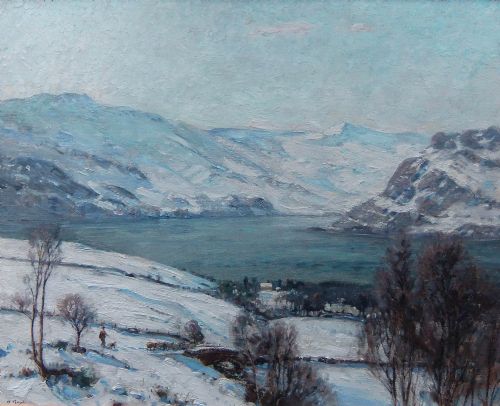
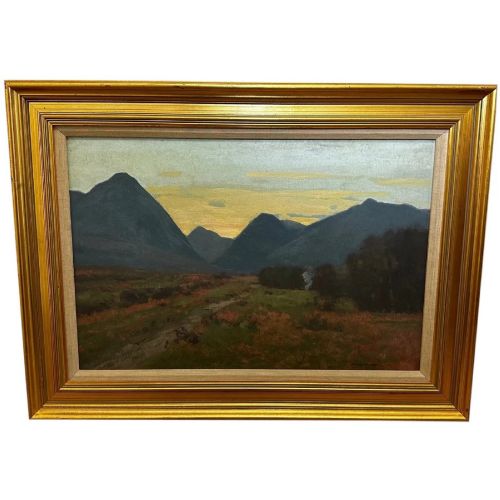
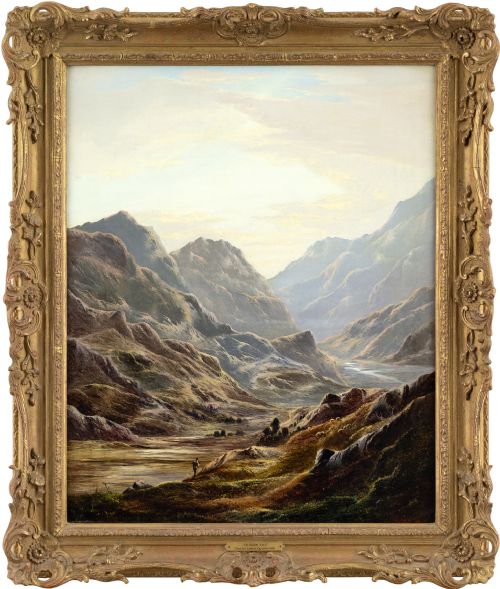
Scottish mountain art encompasses oil paintings and watercolours depicting the dramatic scenery of the Highlands and islands. These works record tranquil lochs, misty glens, and high peaks under changing northern weather.
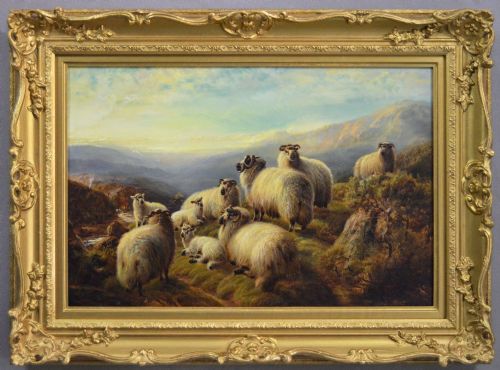
Buyers meet nineteenth-century Victorian canvases alongside early twentieth-century interpretations influenced by Scottish impressionism. Common subjects feature highland cattle, sheep, and figures navigating remote paths beside still waters.
Works range from intimate watercolour studies to large framed oils designed to dominate a Victorian interior. The prevailing palette balances earthy moorland tones against bright morning skies and sunset gold.
Materials and methods
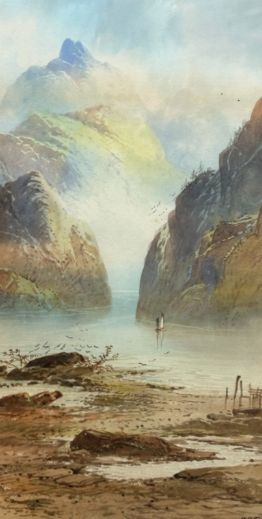
Artists painted primarily in oil on canvas or panel, building up rich textures with layered oil paint to describe rock faces and heather. Watercolours on paper offered a lighter medium for capturing transient effects of mist and cloud.
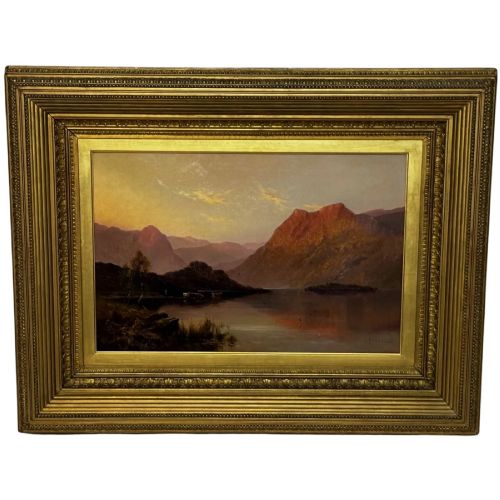
Many period works retain their original giltwood frames, which contribute weight and definition to the composition. Pigments applied with confident brushstrokes allow painters to render the wet sheen of loch water and the rough wool of highland livestock.
Scottish Mountain Art Retail Price Guide 2026
Typical asking prices for scottish mountain art among the pieces listed under this phrase on Sellingantiques today, from the lower quarter to the upper quarter. They describe what is for sale here now, not the wider market.
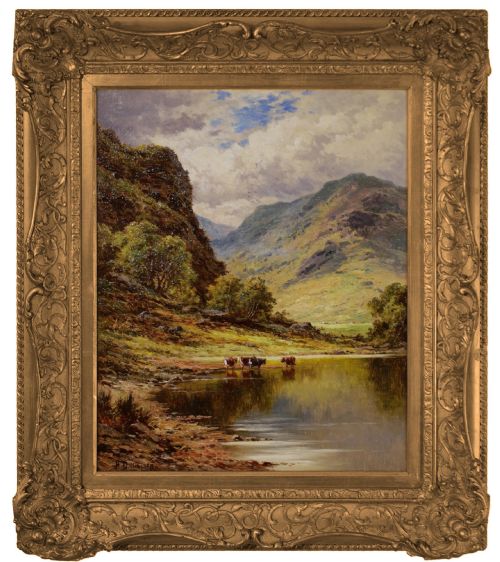
Highland cattle stare from multiple canvases, seemingly unimpressed by the majestic mountain peaks towering behind them.
Distinctions in quality
Quality rests upon the artist's handling of light and atmosphere, distinguishing routine topographical records from canvases with genuine presence. Superior works manage scale effectively, balancing the vastness of Ben More or Loch Long with credible foreground details.
The precision of brushwork in animal and human figures separates accomplished painters from minor practitioners. Original frames matching the period also influence the integrity of the piece.
Alfred de Breanski Snr·George Houston·Benjamin Williams Leader·Henry H Parker·Louis Bosworth Hurt
The Scottish Mountain Art Glossary
- Oil on canvas
- Pigments bound in drying oil applied to a stretched fabric support. This medium allowed artists to achieve deep tones and durable surfaces.
- Giltwood
- Wood carved and coated with gold leaf or gold paint. Frames in this material were standard for significant nineteenth-century landscapes.
- Watercolour
- Pigments suspended in a water-soluble vehicle applied to paper. It was frequently utilised for field sketches and atmospheric views.
- Gouache
- An opaque watercolour paint containing added white pigment for heavier coverage. It creates solid areas of light in mountain scenes.
- Victorian
- The period spanning the reign of Queen Victoria, associated here with detailed realism and romantic landscape painting.
Scottish Mountain Art: Frequently Asked Questions
What subjects appear in these paintings?
Canvases typically show highland lochs, rugged mountain ranges, and remote glens under shifting weather conditions. Herds of cattle or sheep often populate the foreground alongside fishermen and drovers.
Compositions focus on specific geographical locations across Scotland, ranging from the Trossachs to the Hebrides, capturing the distinctive topography of the region.
How do I date these artworks?
Dating relies upon costume details in any figures, the style of the framing, and artist signatures or exhibition records. Victorian pieces often display smooth finishes and dramatic lighting.
Later works from the early twentieth century introduce looser brushwork aligned with impressionist approaches while retaining traditional Scottish subjects.
How should I frame these pieces?
Most works suit traditional giltwood frames that reflect the period of their creation. A heavy frame adds presence to large nineteenth-century oil paintings.
Watercolours require conservation mounting under glass to protect the paper from humidity and direct sunlight.
Where were these paintings displayed originally?
These landscapes hung in nineteenth-century drawing rooms and formal dining spaces as reminders of Highland travel and sporting estates. Their scale was chosen to dominate domestic interiors.
Contemporary collectors place them in both period homes and modern rooms to introduce depth and traditional texture.