




Scottish Mahogany Dresser
These scottish mahogany dresser pieces are substantial storage furniture defined by deep timbers and regional craftsmanship.
Scottish Mahogany Dresser
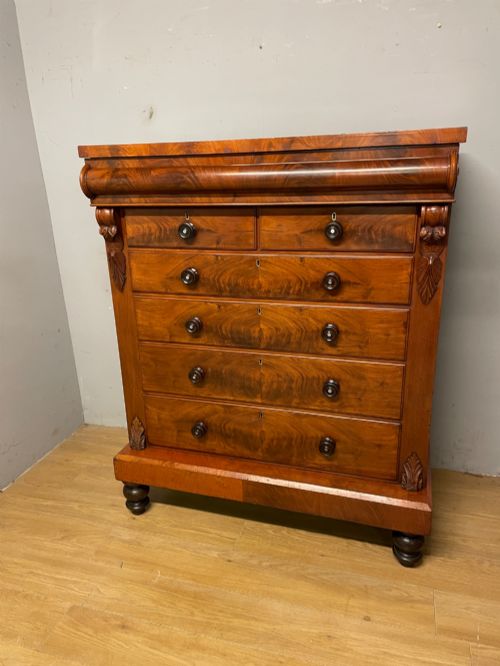
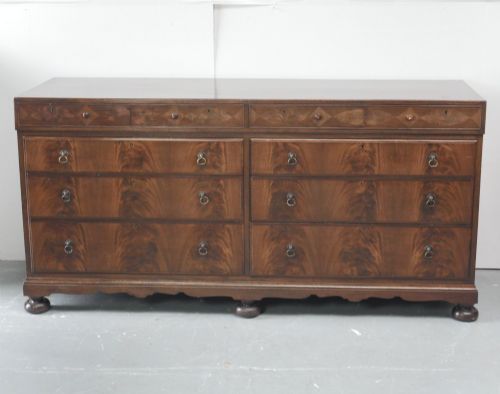
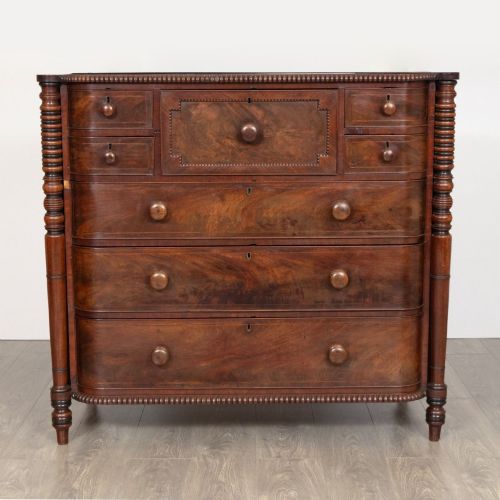
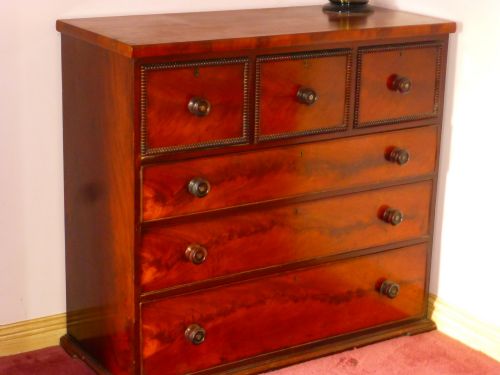
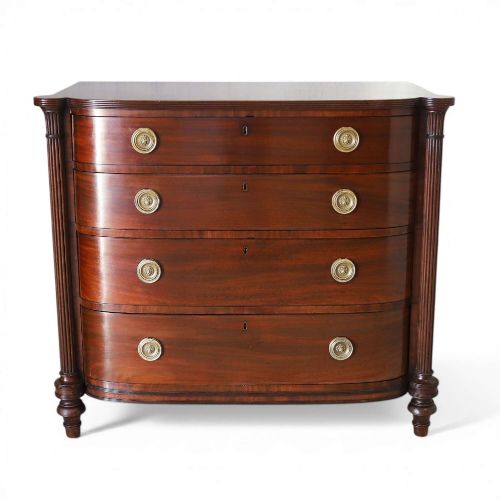
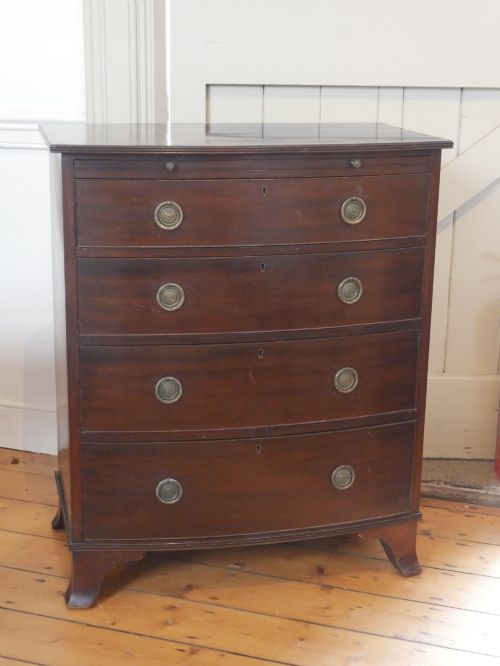
A scottish mahogany dresser on this page typically takes the form of a chest of drawers or a sideboard, spanning periods from the eighteenth century to the twentieth century. These pieces encompass regional variations such as bow fronts, serpentine shapes, and stage-backs.
Buyers frequently encounter nineteenth-century examples alongside George III, Regency, and Victorian pieces. Smaller variations like apprentice chests and gentleman sporran chests also appear among the larger chests of drawers.
Materials and Construction
Makers utilised solid mahogany and flame mahogany veneer laid over secondary timbers such as oak and pine. Drawer linings and structural components frequently display this combination of fine hardwoods and sturdy utility woods.
Decorative elements involve boxwood stringing and brass hardware to complement the figured grain of the wood. Construction techniques span dovetailed drawer boxes and graduated drawer tiers built for daily use.
Scottish Mahogany Dresser Retail Price Guide 2026
Typical asking prices for scottish mahogany dresser among the pieces listed under this phrase on Sellingantiques today, from the lower quarter to the upper quarter. They describe what is for sale here now, not the wider market.
Some nineteenth-century examples include specialist sock drawers, reminding us that even fine mahogany furniture once accommodated very specific hose storage.
Assessing Quality
The choice of veneer sets apart the visual impact of a piece, particularly where dramatic flame mahogany figure is matched across drawer fronts. Superior examples exhibit careful timber selection that enhances the natural grain patterns.
Proportion and cabinet-making execution distinguish workshop output, notably in the crisp execution of serpentine and bow fronts. The integration of secondary woods like oak within the interior structure reflects the underlying standard of manufacture.
Whytock & Reid·R H & J Simpson
The Scottish Mahogany Dresser Glossary
- Flame mahogany
- A veneer cut from the fork of the mahogany tree to create a distinctive swirling flame pattern. It was widely used on prominent furniture surfaces to add visual depth.
- Bow front
- A convex curved cabinet front that swells outward in the centre. This shape requires advanced woodworking skill to construct cleanly.
- Serpentine front
- A front configuration featuring a convex centre flanked by concave curves, or vice versa. It represents an elaborate form of cabinet-making.
- Stage-back
- A raised rear superstructure on sideboards used for display or small compartments. It characterises specific regional sideboard designs from the Georgian period.
- Graduated drawers
- A series of drawers decreasing in depth from bottom to top. This arrangement provides stability and balance to the chest facade.
Scottish Mahogany Dresser: Frequently Asked Questions
What is a Scotch chest?
A Scotch chest is a regional term for a heavy chest of drawers originating from Scotland, typically distinguished by a deep top drawer or configuration specific to northern cabinet-makers.
These pieces often feature robust proportions and striking mahogany veneers that set them apart from standard English equivalents of the same era.
How do I date a mahogany chest?
Dating relies on examining construction methods, timber choices, and overall stylistic details such as bracket feet, turned feet, or brass hardware. Drawer linings in oak or pine also provide clues regarding the period of manufacture.
Changes in proportion and decorative veneers from the George III era through the Victorian period help narrow down the decade in which the piece was built.
Where should I place a large chest?
Large chests require adequate wall space and clearance to allow drawers to open fully without obstruction in a bedroom or hallway. Their substantial weight means they suit ground-floor or structurally sound placement.
Keeping them away from direct heat sources protects the mahogany and flame veneer from drying out or splitting over time.
What is an apprentice chest?
An apprentice chest is a small-scale model of a full-size chest of drawers, traditionally made by a trainee cabinet-maker to demonstrate skill. They replicate all the proportions and joinery of larger furniture.
Despite their diminutive size, they utilise the same mahogany and construction techniques found in standard pieces from the period.