


Scottish Highland Scene
When you search for a scottish highland scene, you are looking at painted views of northern mountains, lochs and moors.
Scottish Highland Scene
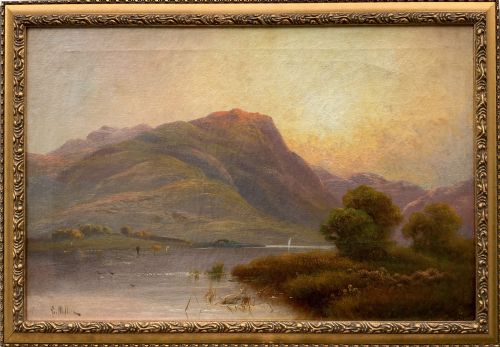
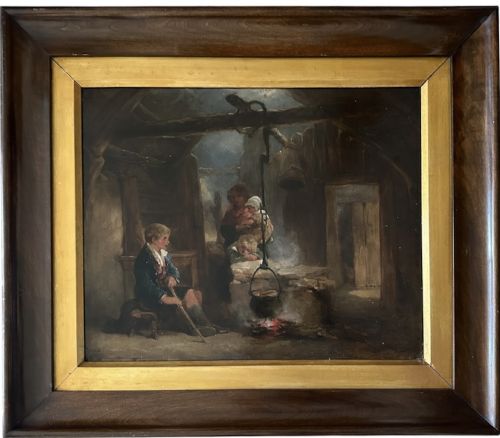
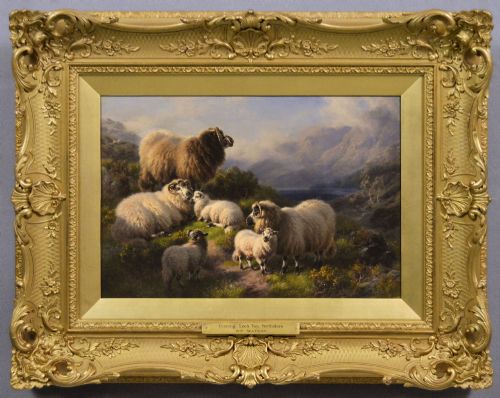
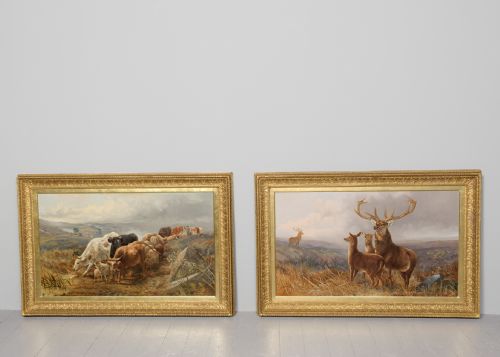
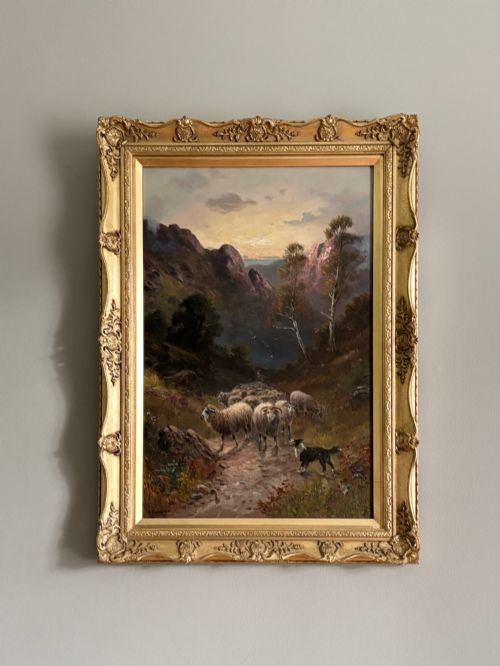
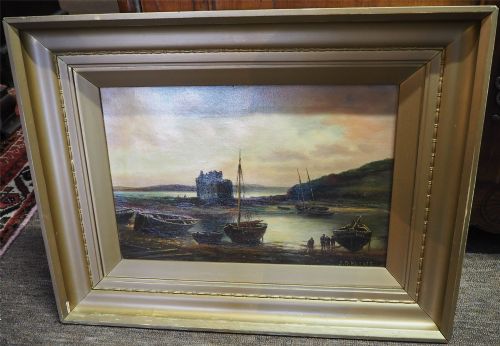
A scottish highland scene captures the terrain, weather and rural life of Scotland across the nineteenth and early twentieth centuries. These works record mountain ranges, deep lochs, grazing sheep and highland cattle under changing northern skies.
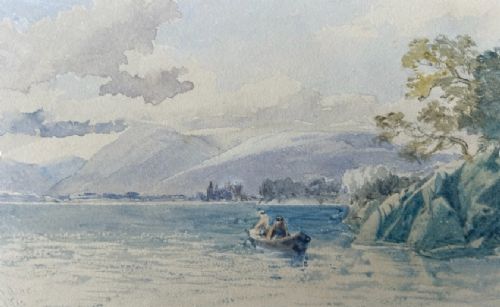
You will most frequently meet nineteenth-century and Victorian oil paintings on canvas or board, alongside occasional watercolours and gouache works. Frames are typically giltwood and gesso, which complete the period presentation of these landscapes.
Materials and Techniques
Painters relied principally on oil paint applied to canvas, wood panels or boards, building texture with brushwork and palette knives. Watercolour and gouache appear on paper supports, often finished with gum arabic to enrich the pigment depth.
Finished works sit within wooden frames ornamented with gesso, frequently finished in gold leaf. These frames provide structural support and reflect the prevailing decorative tastes of the Victorian period.
The archive records works spanning the Georgian, Victorian and Edwardian eras up to the 1920s.
Judging Quality
Quality rests in the handling of atmospheric light, distant mountain perspective and the naturalism of animal and human figures. Weaker examples rely on repetitive formulas for lochs and hills, whereas superior works convey specific weather and distinct topographical character.
The integration of the painting with its original giltwood and gesso frame influences the overall integrity of the piece. Brushwork that remains confident across both foreground detail and expansive skies separates standard decorative works from accomplished paintings.
George Whitton Johnstone·William Beattie-Brown·Thomas Miles Richardson Jnr·William Watson Jnr·Robert Cleminson·Douglas Cameron·Archibald Kay·James Kyd·W.E. Evans·William Grant Murray·John Charles Tunnard·Sir David Murray·John W Morris·Daniel Sherrin·Frederick Richard Lee·Thomas Sidney Cooper·AJ Thornton·George Cole·Henry Birtles·Alfred de Breanski Sr·Benjamin Williams Leader·Louis Bosworth Hurt·James Russell·Alfred Graham·E. M. Seaton
The Scottish Highland Scene Glossary
- Giltwood
- Wood carved and coated with gold leaf or metallic paint. This material forms the ornate frames commonly found on nineteenth-century paintings.
- Gesso
- A plaster mixture applied to wood frames to create a smooth surface for gilding. It allows intricate relief moulding around the edges of landscape paintings.
- Gouache
- An opaque watercolour paint mixed with a white pigment. It produces solid, matte passages of colour in works on paper.
- Oil on Canvas
- Pigment suspended in drying oil applied to a stretched woven fabric support. This combination underpins the majority of nineteenth-century Scottish landscape paintings.
Scottish Highland Scene: Frequently Asked Questions
What periods do these paintings date from?
The works span the Georgian era through the Victorian period and into the early twentieth century, including the 1920s. Most examples date from the later nineteenth century.
Victorian and Edwardian artists recorded these highland landscapes during a time of rising appreciation for Scottish scenery.
How were these Scottish scenes originally displayed?
Landscapes were framed in substantial giltwood and gesso surrounds designed to project the artwork forward on domestic walls. These heavy frames were standard for formal reception rooms.
Today, those same frames help establish the period context of the painting, though collectors should check for original gilding.
Which subjects appear most often?
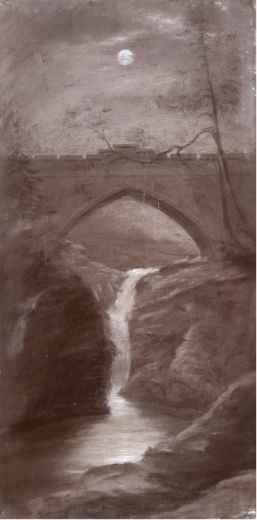
Cattle, sheep, stags and fishermen populate the foregrounds of mountain loch views and moorland vistas. Weather effects such as morning mist and moonlight recur across the painted compositions.
These motifs reflect the nineteenth-century taste for romanticized rural life in the Scottish highlands.
Are watercolours as common as oils?
Oil paintings on canvas or board form the majority of surviving works, though watercolours and gouache paintings appear regularly. Works on paper offer a lighter alternative to large oil canvases.
Watercolours from the period typically require protective glass framing to preserve the pigments.