

Scottish Highland Landscape
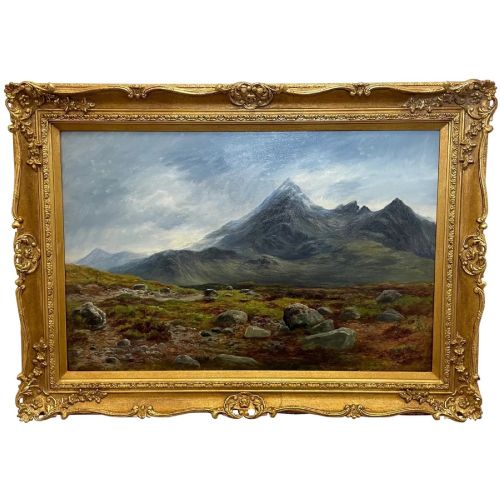
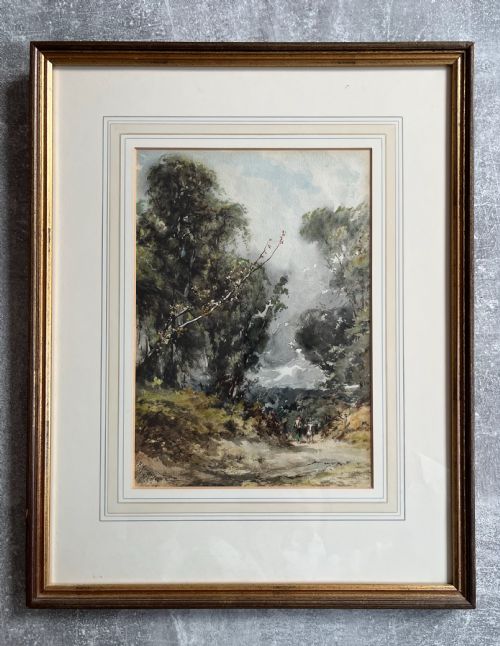
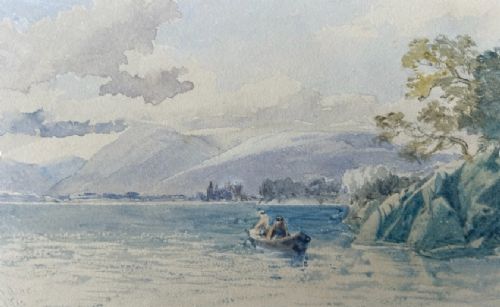
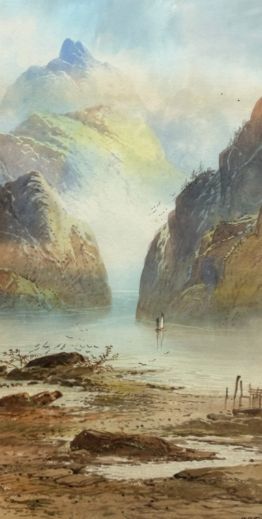
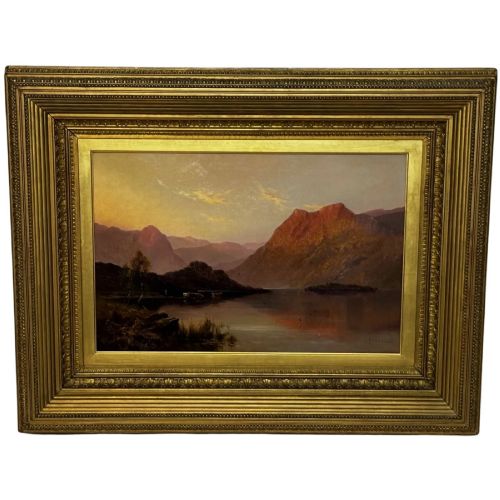
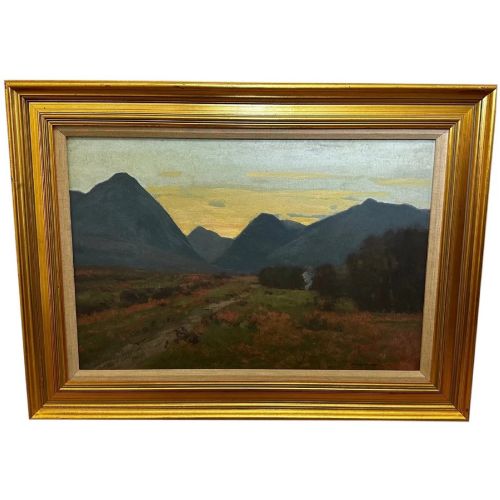
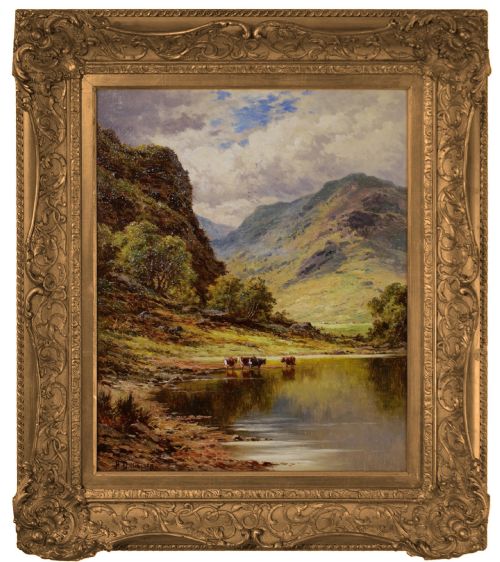
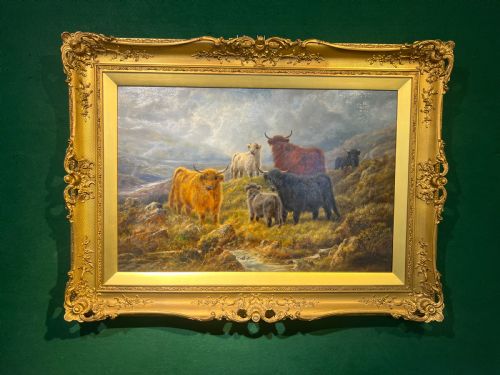
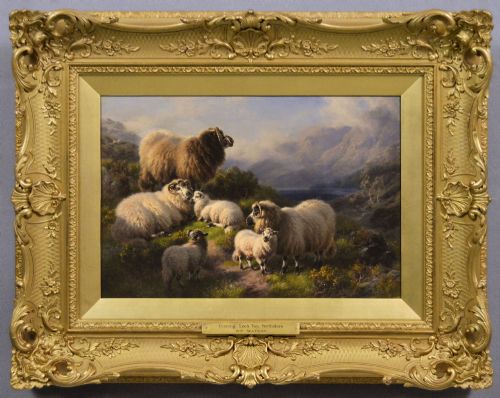
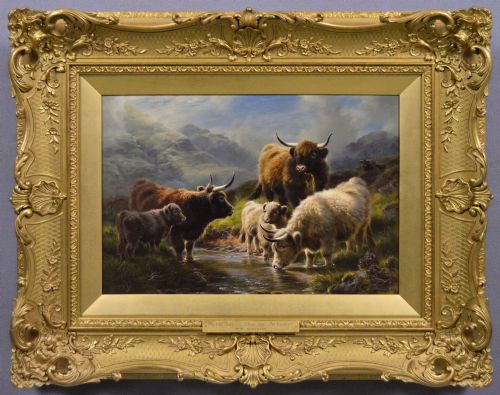
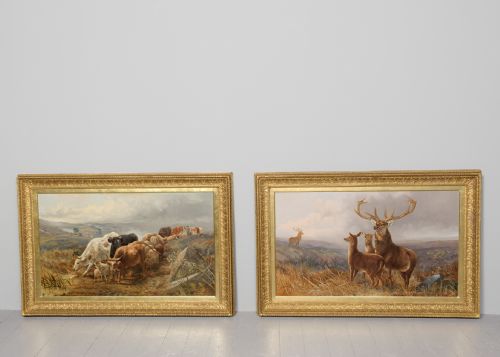
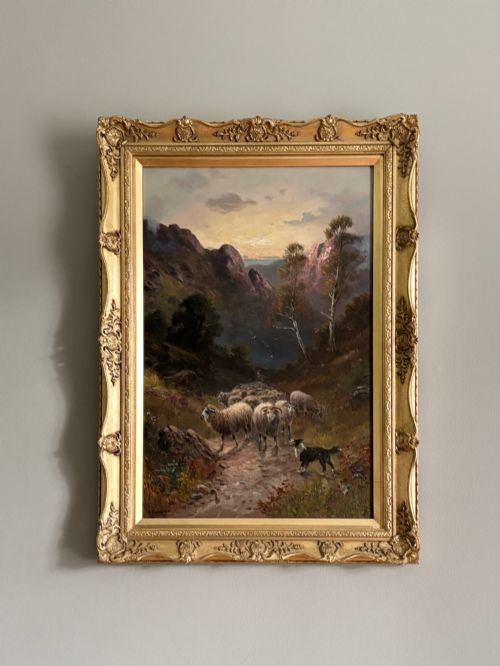
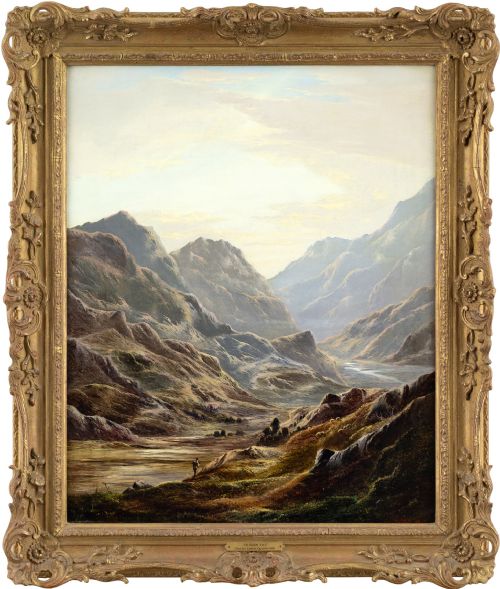
These nineteenth and early twentieth-century artworks capture the rugged topography, distant lochs, and native livestock of a scottish highland landscape.
Scottish Highland Landscape
A scottish highland landscape depicts the remote terrains, atmospheric waters, and grazing animals of Scotland during the Victorian and Edwardian eras. These paintings typically record specific geographic locations such as Loch Awe, Ben Lawers, and Glen Tilt under shifting morning mists or evening light.
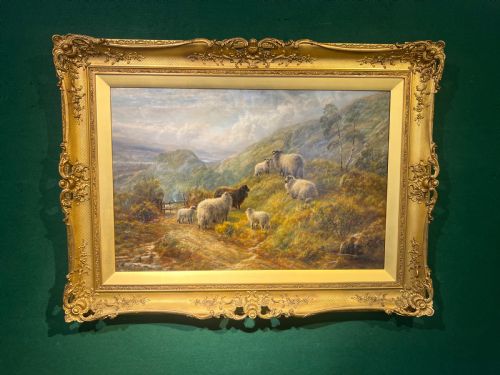
The works most commonly encountered span from the mid-nineteenth century through the early twentieth century, created by artists working within the Scottish School and Scottish Impressionism. Subjects frequently feature Highland cattle, sheep, or stags positioned beside deep lochs and shadowed mountain passes.
How They Were Made
Painters applied oil paint to stretched canvas, wood panels, or millboard, often building rich textures with brushwork and palette knives to render heather, rock, and water. Watercolour versions on paper utilised delicate washes and pen work to capture the translucent mountain atmosphere and sudden weather shifts.
Finished canvases were commonly housed within heavy giltwood and gesso frames that enhanced the depth and luminance of the composition. Support panels of wood and canvas laid onto board provided stable foundations for outdoor plein-air studies and large studio works alike.
Listings combine nineteenth-century oil paintings on canvas with early twentieth-century watercolours and gouache studies.
What Varies in Quality
Quality rests upon the artist's handling of natural light and atmospheric perspective, distinguishing atmospheric topographical studies from formulaic studio reproductions. Superior examples demonstrate precise observation of local weather, terrain, and animal anatomy rather than generic mountainous backdrops.
The execution of the surrounding frame and the clarity of the artist's signature or exhibition provenance further separate works of distinction. Stronger pieces retain their original surface tension, stable pigment layers, and period gilding without heavy overpainting.
William Beattie-Brown·George Fotherly Hargitt·Thomas Miles Richardson Jnr·William Henry Earp·Tom Campbell·George Houston·Henry H. Parker·Robert Watson·William Watson Jnr·Robert Cleminson·Charles Leslie·Alexander Wellwood Rattray·Everett Watson Mellor·Henry Robinson Hall·Andrew Kurtis·F. E. Jamieson·Walter Linsley Meegan·Alfred Wainwright·Kenneth Holmes·Waller Hugh Paton
The Scottish Highland Landscape Glossary
- Gesso
- A plaster-like material applied to wooden frames as a smooth base before gilding with gold leaf. This ground mixture was often moulded into ornate decorative patterns.
- Scottish School
- A loose collective of artists working in Scotland who shared regional landscape traditions and academic training. Their output defined national painting styles across the nineteenth and twentieth centuries.
- Plein-air
- The practice of painting outdoors directly from nature to capture transient light and weather conditions. Artists utilised portable box easels to work on site in remote glens.
- Giltwood
- Timber carved and coated with thin gold leaf or metallic powder to create a reflective golden surface. It was standard for framing significant nineteenth-century oil paintings.
Scottish Highland Landscape: Frequently Asked Questions
Where were these scenes usually painted?
Artists travelled into the northern glens, highland passes, and coastal islands of Scotland to sketch direct from nature. Popular locations included Loch Lomond, Glen Tay, and the base of Ben Nevis.
Many painters maintained studios in Edinburgh or Glasgow where they converted these field watercolours and charcoal sketches into large canvases for exhibition.
How do I care for an antique oil painting?
Keep canvases away from direct sunlight, high humidity, and rapid temperature shifts that cause the wood panels and paint layers to warp or crack. Dust the surface gently with a soft, dry brush without applying pressure.
Avoid using water or chemical cleaners on the paint surface or the antique giltwood frame. Professional conservation is recommended for any structural repairs.
What subjects appear besides cattle?
Paintings frequently feature highland sheep grazing on moorland, stags standing on misty ridges, and working ponies resting beside shooting parties. Figures including shepherds, drovers, and inhabitants of local crofts also populate the valleys.
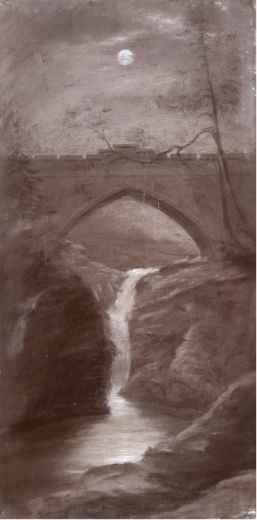
Architectural elements like ruined castles, stone bridges, and remote Highland bothys frequently anchor the compositions.
How can I tell a watercolour from an oil painting?
Oil paintings display a heavier texture where brushstrokes and pigment sit visibly on top of the woven canvas or wood panel. They are typically protected by a heavy giltwood frame rather than glass.
Watercolours use transparent washes of pigment on paper, revealing the texture of the sheet beneath, and require glazing behind glass to prevent moisture damage.