
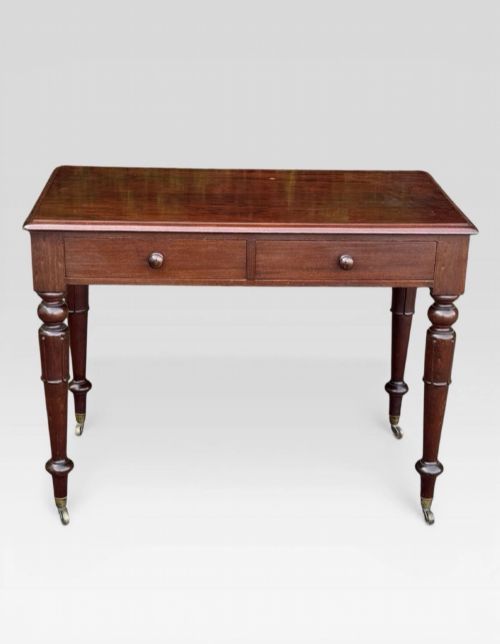
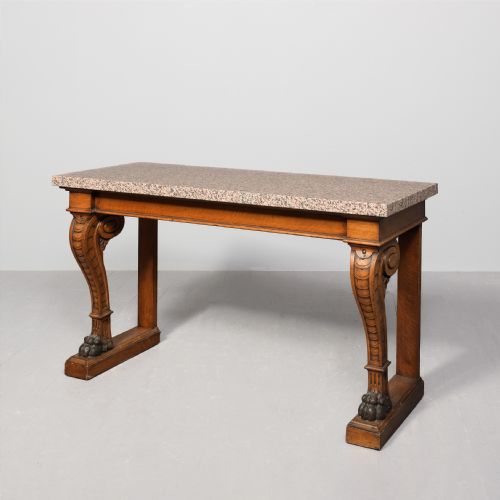

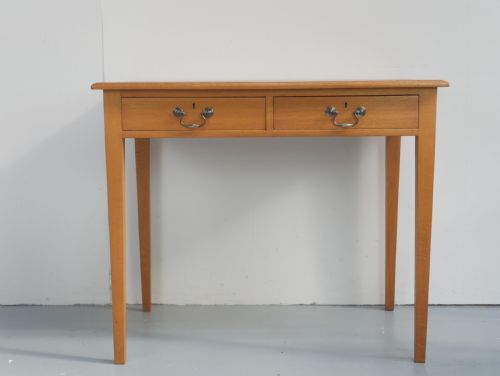


Scottish Console Table
A scottish console table brings robust native timbers and distinct regional cabinet-making traditions into a hallway or reception room.
Scottish Console Table
A scottish console table is a heavy furniture form designed to stand against a wall in hallways, dining rooms, and drawing rooms. These pieces encompass related regional forms like serving tables, dresser bases, and side tables that share the same architectural placement.
Makers in Edinburgh, Glasgow, and Dundee produced these tables across the eighteenth, nineteenth, and early twentieth centuries in styles ranging from Georgian and Regency to Victorian and rustic farmhouse. Oak, mahogany, and pine dominate the surviving examples, often paired with substantial proportions and local stonework.
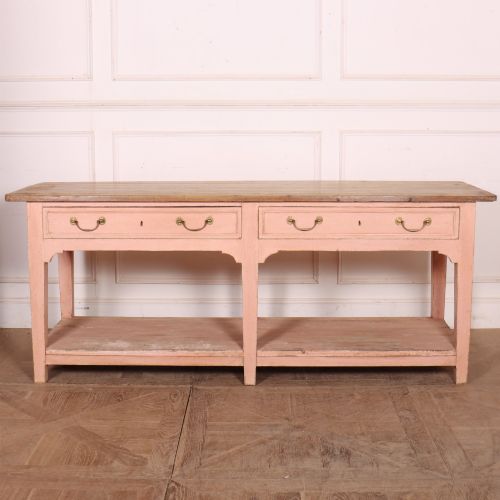
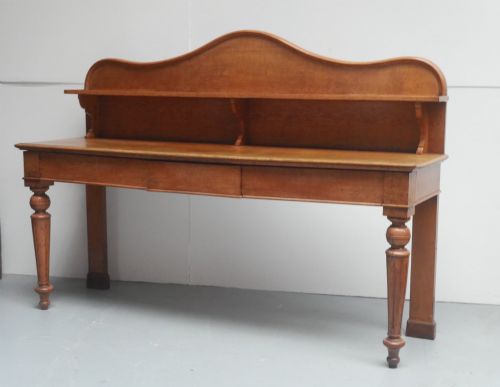
Buyers encounter variations spanning from plain country pine and bleached oak to crossbanded rosewood and granite-topped or marble-inlaid formal serving tables. The selection balances utilitarian rural pieces against highly finished urban cabinet work.
How They Were Made
Craftsmen built these tables using dense hardwoods such as oak, mahogany, and rosewood, alongside softer timbers like pine and larch for utility pieces. Wood inlay, crossbanding, and burr oak veneers enhanced the surfaces of formal tables from major urban workshops.
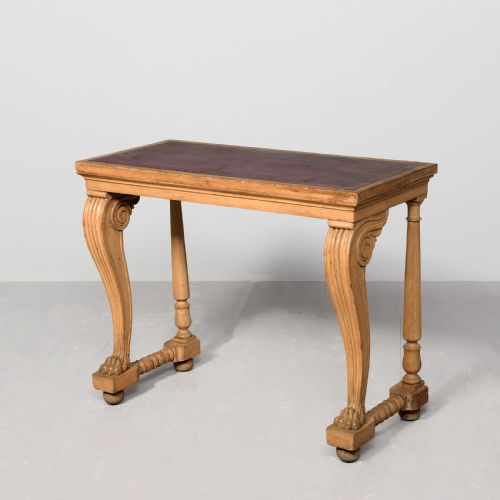
Structural heft defined the regional output, utilising thick timber slabs, turned supports, and occasionally applied carved detailing in walnut or oak. Marble and granite inserts appeared on specific serving and console tables to provide durable, polished working surfaces.
Materials span native oak, pine, and larch alongside imported mahogany, rosewood, walnut, and marble or granite inserts.
What Varies in Quality
Quality rests upon the selection of timber and the sophistication of the joinery, distinguishing heavy utilitarian farmhouse pieces from bespoke urban commissions. Regional timbers like native oak or larch show disciplined selection, while top-tier pieces employ figured mahogany, rosewood, and precise crossbanding.
Attribution to documented workshops or makers elevates a piece through refined proportions and sophisticated decorative treatments like wood inlay and marble or granite top integration. Simpler pine or bleached oak tables rely entirely on honest construction and surface patination rather than elaborate cabinet techniques.
Bruce And Burns Of Edinburgh·James Mein Of Kelso·J A Mein Edinburgh·Alexander McKenzie Of Glasgow·William Trotter·Whytock And Reid·Jenners·J And T Scott·Justice Of Dundee
The Scottish Console Table Glossary
- Console table
- A table designed to stand against a wall, frequently secured to it or balanced on front legs. These items served functional and decorative roles in entrance halls and reception rooms.
- Crossbanding
- A strip of veneer applied to the border of a table top where the grain runs at right angles to the main surface. This technique created a neat framing effect on Regency and Georgian pieces.
- Dresser base
- A lower kitchen or dining room storage unit featuring drawers and cupboards beneath a solid top. These rural forms frequently double as serving tables in modern interiors.
- Potboard
- An open lower shelf fitted between the legs of a dresser base or serving table. It provided space for storing heavy kitchen pottery and metalware.
- Chiffonier
- A compact sideboard cabinet fitted with doors enclosing shelves and often a raised shelf on top. This form appeared in nineteenth-century dining and drawing rooms.
Scottish Console Table: Frequently Asked Questions
Where do you put a scottish console table?
These tables suit hallways, entrance passages, and dining rooms where a shallow footprint against the wall works best. Their sturdy proportions anchor large wall spaces and provide a surface for lamps or decorative objects.
Larger serving tables and dresser bases fill dining room walls, offering ample surface area for serving food or displaying collections of ceramics and silver.
How do you date a scottish console table?
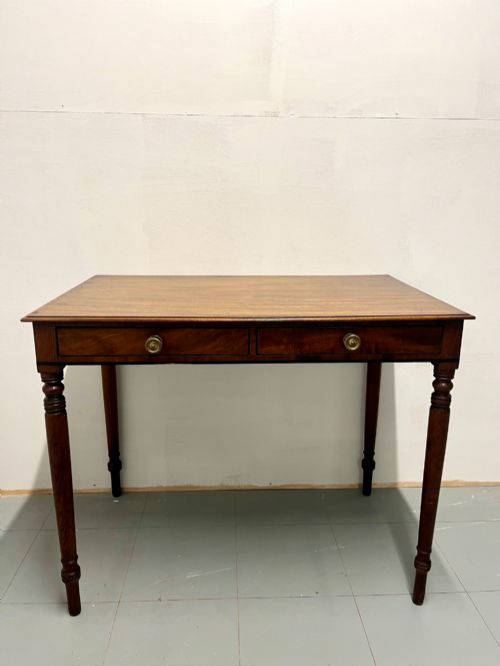
Dating relies on combining the timber species, construction methods, and stylistic cues present in the piece. Georgian and Regency examples display refined mahogany, rosewood, and classical veneers, while Victorian pieces often feature heavier oak, walnut, or applied carving.
Maker signatures, stamps, or documented attribution to Edinburgh and Glasgow workshops narrow down the production era. Vernacular pieces in pine or oak look to traditional regional joinery methods for context.
What is the difference between a console and a side table?
Console tables traditionally stood against a wall and sometimes required wall fastening for stability, whereas side tables stood freely on four legs. Over time, cabinet makers blurred these distinctions as domestic layouts evolved.
In marketplace terminology, both terms describe narrow rectangular tables suited for perimeter placement in rooms. Material choice and decorative finish typically indicate whether a piece was meant for formal reception spaces or utility rooms.
Are marble tops original on these tables?
Marble and granite inserts appear on specific nineteenth-century serving and console tables designed for heavy use or formal display. These stone surfaces provided durable, heat-resistant areas for food and beverage service in grand houses.
Evaluating originality involves inspecting the surrounding timber rebate and support framing to ensure the stone fits the period construction. Regional workshops frequently paired native oak or mahogany bases with imported marble or local granite.