

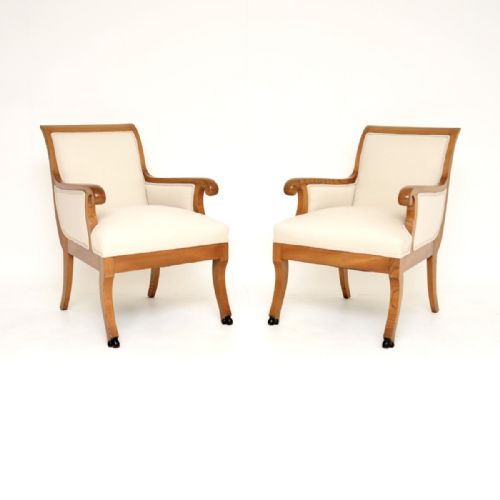

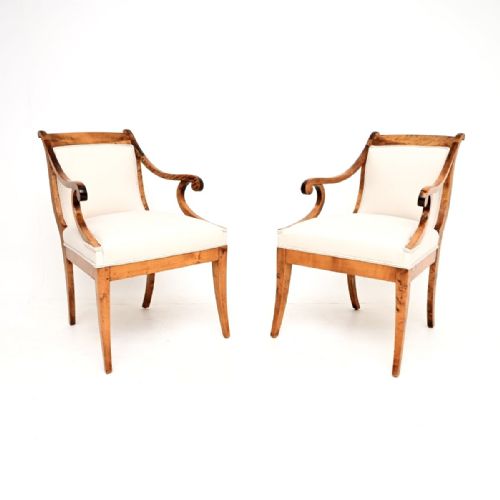


Scandinavian Wood Armchairs
Scandinavian wood armchairs bring clean form and honest craftsmanship into a room, offering both sculptural presence and enduring comfort.
Scandinavian Wood Armchairs
When you search for scandinavian wood armchairs, you encounter a distinct tradition of seating originating primarily from Sweden across several centuries. The selection spans robust country forms through to refined urban styles.
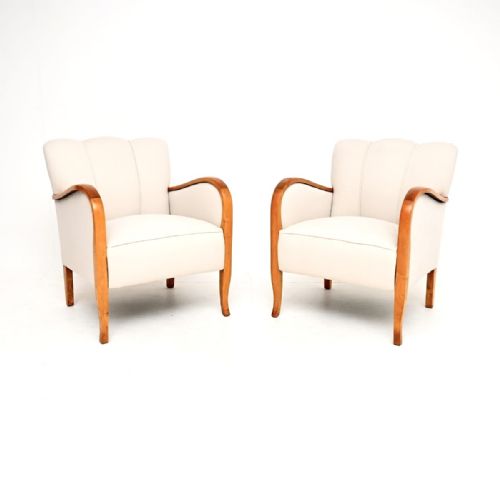
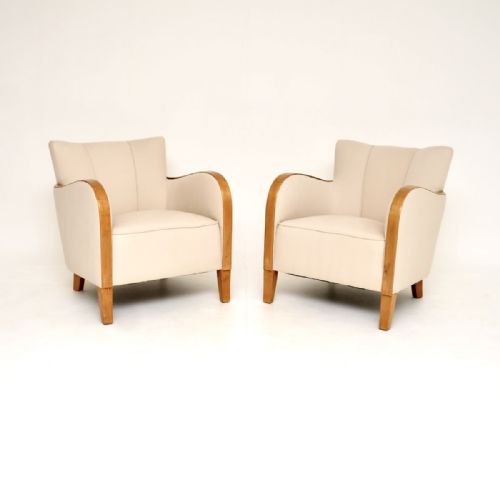
The most frequent examples on this page date from the nineteenth and early twentieth centuries. These encompass distinct aesthetic movements including Swedish Biedermeier, Art Deco, and Neoclassical designs.
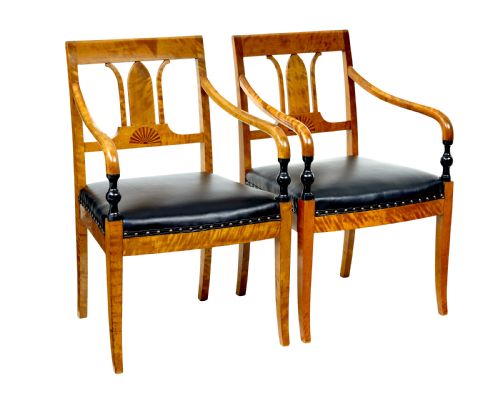
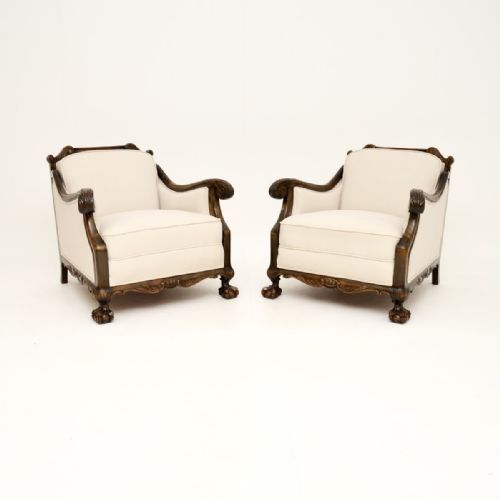
Makers utilised native timbers to construct forms ranging from solid elm armchairs to satin birch seating pairs. Many pieces reflect regional furniture traditions alongside formal period aesthetics.
How they were made
Cabinetmakers constructed these frames using native timbers such as birch, satin birch, and elm. Wood was selected for both grain figure and structural integrity.
Surfaces were finished in various ways, ranging from clear polished wood to painted treatments and ebonised details. Upholstery materials like fabric and leather were integrated into the seating design.
Scandinavian Wood Armchairs Retail Price Guide 2026
Typical asking prices for scandinavian wood armchairs among the pieces listed under this phrase on Sellingantiques today, from the lower quarter to the upper quarter. They describe what is for sale here now, not the wider market.
Dug-out chairs required a tree trunk split and hollowed by hand, yielding a heavy seat with zero joinery.
What varies in quality
The sophistication of the carved or turned woodwork separates simpler regional examples from metropolitan cabinet work. Grain matching in satin birch indicates the level of care taken during construction.
Proportion and silhouette distinguish standard vernacular chairs from high-style pieces influenced by periods such as Karl Johan and Art Deco.
Anton Rosen
The Scandinavian Wood Armchairs Glossary
- Satin birch
- A timber prized for its lustrous, light-reflecting grain. It frequently defines high-status Swedish seating from the nineteenth and twentieth centuries.
- Biedermeier
- A Central European and Scandinavian style period known for clean lines and emphasis on wood grain rather than heavy ornamentation. It produced restrained, elegant seating forms.
- Karl Johan
- A Swedish neoclassical design style named after King Karl XIV Johan. It draws heavily on French empire influences adapted to local tastes.
- Ebonised
- Wood treated to imitate ebony, giving a deep black finish. It often highlights specific structural elements on birch and softwood frames.
- Elm
- A durable, tough timber utilised for solid country furniture frames. Its interlocking grain provides exceptional strength for vernacular chairs.
Scandinavian Wood Armchairs: Frequently Asked Questions
Are these armchairs comfortable for daily use?
Most period examples offer supportive upright seating designed for parlours and living spaces. Upholstered variants provide a softer seat.
Depth and rake vary considerably between country folk art pieces and refined urban styles.
How do I identify a Biedermeier armchair?
Biedermeier pieces emphasise smooth surfaces and warm birch veneers without excessive carving. The silhouette relies on balanced geometric proportions.
Scroll arms and curved backrests are common hallmarks of this nineteenth-century aesthetic.
What is satin birch?
Satin birch is a common descriptor for birch timber exhibiting a shimmering, light-reflective grain pattern. Cabinetmakers used it extensively in Scandinavian furniture.
Its pale tone contributes to the airy quality typical of Nordic interiors.
Can I mix these chairs with modern interiors?
The clean lines of Scandinavian wood armchairs complement contemporary rooms naturally. Their warm wooden tones soften minimalist spaces.
Pairs work effectively as accent seating in living areas or bedrooms.