


Scandinavian Nightstands Pair
These scandinavian nightstands pair practical bedside storage with regional European character, offering useful surfaces and drawers beside the bed.
Scandinavian Nightstands Pair
A scandinavian nightstands pair brings compact bedside furniture into the bedroom, drawing on traditional forms from the nineteenth century up to nineteen thirty. The selection on this page relies heavily on nineteenth-century pieces, spanning painted chests of drawers, commodes, and dedicated bedside cabinets.
Materials and construction
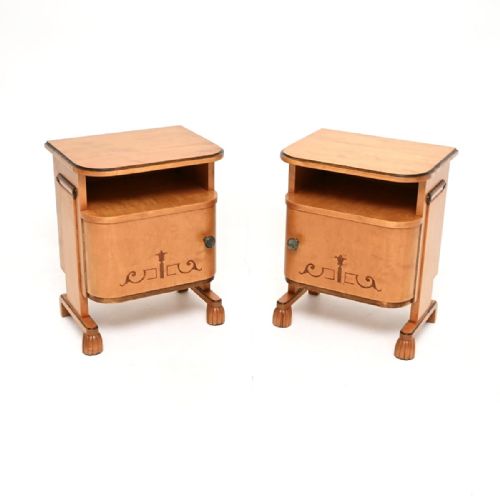
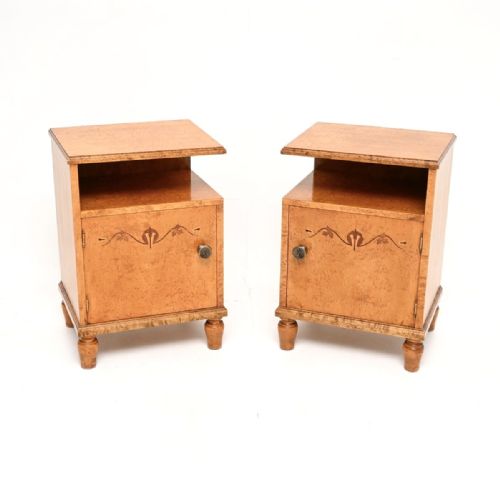
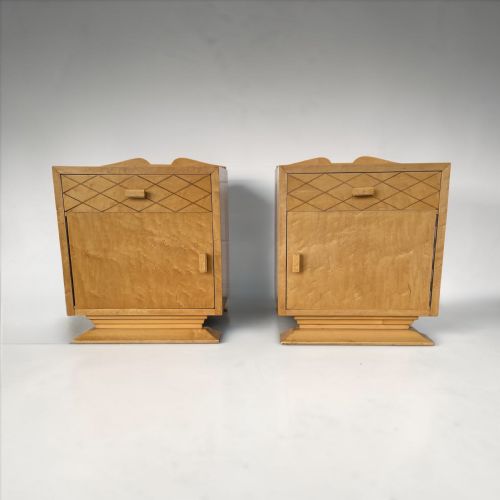
Cabinet makers utilised native timbers such as solid birch, birch veneer, and pine to construct these bedside pieces. Selected examples incorporate contrasting ebonised wood details or incorporate marble tops for a more durable surface.
Painted finishes dominate the group, ranging from traditional white painted schemes to decorative hand-painted treatments. Functional hardware often includes brass fittings, whilst interior configurations utilise small drawers and cupboards.
Marble tops appear alongside painted and satin birch finishes within the available bedside cabinet selection.
Judging quality in these bedside pieces
Quality rests upon the crispness of the timber joinery and the integrity of the original or period surface finish. Pieces showcasing refined Swedish Biedermeier proportions or clean Gustavian mouldings command attention through their architectural restraint.
The refinement of the decorative paintwork and the selection of secondary timbers further distinguish standard regional carpentry from finer cabinet making. Well-executed hardware and stable carcass construction ensure these small cupboards and chests endure daily use.
The Scandinavian Nightstands Pair Glossary
- Gustavian
- A Swedish neoclassical design style characterised by restraint, symmetry, and pale painted finishes. It draws inspiration from French Louis XVI design adapted to Nordic tastes.
- Commode
- A low chest of drawers or cabinet with doors, commonly used for bedside storage in European interiors. Nineteenth-century examples often sit on short tapered legs.
- Biedermeier
- A Central and Northern European style spanning the nineteenth century that prioritises utility, clean lines, and polished wood veneers over excessive ornament.
- Ebonised wood
- Timber treated with a chemical stain or finish to imitate dark, dense ebony. It provides sharp contrast against lighter birch or painted carcass work.
Scandinavian Nightstands Pair: Frequently Asked Questions
What periods do these pieces date from?
The available selection spans the nineteenth century through to nineteen thirty. This encompasses both nineteenth-century painted commodes and early twentieth-century Art Deco designs.
Such a timeline allows buyers to choose between rustic painted country items and more formally styled neoclassical or modernist bedside tables.
Are these pieces painted or natural wood?
The listings feature both painted surfaces and exposed timbers. Many nineteenth-century examples wear traditional white or hand-painted finishes.
Alternatively, pieces utilising satin birch and birch veneer showcase the natural grain of the wood beneath clear polishing.
How were these cabinets used originally?
These small chests and cupboards served as bedside storage in European bedrooms. Their drawers and enclosed compartments held night-time necessities.
Side tables and small commodes provided convenient surfaces for lighting and personal items before electric bedside lamps became common.
What styles are represented here?
The inventory includes Gustavian-influenced designs, Scandinavian country furniture, Swedish Biedermeier, and Scandinavian Art Deco. Each style reflects the distinct aesthetic preferences of its decade of origin.
Gustavian pieces offer neoclassical elegance, whereas country examples rely on simple painted finishes and sturdy pine construction.