


Scalloped Oval Table
A scalloped oval table brings together curves and timber, offering a distinctive surface for a drawing room or parlour.
Scalloped Oval Table
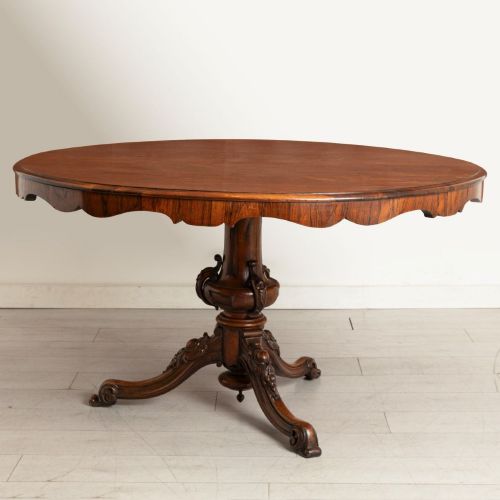
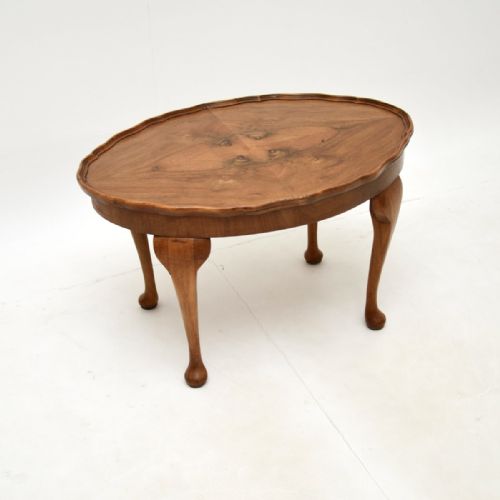
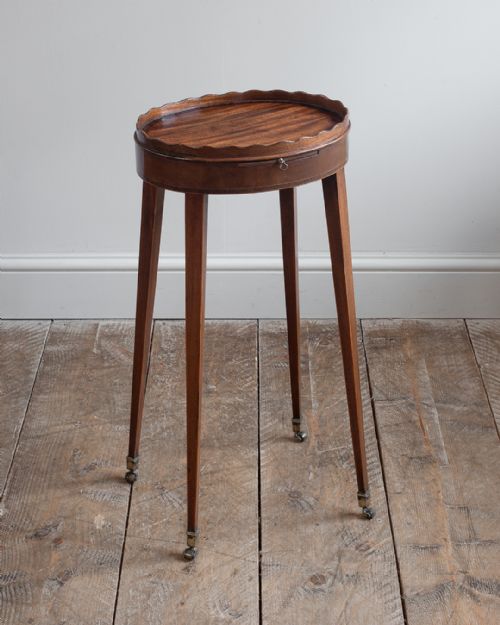
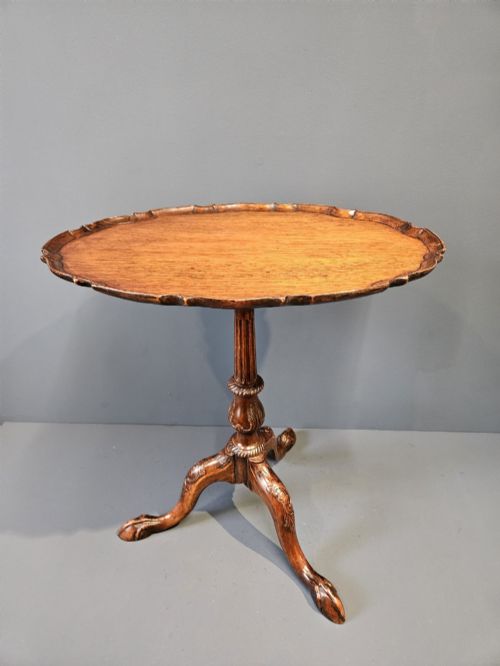
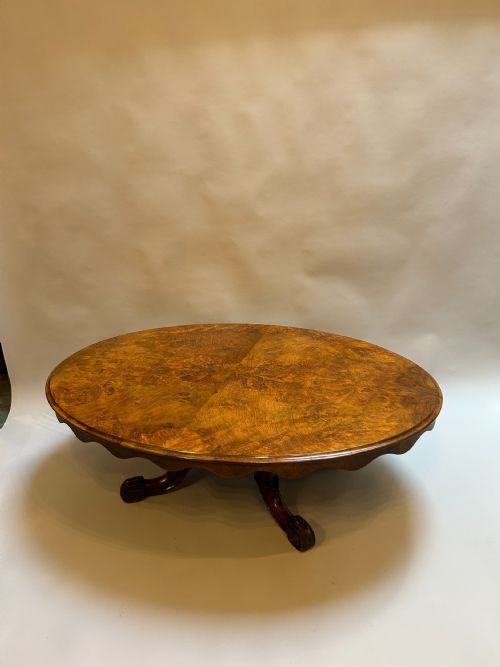
A scalloped oval table presents a curved, indented edge framing an oval top, appearing most frequently in Victorian and Edwardian examples across this selection. These pieces serve primarily as occasional tables, coffee tables, or wine tables, functioning as versatile surfaces within a room.
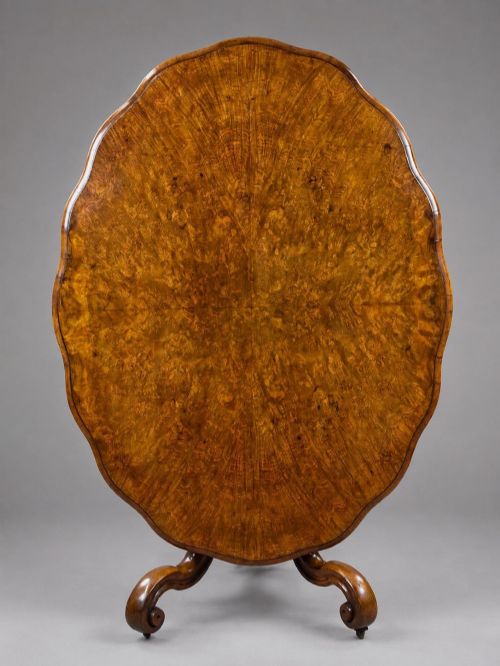
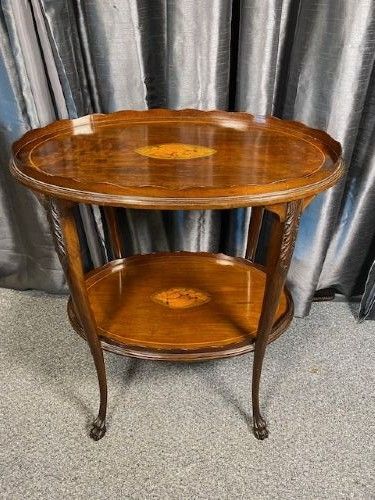
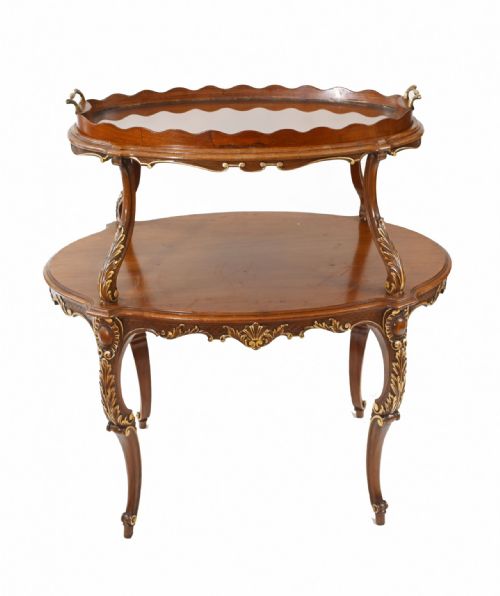
The evidence shows a strong presence of Victorian burr walnut and Edwardian mahogany forms, often featuring tiered constructions or pedestal bases. Buyers searching for a scalloped oval table will encounter various iterations, from inlaid centre tables to tilt-top dining tables.
Materials and construction
Cabinet makers relied heavily on timber such as mahogany, walnut, and burr walnut, frequently enhancing the surfaces with satinwood inlay or marquetry details. Selected pieces incorporate brass fittings and solid carved wood bases to support the shaped tops.
Techniques range from hand-carved foliate edges to pie crust borders, creating the characteristic scalloped outline. Pedestal designs and tiered structures demonstrate traditional joinery suited to the varied proportions of occasional and dining pieces.
Mahogany and burr walnut dominate the material list, accompanied by rosewood, satinwood inlay, and brass.
Judging the work
The distinction between standard and superior pieces rests on the choice of veneers and the crispness of the carved details. Figured walnut and burr birch exhibit rich natural grain patterns that elevate the visual depth of the top.
Attention to subsidiary elements, such as inlaid banding and the execution of the turned or carved base, separates a straightforward production from a more considered workshop output.
The Scalloped Oval Table Glossary
- Pie crust edge
- A raised, decorative carved border resembling the fluted crust of a pastry pie. This technique defines the perimeter of several occasional and coffee tables.
- Inlay
- A decorative technique where contrasting woods or materials like satinwood are fitted into recesses flush with the surface. It adds geometric or floral detail to table tops.
- Tilt-top table
- A design featuring a mechanism allowing the table top to pivot into a vertical position when not in use. This conserved space in smaller period rooms.
- Etagere
- A set of tiered open shelves or tables designed for display. These pieces provide multiple surfaces arranged vertically.
Scalloped Oval Table: Frequently Asked Questions
What periods do these tables come from?
The pieces span several eras, with a heavy concentration of Victorian and Edwardian examples. You will also find items attributed to the Georgian period and the 1930s.
Cabinet makers during the Victorian and Edwardian decades favoured richly figured woods like burr walnut and mahogany, producing everything from wine tables to larger centre tables.
Where should I place an occasional table?
These tables suit sitting rooms, reception halls, and bedchambers as compact surfaces for lamps, books, or decorative objects. Their curved profiles allow them to fit smoothly into seating arrangements without blocking pathways.
Tiered versions and wine tables offer additional display space while maintaining a minimal footprint on the floor.
How do I care for a polished wood surface?
Maintain the finish by dusting regularly with a soft, dry cloth and avoiding placement near direct heat sources or strong sunlight. These precautions protect the underlying timber and veneer from drying out.
Applying a traditional beeswax periodically helps nourish the wood and preserve the natural lustre of walnut and mahogany.
What is a pie crust edge?
A pie crust edge is a carved, undulating border that follows the contour of the table top. It creates a decorative, scalloped silhouette favoured on occasional and coffee tables.
Craftsmen shaped these borders directly from the solid timber or built them up to frame the central panel.