



Scagliola Display Stand
A scagliola display stand is a striking architectural column or pedestal that elevates sculpture and art objects with classical presence.
Scagliola Display Stand
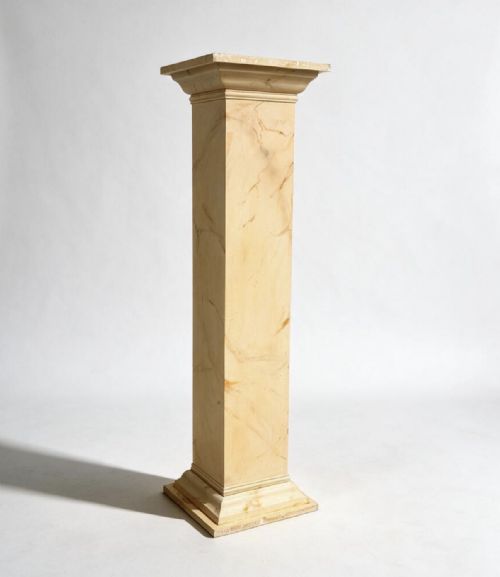
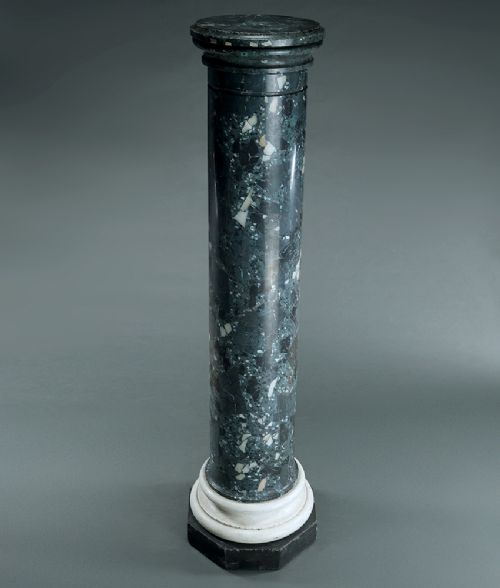
When you search for a scagliola display stand, you are looking at architectural columns, plinths, and pedestals designed to elevate ornaments, clocks, and sculptures within a room. These supports serve as classical focal points, lifting decorative objects to eye level and framing them with architectural dignity.
The pieces appearing on this page span the nineteenth century, the Victorian era, nineteen hundred, nineteen-twenty, and nineteen-thirty. They take the form of tall columns, square pedestals, and stepped plinths, reflecting classical design vocabularies.
You are most likely to meet faux marble columns and scagliola pedestals finished in Neoclassical or Victorian styles. These examples draw upon French Chateau and Grand Regency aesthetics to replicate solid stone through clever surface work.
How they were made
Makers built these pieces using wood, plaster, and painted surfaces to simulate expensive stones. Plaster and painted wood formed lightweight cores that were easier to manoeuvre than solid masonry.
Scagliola and faux marble techniques involved applying pigmented plasters to mimic the rich veining of natural marble. Artisans polished these surfaces to a high gloss, creating the illusion of solid mineral blocks.
Some examples incorporate ormolu collars and white socle bases with black marble plinths. These metal and stone additions provided contrasting details and structural support at the base and capital.
Scagliola Display Stand Retail Price Guide 2026
Typical asking prices for scagliola display stand among the pieces listed under this phrase on Sellingantiques today, from the lower quarter to the upper quarter. They describe what is for sale here now, not the wider market.
Listings feature pieces spanning the nineteenth century, the Victorian era, nineteen-hundred, nineteen-twenty, and nineteen-thirty, utilising marble, paint, scagliola, plaster, wood, painted wood, onyx, and ormolu.
What varies in quality
The depth and conviction of the faux marble finish dictate the visual success of the piece. Superior examples display convincing, multi-layered veining that mimics deep geological strata rather than simple surface strokes.
The architectural proportions and the crispness of detailing set finer columns apart from simpler versions. Well-executed bases, capitals, and applied ormolu collars demonstrate a more rigorous adherence to classical design canons.
The Scagliola Display Stand Glossary
- Scagliola
- A composite material made from pigmented plaster, glue, and sometimes alabaster, used to imitate natural marble and other hard stones. It allows artisans to create complex veining patterns that resemble quarried monoliths.
- Ormolu
- Gilt bronze ornamentation applied to furniture and decorative objects during the eighteenth and nineteenth centuries. This decorative metalwork adds a bright metallic accent to stone and wood surfaces.
- Socle
- A short plain plinth or pedestal supporting a statue, column, or bust. It provides a stable transition between the floor and the main architectural shaft.
- Plinth
- The heavy lower base of a column, pedestal, or statue. It grounds the vertical weight of the structure visually and physically.
Scagliola Display Stand: Frequently Asked Questions
What is a scagliola display stand?
A scagliola display stand is a decorative column or pedestal finished with pigmented plaster to imitate costly stone. These pieces provide a classical platform for displaying urns, sculptures, and ornamental objects.
They appear in various heights and structural forms, ranging from nineteenth-century faux marble columns to square pedestals with socle bases.
How do I date a faux marble column?
Dating relies on examining the underlying construction materials, such as the type of timber core, alongside stylistic cues from the Victorian period or the early twentieth century. Neoclassical and Grand Regency design preferences also offer clues to the era of manufacture.
Notice how finishes like painted plaster or scagliola reflect the prevailing tastes of nineteenth-century revival movements.
Are these stands made of real marble?
Most of these pieces utilise scagliola, painted plaster, or painted wood rather than solid quarried stone. This composite technique created lighter, more affordable alternatives to heavy monoliths while retaining the rich appearance of marble.
Some examples combine wood and plaster bodies with distinct marble plinths or ormolu collars.