



Satsuma Ware Pair
A satsuma ware pair offers matching symmetry and intricate hand-painted detail, bringing distinctive Japanese ceramic artistry into your interior scheme.
Satsuma Ware Pair
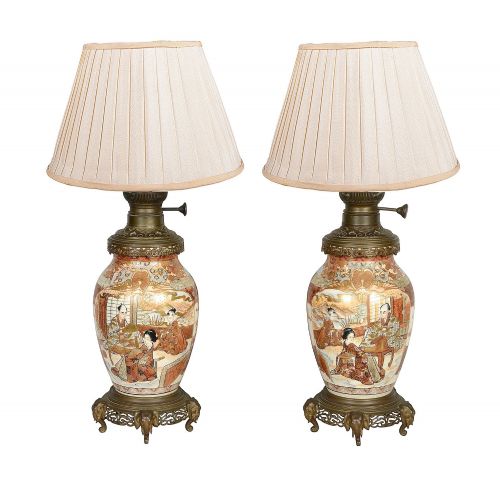
A satsuma ware pair consists of matching Japanese ceramic vessels created for display, featuring characteristic earthenware bodies and detailed pictorial scenes. You will most frequently encounter vases and table lamps dating from the nineteenth century through the early twentieth century.
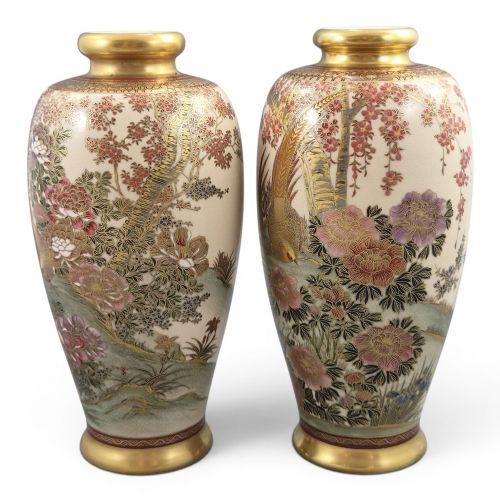
The decorative subjects span traditional Japanese motifs, incorporating figural groups such as arhats and rakan alongside floral studies like wisteria gardens. These matched pieces originate from major production centres including Kyoto and Kobe during the Meiji and subsequent periods.
Makers working within these workshops utilised specific signatures and mon emblems to identify their studio output. Surviving examples range from small decorative vases to large exhibition pieces wired for illumination.
Materials and Techniques
Potters formed these vessels from earthenware clay, applying characteristic crackle-glaze finishes across the surfaces before hand-painting intricate narrative and botanical designs. Artisans built up the polychrome imagery using dense enamel pigments combined with raised gold leaf detailing.
Certain workshop productions incorporated cobalt blue underglaze elements alongside the primary enamel palette to create contrasting depth. Individual pieces often carry signature marks brushed directly onto the ceramic body beneath the final glaze layer.
Satsuma Ware Pair Retail Price Guide 2026
Typical asking prices for satsuma ware pair among the pieces listed under this phrase on Sellingantiques today, from the lower quarter to the upper quarter. They describe what is for sale here now, not the wider market.
Listings feature earthenware bodies decorated with enamel, gold leaf, and cobalt blue across nineteenth-century and Edwardian periods.
Distinguishing Quality
Superior examples display exceptional precision in the miniature brushwork, rendering human figures and floral patterns with striking clarity and control. The richness and application of the gold leaf work also separate standard production items from exhibition-grade outputs.
The structural balance and fineness of the earthenware body contribute significantly to the overall presence of the matched items. Workshop attribution, such as signed pieces associated with established Kyoto makers, marks another clear distinction in the tier of manufacture.
Manpei·Kinkōzan·Kinzan·Shuzan·Hakusan
The Satsuma Ware Pair Glossary
- Earthenware
- Porous ceramic pottery fired at lower temperatures, forming the structural base for traditional satsuma wares before glazing and decoration.
- Enamel
- Opaque vitreous composition applied in liquid form over the fired glaze to create colourful pictorial details on the ceramic surface.
- Gold Leaf
- Extremely thin sheets of beaten gold utilised by artisans to highlight specific motifs and borders across the decorated vessel.
- Mon
- Japanese heraldic emblem or badge used by families and clans, frequently appearing as a crest on fine satsuma ceramics.
- Meiji Period
- The era of Japanese history spanning from eighteen sixty-eight to nineteen twelve, noted for extensive ceramic production directed at export markets.
Satsuma Ware Pair: Frequently Asked Questions
How do I date a satsuma ware pair?
Dating relies on stylistic indicators, potting characteristics, and specific maker signatures recorded across nineteenth and early twentieth-century production.
Changes in enamel saturation and the presence of export registration marks further help establish the approximate period of manufacture.
Were these pairs made for export?
Many fine satsuma pieces were produced specifically for Western export markets during the Meiji period to satisfy international demand for Japanese art.
Kyoto workshops became major centres for creating these decorative vessels tailored to European and American tastes.
How should I clean my vases?
Dust the ceramic surfaces gently with a soft, dry cloth to prevent accumulation without disturbing the delicate enamel and gold leaf details.
Avoid using water, chemical cleaners, or abrasive cloths that might damage the fragile crackle-glaze or the painted decoration.
What do the figural scenes represent?
The painted scenes frequently depict arhats, rakan figures, or historical narratives drawn from traditional Buddhist and Japanese folklore.
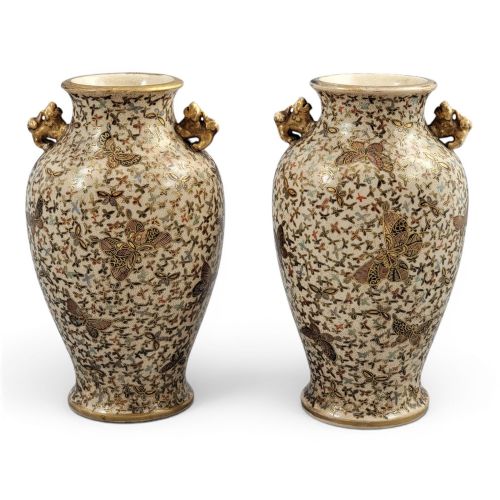
Botanical elements such as wisteria gardens and butterfly clusters also appear frequently, symbolising seasonal change and natural beauty.