

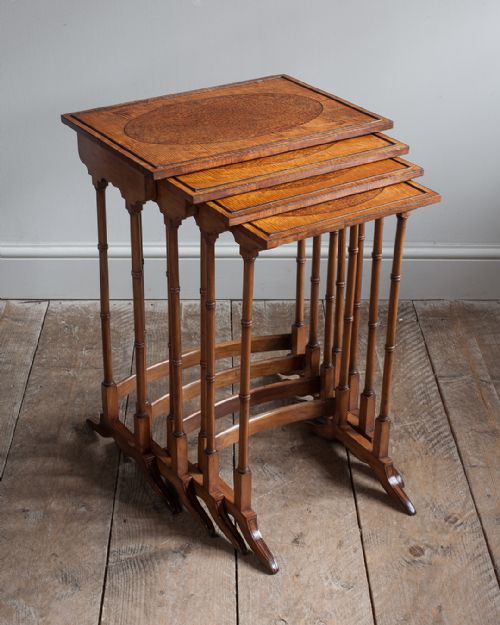


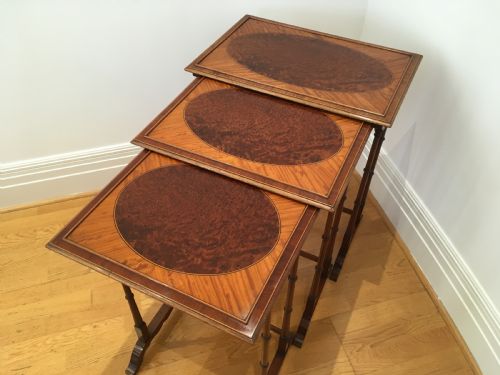


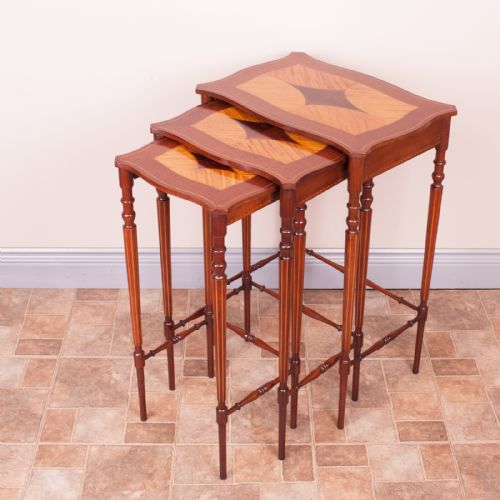

Satinwood Nested Tables
Satinwood nested tables offer a clever tier of surfaces that slide away when floor space matters most.
Satinwood Nested Tables
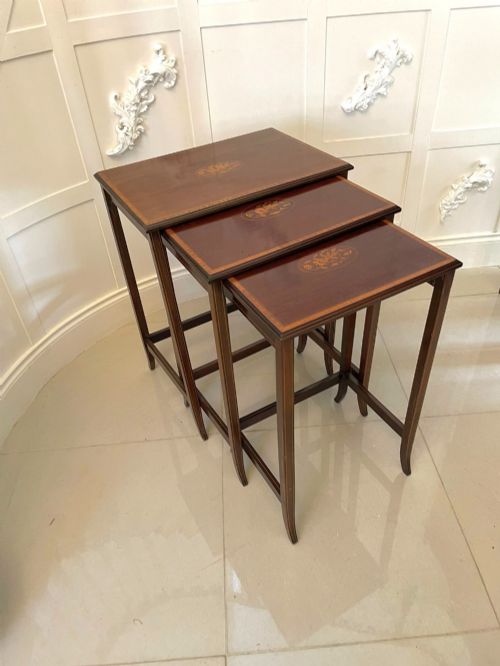
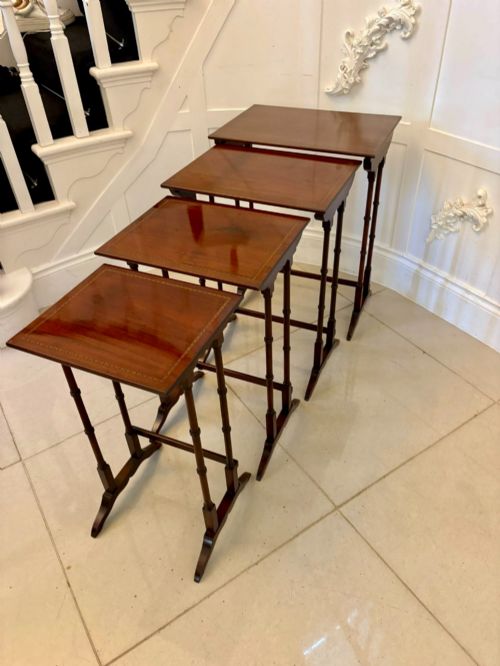
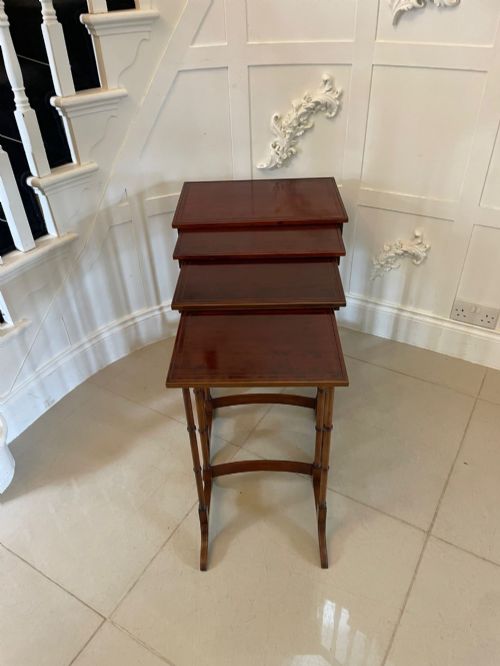
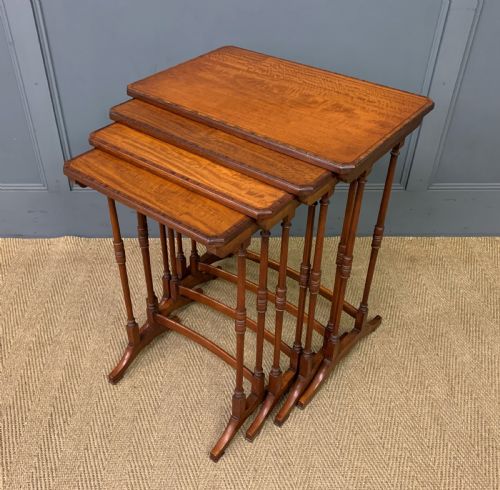
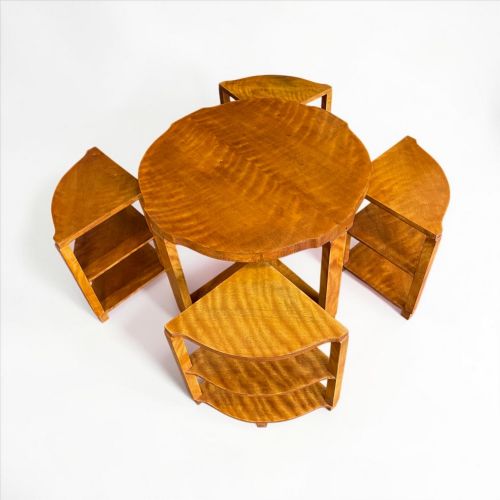
Satinwood nested tables combine light timber surfaces with practical stacking designs, appearing primarily in Edwardian interpretations alongside Victorian and Art Deco examples. Buyers searching for satinwood nested tables will encounter quartetto sets containing three, four, or five graduating surfaces that store neatly inside one another.
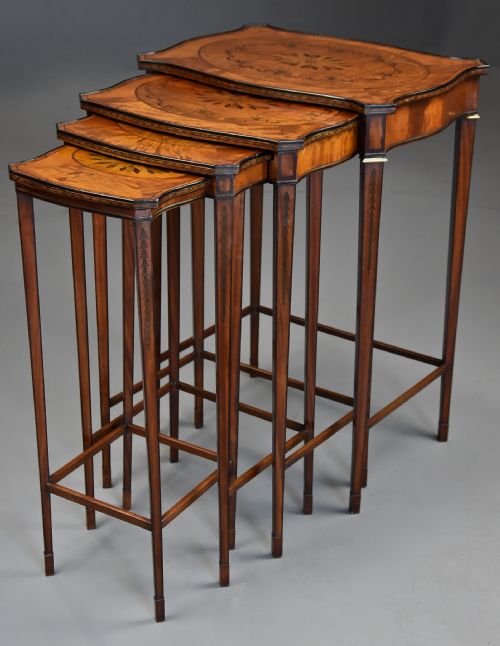
The form spans the nineteenth century into the twentieth, drawing heavily on Sheraton revival idioms through serpentine contours and occasional proportions. Most pieces function as occasional, coffee, or lamp tables within domestic interiors, designed to be pulled out for tea or writing before returning to a compact column.
How they were made
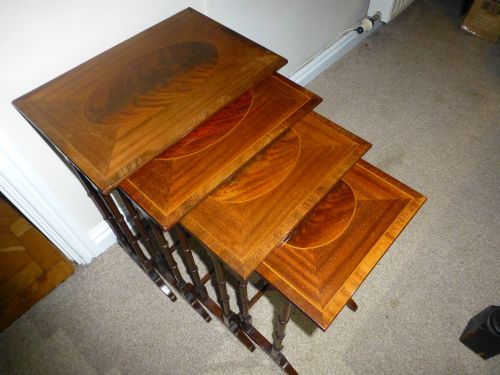
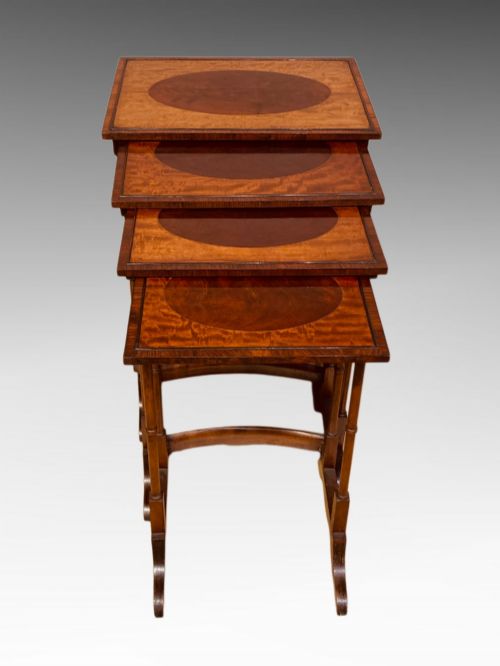
Cabinetmakers constructed these tables using solid mahogany or framing timbers overlaid with fine satinwood veneers, complemented by contrasting boxwood and rosewood stringing. Artisans applied intricate marquetry inlay to the top surfaces, creating decorative borders and floral motifs that catch the light.
The quartetto design relies on precise joinery to ensure each smaller table slides smoothly within the frame of the one above it without binding. Selected pieces incorporate additional exotic woods such as amboyna alongside the primary satinwood and mahogany structures.
Satinwood Nested Tables Retail Price Guide 2026
Typical asking prices for satinwood nested tables among the pieces listed under this phrase on Sellingantiques today, from the lower quarter to the upper quarter. They describe what is for sale here now, not the wider market.
Listings feature Edwardian, Victorian, and Art Deco periods, with mahogany and satinwood dominating the material palette.
What varies in quality
Quality reveals itself in the crispness of the boxwood inlay and the careful matching of satinwood grain across the graduated tabletops. Superior sets maintain structural stability across all four tiers, ensuring the smallest table rests securely without excessive lateral play.
The refinement of the supporting legs and the depth of the timber finish separate standard production from exceptional cabinet work. Subtle touches like serpentine edge profiling and well-balanced proportions mark out the more ambitious pieces.
The Satinwood Nested Tables Glossary
- Quartetto
- A set of four graduating tables designed to nest together. The term originates from nineteenth-century furniture nomenclature for nested sets.
- Satinwood
- A durable, lustrous timber native to India and Ceylon, prized for its golden-yellow sheen and smooth grain. It serves as both a solid medium and a decorative veneer.
- Marquetry
- The art of applying small pieces of veneer to a structure to form decorative patterns and pictures. Craftsmen use contrasting timbers like boxwood and rosewood to achieve this effect.
- Stringing
- Thin inlay lines of contrasting wood used to outline geometric panels or table edges. This technique defines the Sheraton revival aesthetic seen on Edwardian examples.
- Serpentine
- A curved line that undulates gently, convex at the centre and concave at the ends. It appears on the tabletops and rails of finer period pieces.
Satinwood Nested Tables: Frequently Asked Questions
How many tables come in a set?
Most standard quartetto sets comprise four graduating tables that slide together beneath the largest top surface.
Alternative configurations appear occasionally with three or five tables depending on the specific period and maker's design.
What is a quartetto nest?
A quartetto nest is a Victorian or Edwardian term specifically describing a set of four stackable occasional tables.
The word derives from musical terminology, reflecting the four distinct pieces working together in harmony.
How do I care for satinwood?
Satinwood benefits from minimal exposure to direct sunlight to preserve its golden tone and prevent veneer lifting.
Regular dusting with a dry cloth keeps the polished surface clean without the need for heavy chemical waxes.
Can these tables support heavy items?
Nested tables were designed for light domestic use such as holding tea cups, books, lamps, or wine glasses.
The smaller tiers have slender frames and delicate joints, making them unsuited for heavy loads or continuous rough treatment.